
Environment
Managing the environment
Vulture conservation is one of the major projects that Bombay Natural History Society president Homi Khusrokhan will tackle using his considerable executive experience
What is a chartered accountant with an MSc in economics from the London School of Economics doing as president of the Bombay Natural History Society (BNHS)? As Homi Khusrokhan the former Managing Director (MD) of Glaxo, India, Tata Tea and Tata Chemicals Ltd (TCL) reads your mind, he humbly states that he is not an ornithologist. "Unfortunately, thanks to a knack I have perfected for being in the right place at the wrong time!” he inherited the mantle of the BNHS president being the senior-most vice president, on the passing away of B. G. Deshmukh.
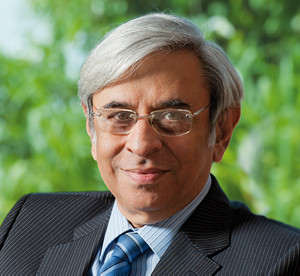
"Khusrokhan has keen interest in environmental issues and firmly believes in bridging the gap between nature conservation and development,” states the BNHS press release on his appointment. "He had played the lead role in relocating a plant of TCL in Tanzania after BNHS had raised concerns about the survival of flamingoes in the proposed area…” Other vice presidents at BNHS — Dilnavaz Variava and Pheroza Godrej — prevailed on Khusrokhan to take up its presidency to restructure BNHS, create a system for the organization and give focus to the vision. These are skills he is known for, as also his reputation for acquiring domain knowledge wherever he heads organizations.
Belying his 68 years, Khusrokhan states, "Our primary focus is conservation. We pride ourselves for being a scientific organization and our responses are based on sound science… Our conclusions are invariably unchallengeable.” This has earned the non-governmental organization (NGO) projects for assessments of coastal areas — whether the Konkan or precarious bio-diversity or nudging the government to protect ecologically sensitive areas. They run the Project Giant Clam and Project Mangrove. The NGO also assists in a project for coastal marine ecosystem protection and identifies specific areas that need attention. Founded in 1883, BNHS is "India’s premier independent scientific organization with a broad based constituency, excelling in the conservation of threatened species and habitats,” notes the release.

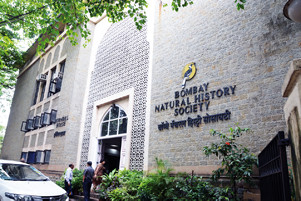
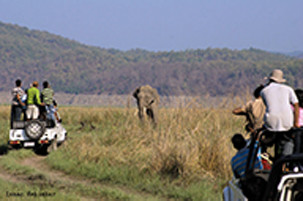
Homi Khusrokhan (top); BNHS logo (above); the BNHS building (alongside); a camp at the Corbett National Park (center) Photos courtesy: BNHS
SAVE the scavenger
True to his reputation, Khusrokhan has sunk his teeth into the Saving Asia’s Vultures from Extinction (SAVE) project. A joint effort with the Royal Society for the Protection of Birds (RSPB), the venture focuses on conserving the Gyps variety of vultures — the White-backed, Long-billed and Slender-billed; "the Long-billed is the most endangered precisely because of its long bill which rapidly reaches the entrails.” Khusrokhan clarifies, "We have already bred 300 pairs in captivity. The next step will be to release them in safe zones.”
In the early1990s, vultures started dying after consuming cattle carcasses. They suffered renal failure, a condition termed visceral gout, indicated the vulture post mortems. This was the effect of the drug diclofenac consumed by the scavenger birds on eating carcasses of cattle to which the medicine was indiscriminately administered as a painkiller. Initially scientists and veterinarians were unable to identify the cause of the bird deaths, partly because the vultures died far from the carcass and partly because there was no prior experience. "Strangely,” Khusrokhan informs, "the drug seems to affect only the species found in Africa and Asia but not vultures found in other parts of the world.” It was the late Dr Lindsay Oaks (who elucidated on the role of a veterinary anti-inflammatory drug in the devastating decline of Oriental vultures on the Indian subcontinent) and Dr Vibhu Prakash, principal scientist of BNHS who pinpointed the cause and effect of diclofenac on vultures, along with his wife Nikita under whose watchful eye the first incubated vulture egg was hatched. Prakash is also examining the possibility of returning vultures to the Towers of Silence in Bombay. "The government has banned diclofenac in 2008 for veterinary use but unscrupulous veterinarians still use the human multi-dose vials for animals and the incidence of vulture deaths continues. In fact, diclofenac was not meant for veterinary use but is still widely used medically for cattle, even though banned.”
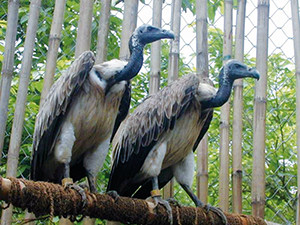
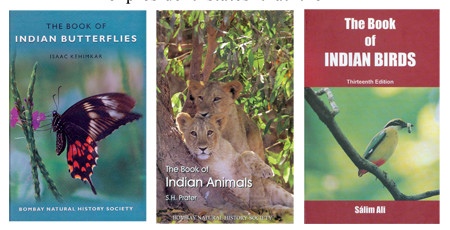
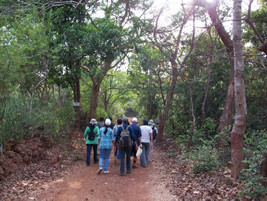
(Top) The Slender-billed vulture at the breeding center in Pinjore; (right) BNHS publications; (below, right) on a nature trail at the Phansad Wildlife Sanctuary
Switching drugs
The BNHS and RSPB have already successfully bred birds in four breeding centers — Pinjore in Haryana, Assam, West Bengal and Nepal. Nepal’s success is due to prevailing upon cattle breeders and farmers not to use the killer diclofenac and help them change over to the use of another, similar but less harmful drug called meloxicam. Even Pakistan has succeeded in prevailing upon farmers to switch drugs. India has not yet met with the same success. It is part of the BNHS challenge to convert farmers to the use of meloxicam. Though the production of diclofenac is banned for cattle in India, farmers can buy it from 30 or so Indian manufacturers who advertise on the net. Conservationists still do not know how many other drugs administered to man and or beast may be deleterious — in Africa another drug, ketoprofen, has already been found to have a murderous effect on vultures.
The president states that their research has indicated an enclosure of about 100 x 50 x 30 feet is good enough to breed approximately 20 vultures in. The SAVE project experiments with "double clutching.” Human intervention takes away the egg laid. This tricks the bird into laying one more egg and the "stolen” eggs are bred in safety. This method has been adopted from the Californian condor which shares habitat similarities with the vulture. It turns out that decimation in Asia is due to medical usage whilst in America, hunting of animals is the cause. The American environmentalists were able to persuade hunters to use silver bullets instead of lead ones as carrion eating condors were dying of lead poisoning after they consumed leftovers from the hunt.
The dakhma’s vultures
Regarding dakhmenashini and alternate means of disposal Khusrokhan counsels, "Do both. Things have to change with time. It’s a personal choice. In principle no one should interfere with that choice… there should be no external compulsion. I feel very strongly that the choice of method of disposal of a loved one is an intensely personal decision and I abhor any form of external compulsion in such matters.” The BNHS is working closely with the Bombay Parsi Punchayet on the Doongerwadi Vulture Recovery Project (DVRP).
The DVRP is zealously promoted by the sudreh-kusti wearing, liberal minded Khusrokhan — "not merely because I am a Zoroastrian but because of its scientific content which fascinates me. Also the disappearance of vultures as excellent natural scavengers has huge social implications in our rural areas. These are strange but fascinating birds and there are so many myths about them that need to be dispelled — something that I now try and do whenever I have the opportunity.
"Wherever they can scavenge, vultures will go. Habitat is no problem. Concrete jungles are no problem. A vulture weighs four to six kilos. It consumes about 300 grams of meat at one time. However, when hungry, it can eat up to 50 percent of its own body weight but may not eat again for a week.” Khusrokhan informs that diclofenac lodges in the liver and passes out of the system of the living in six hours. So 72 hours seems a safe period for ingesting the drug before a person dies. The problem lies in lack of knowing whether the drug’s been administered 72 hours before death. For, if this is not known, it can affect scores of vultures who have fed on one human body.
Flying high
Khusrokhan aims to make BNHS self-sustaining and profitable. "We (BNHS) do environment assessments for new ports and airport and power projects. This makes us self-supporting. We are building a corpus. I guess, at the end of the day, BNHS is an organization like the others I have had the good fortune to lead. It has ethical values and committed people — two of the greatest blessings any manager could ask for.”
Another revenue earner is publications — not only on birds (the BNHS was founded by India’s "bird man” and Padma Vibhushan awardee Dr Salim Ali) but also trees; butterflies; snakes and amphibians; wild life; wild flowers; Indian shells; the Indian elephant; ducks, geese and swans; and even on geographic, regional natural history — lake Chilka in Orissa, Bharatpur in Rajasthan, wetlands, grasslands and many more. Their publication, Petronia is worth a mention as it commemorated Ali’s birth centenary in 1996 with an international seminar on wetland and grassland bird conservation. Petronia is the generic name of the famous yellow-throated sparrow that connected Ali and BNHS and, in turn, birding. BNHS publishes in local languages like Hindi, Gujarati, Tamil, Malayalam, Telugu and Urdu as well.
The quarterly magazine Hornbill puts nature lovers in touch with researchers and nature photographers have a pride of place here. Subjects as diverse as spiders, ants, hyenas are all examined by experts in the field. The Society also popularizes concepts such as the "locavore” — a person who encourages the consumption of local products so that travel and food preservatives are minimized.
Life membership for a couple at Rs 15,000 is the most expensive and the students’ annual membership, Rs 400, is the cheapest. Members and the public are offered nature walks, camps and trails for bird watching, animal observation and study of flora and fauna.
Conservation seems to have interested Khusrokhan for a long time as he narrates two experiences from the other side of the table — as head of TCL. The whale shark spawns on the shores of the Gulf of Kutch in Gujarat. Fisherfolk killed these to acquire 20-30 tons of fat from an adult. TCL created the vahi or bahu (daughter-in-law) campaign tagline to appeal emotionally to the locals not to kill the ‘daughter-in-law’ when she comes home to roost. They roped in a local godman to make their appeal more compelling and also staged street plays. Further, TCL reimbursed the cost of a fishing net if the fisherman released the live whale shark back into the sea. The net result was saving about 20 whale sharks from the fishermen’s nets.
The other incident was TCL’s "Think Pink” campaign on the shores of the Natron Lake in Tanzania. The lake is rich in soda ash which floats to a depth of 30 feet. TCL was commissioned to set up a plant there but aborted the project after working on it for two years when they realized it was an environment hazard to the nesting of the Lesser Flamingo and would have damaged their breeding ground.
Centuries of eco-friendly practices
"I genuinely believe that we are the first religion to have not only countenanced the fine balance that exists between man and nature, but also created a deep reverence for the elements around us. We can therefore certainly lay claim to being the world’s most ecologically focused religion,” the experienced organizational leader proclaims.
It is no wonder that names of Zoroastrian conservationists still surface. Almost all are working closely with BNHS — Dr Erach Bharucha of Bhartiya Vidyapeeth Institute of Environmental Education and Research, Poona who is looking for alternative solutions to the present environmental concerns, marine biologist Dr Boman Chhapgar of the Taraporewala Aquarium, raptor specialist Rishad Naoroji and Variava and Godrej mentioned earlier. Variava works in organic farming while Godrej looks after funding and publications. The late Sorabji Godrej offered every assistance possible to BNHS — whether infrastructural, monetary or moral support.
"BNHS has the maturity to pick the right battles and make impartial and fact-based recommendations. Education of youth and inculcating a sense of preservation into the value system of our youth is also a clear aspirational goal. Advocacy is another powerful tool for organizations such as BNHS… I also see it playing a vitally important role at this point of time when India needs development but not at the expense of the environment,” the realist concludes.
◆ ◆ ◆
From the archive