
Comment
“Veiled ones at home”
Seven women who feared for Arda Viraz during his fact finding mission to the other world have been referred to as both his sisters and his wives
By sending him to the other world, they would lose their brother and protector, lamented the seven sisters of Arda Viraz. They were disappointed that the religious leaders had resolved to send Arda Viraz as the most righteous member of the Zoroastrian community to the other world in order to verify the teachings of the religion. But they are assured of his safe return and the ordeal proceeds under strict religious watch of the community. The advent of the brother resulted in the book of Arda Viraz, believed to relate an ancient Zoroastrian vision of the home of the dead in its Pahlavi rendering of the 9th century AD as a means of strengthening the faith in hard times.
According to the Pahlavi version of the text, the seven sisters were as his wives. This has been interpreted as an instance of the Zoroastrian next of kin marriage. But it is not necessary to see the relationship as only incestuous. The Persian version, however, refers to the sisters as his "seven veiled ones at home.”
The point of this paper is on the Pahlavi version’s definition of the sisters "as wives.” One would note that a similar manner of defining the dependants’ relationship to their lord as that of "wives” is also seen in the 11th century AD Mirror for Princes by Nizam al-Mulk. In this treatise Nizam al-Mulk refers to the king as lord of the world and to the inhabitants of the world as the king’s wives and his bread-eaters. It is possible to view the cultural milieu of the Pahlavi version as coming close to that of Nizam al-Mulk’s treatise with a similar understanding of a dependant’s status in relation to his lord.
A case discussed in the Dadistan-i Dinik, another 9th century work, is also of interest for comparison. In chapter LIV a question is asked about a man who is the head of a family that includes a wife, several daughters and sisters. They are all under his guardianship and depend on him for their livelihood. He falls sick. At the point of becoming unconscious he bequeaths all his property to a daughter. Others object and state that the decision had not been made in sound judgment. The answer to their dispute is, given every one’s status in the family, the sisters have a place too. In LIV.11 it is said: "As to the sisters of that man, if they have been necessarily in his guardianship, even as to nourishment, and there is no property for them in any other way, their food and maintenance are also needful to be out of the income of the property, unless that man has otherwise devised, or the appointment of a husband is not provided on account of the non-subjection in which they have been unto the guardianship of that man or anything else opposed to it, so that nothing whatever of the property of that man is needful for them.”
One would see that the implication of the idea of "bread-eaters” emerges from the definition of the status of the sisters in their brother’s household. If they are under his guardianship and depend for their nourishment on him, then certain provisions apply. It is possible to define the status of Arda Viraz’s sisters in the same manner as well and understand their brother’s relationship as that of a guardian and provider. Furthermore, it is interesting to note that while the seven sisters are worried about the loss of their brother as a provider, there is no mention of any children, either of Arda Viraz or those of the sisters. Had they existed, they also would have followed their mothers to plead for their case, or kept vigil over their father’s body and prayed for his safe return, same as everyone else in the community. Nor do the sisters mention them or refer to the probable plight of the would-be orphans, which would have given them more cause for concern and strengthened their hand in pleading their case with the king.
If this is a real historic family, then it is not difficult to envision some of the sisters as children themselves, who having lost their parents had depended on their brother for protection, guardianship and nourishment. Similar to what is seen in the Dadistan-i Dinik LIV. In fact the Persian version of the book may be more to the point in describing the sisters as "veiled ones at home” which in general refers to the female members of the family.
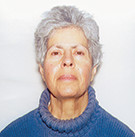
Iranian Studies researcher and writer, Parivash Jamzadeh completed her PhD in Near Eastern Studies, from the University of California, Berkely two decades ago. A freelance journalist, writer and translator, with her familiarity with Persian, Old Persian, Middle Persian, Zoroastrian Dari, English, French and German she has been a regular contributor to Iranica Antiqua, Journal of the K. R. Cama Oriental Institute and other scholarly publications. She is the author of a forthcoming book titled Alexander Histories and Iranian Reflections: remnants of propaganda and resistance.
◆ ◆ ◆
From the archive