
Observation
Wages of war
Two impressionable young men from India with visions of glory became fodder for the English military machine during World War I
Of my great-grandfather’s dozen children, Dhunjisha Chothia was the one who refused to join the family business and left home. The drums of war were beating all over India and British propaganda was intense: "Defend the Empire; the country needs you!”
Impressionable young men like Chothia and his friend Vinod, sons of small-town traders, bored with their empty lives, were ripe fodder for the English war machine. They enlisted without informing their families. Vinod, an avid reader, had visions of seeing an England which was at the height of its glory. Rich with the spoils of Empire, it dominated the world. Its elite were drawn from their great universities. They served the Empire well and cared for themselves no less. Sir Robert Clive, a former Governor-General whose wealth was once questioned by Parliament, is reputed to have said, "Gentlemen, I stand astonished at my own moderation!” We are shocked at today’s scams, but obviously, we’re following an old tradition.
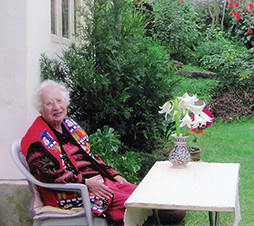
Siiloo Mehta, 95, lives in the Nilgiris and is a freelance writer for national newspaper and magazines
While waiting processing, Vinod had inspired Chothia with his own dreams about London town. When finally the boys reached their unit, they were bitterly disappointed to learn that they would be shipped to France or Belgium, and not see England at all. There followed months of gruelling drill at an army outpost where they were knocked into battle shape. As reserves for the Indian Expeditionary Force, their unit was flung into battle where the fighting was fiercest; an Armageddon which killed Vinod and sent Chothia home blind and shell-shocked. Two young men’s dreams of glory shot to pieces before their lives had even begun.
On Armistice Day, which falls on November 11 every year, a part of the world commemorates the end of World War I (1914-1918).
Bapaiji, my great-grandmother, was the matriarch of a large family. Dhunjisha was one of her sons. I saw them when I was just a child, and Dhunjisha Kaka was the grand-uncle who interested me most.
My mamma, Banoo Chothia, used to take me visiting with her sometimes. As the eldest daughter-in-law, she had to make duty visits to family seniors. Bapaiji lived with another son. She was a tiny old lady, always in bed, with a white cotton band round her forehead (probably migraine). It was she who decided whose daughter married whose son and how much dowry each should receive. I doubt if she ever went to school; probably a masterji came to the house to tutor the female children.
One room away, Dhunjisha Kaka was waiting for us. He had recognized Mamma’s voice and was getting impatient. Imagine a room with a strong electric light above a round marble table, a bottle of stout (dark beer) and thick glasses. Dhunjisha Kaka tramping round the room muttering ceaselessly. As we approached, his sightless glass eyes stared at us directly. Arms outstretched, he was happy to see Mamma. She too loved him with a compassionate woman’s heart. They hugged and I was introduced. They talked holding hands. She spoke about her children, their doings at home, and for a while made him feel human again. Alas, it was too short a visit. When she arose, he began to cry. She hated to leave him thus. We also wept silently at his loneliness. Dhunjisha’s muttering began again. The guns boomed in his head; he shivered with the cold and wet of the trenches which even Bombay’s stifling heat could not eradicate. Poor, dear Dhunjisha Kaka!
Three decades later, in October 1946, my family and I were holidaying in Kashmir. Every evening we waited for Melville de Mello’s strong clear voice on All India Radio relating the day’s terrible events unfolding in Calcutta. We heard about the ghastly Hindu-Muslim riots which Gandhiji was trying vainly to calm by fasting unto death.
Mindless mobs roamed the streets out to kill. I particularly remember one story of a Parsi who, when caught by the mob saved himself by tearing open his shirt and displaying the white muslin sudreh and woven sacred thread — emblems of Zoroastrianism. Memories flooded my mind of Dhunjisha Kaka and his loose, old-fashioned sudreh-kusti.
The author would welcome feedback on silloomehta@yahoo.co.in
◆ ◆ ◆
From the archive