
Welfare
Dealing with double disability
Beroz Vacha has lent her voice and created a vision for the deafblind for 35 years
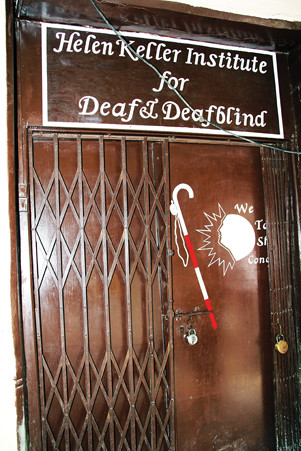
Beroz Vacha hands over her visiting card stating she is founder, honorary director and consultant of the Helen Keller Institute for Deaf and Deafblind (HKIDB). As you hold the card you feel the reverse is uneven and rough. Flipping it, you realize it is in Braille, read through touch, not sight. Vacha knew there were schools for the deaf and schools for the blind but no education was available for those inflicted with both — the deafblind. This lacuna planted the seed for starting HKIDB in 1977. Today the Institute caters to 40 deafblind students and 75 deaf ones.
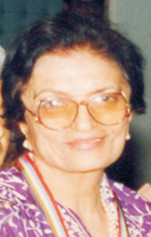
Beroz Vacha
The trigger was actually set five years earlier, when the pioneer set up a ‘school’ with Diana Fernandes and Brinda Nanavati, putting in their personal contribution of a total Rs 150. The Fernandes couple offered two of three rooms of their home in Byculla to start education for the deafblind. The three amigos started off with three students who were afflicted.
Unknown possibilities
Today, HKIDB has learning set-ups in Byculla, Vashi and Chembur in Bombay. When asked if there were plans to go national, the answer was an unequivocal "no.” The institution’s builders have recently added a hostel for outstation students in Borivli. Yogesh Desai, the chief executive officer of HKIDB, has been chosen to succeed 83-year-old Vacha. Desai explains that their method of reaching out to urban and rural India is through the Teachers’ Training Programme (TTP) at their center, sponsored by Sense and the Rangoonwalla Foundation, UK. Their path is to offer technical assistance, not financial or administrative. The Institute’s pioneering TTP, started by Vacha, is now in its 12th year. They have trained approximately 250 teachers who are in great demand especially after the Sarva Shiksha Abhiyan program (SSA) was introduced by the Government of India (GoI). The SSA is the flagship program of the GoI to achieve universalization of elementary education, focusing on children with special needs. As part of the TTP, all its students are given experiential training from wake-up duties, lunch and dinner duties, etc to being guided to mentor the deafblind.
Today, HKIDB has learning set-ups in Byculla, Vashi and Chembur in Bombay. When asked if there were plans to go national, the answer was an unequivocal "no.” The institution’s builders have recently added a hostel for outstation students in Borivli. Yogesh Desai, the chief executive officer of HKIDB, has been chosen to succeed 83-year-old Vacha. Desai explains that their method of reaching out to urban and rural India is through the Teachers’ Training Programme (TTP) at their center, sponsored by Sense and the Rangoonwalla Foundation, UK. Their path is to offer technical assistance, not financial or administrative. The Institute’s pioneering TTP, started by Vacha, is now in its 12th year. They have trained approximately 250 teachers who are in great demand especially after the Sarva Shiksha Abhiyan program (SSA) was introduced by the Government of India (GoI). The SSA is the flagship program of the GoI to achieve universalization of elementary education, focusing on children with special needs. As part of the TTP, all its students are given experiential training from wake-up duties, lunch and dinner duties, etc to being guided to mentor the deafblind.
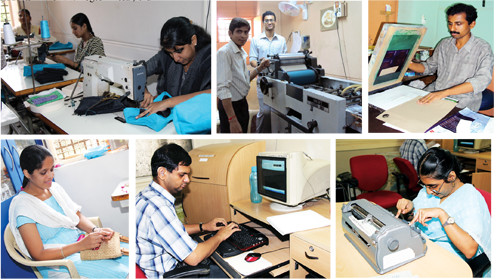
Differently abled persons generating income
Nurturing children from age five to their teens, HKIDB also has a parent education program for improved caretaking. The sensitive educationists understand parental responses — "for parents it is a challenge to deal with this kind of a kid. They wonder — why me?” Vacha proclaims that even mothers of normal children flounder with their first born; the second time they are better mothers. "Experience is the best teacher,” she adds. Desai and Vacha both talk of the rapid development of the child when parents are involved and positive.
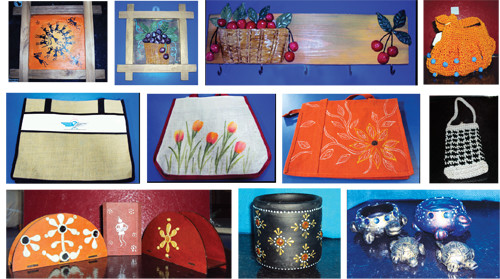
Braille display board; Braille typewriter Below: Products sold including folder for XVI NAZC 2012 (far left, middle row)
Photos: Jasmine D. Driver
This compassionate teacher bemoans that some parents consider children with disability as a burden. Her lament is that children are born in an inclusive family; one excludes them only because of their handicap. "The (handicapped) children are seen as a liability and the discrimination starts. There is resistance to these children. You put a child in a box and then the teachers say the child is ‘mentally challenged.’ It is the teacher who is mentally challenged, I say, to call a child so… Our children have done the secondary school examination adopting the curriculum of the National Institute of Open School.” This feat is accomplished by an electronic Braille display board (BDB), attached to a computer. All students are required to learn touch typing. The BDB indicates every change that takes place on the monitor and vice versa. These changes are felt tactilely on the Braille board. The deafblind are thus able to download from the net, "transcribe” exam papers from Roman script to Braille and the reverse process is put into gear after answering the question paper.
Desai’s latest addition to institutional growth is teaching and creating animation in the studio. The deaf create the visuals, having been trained in graphic design; the blind do the proof reading in Braille; the deafblind do the packaging and printing. Each one’s handicap is compensated by another — no one is considered a "liability” in this team.
The Institute encourages the use of Tadoma — tactile lip-reading. The Tadoma method of communication requires a deafblind individual to place the thumb on a speaker’s lips and spread the remaining fingers along the speaker’s face, cheek and neck. Communication is transmitted through vibrations, motions of the jaw and facial expressions of the speaker. Originally believed to be time-consuming, it has proven successful, granting fluent Tadoma users the ability to comprehend up to 40 words a minute.
Some of the other facilities include vocational training cum rehabilitation for the deafblind, workshops for printing, computers, discovery-cum-science section, diagnostic center for identifying impairment and occupational therapy, the teacher training center and their pride — the Computerized Mini Braille Press. HKIDB garners orders from organizations for screen printing. They also execute orders for customized stationery, e.g. Thomas Cook. The Institute has just finished an order for canvas bags to be distributed to the delegates of the ensuing XVI North American Zarathushti Congress (NAZC) 2012 in New York with their logo.
Vacha laments there are no changes in social acceptance of this disability since she began her mission in 1972. She takes on board people who primarily exhibit commitment, compassion and empathy as this is a profession which is fast losing its human touch — qualities which are not "learnable” in a course. She observes her students for life skills while they are attending the teachers’ training course and picks out the best for her own school.
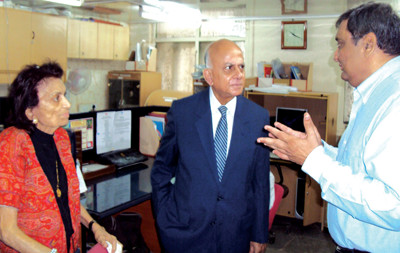
(From left) Vacha with guest and Yogesh Desai
This lady with vision, who caters to those without it, has redefined inclusive education. The differences in learning are too wide to integrate children with a double handicap in normal schools, she says. "It is a narrow concept to put him in a normal school.” Inclusion must start in art, craft, play, swimming, etc where the differences are not that significant. She recalls how a hearing impaired school mate of hers in the Bulsar school she attended, was picked upon by all other students only because he was unable to retaliate.
The causes for this handicap may be congenital or an accident. Partial sight or blindness with on-coming deafness are also reasons for becoming deafblind. It may also be adventitious, coming on at an old age for various reasons, Leena Garg who is a volunteer counselor informs us. Desai explains that it is important to include this double infliction in the Persons with Disability Act of 1995. They acknowledge the special efforts of Rodney Clark of Sense who assisted towards this inclusion.
Vacha, Desai and Garg all state that there is no evidence of Parsis having a high percentage of this disability. There are 4.5 lakh deafblind persons in India, which is only 0.04 percent of the population. It is a myth they say that there are more Parsis who are afflicted as per their experience.
An engagement ring for a home for the deafblind
Married at 21, the spirited Vacha learnt flying when accompanying her husband Nariman on his naval duties in Patna. On a visit to Calcutta a friend asked her how she occupied herself apart from flying. Realizing she had spare time, this hobby pilot took Joey, aged seven, under her wings. This deafblind child was "a clever, pretty Tibetan girl whose parents had no time for their child as they were busy pursuing their own careers” — one as an actress and the other as landed gentry. Joey’s father sought a volunteer to look after her, and Vacha fit the bill. She says, "It was here that I understood what volunteering meant — take what you get and make the most of it.”
Married at 21, the spirited Vacha learnt flying when accompanying her husband Nariman on his naval duties in Patna. On a visit to Calcutta a friend asked her how she occupied herself apart from flying. Realizing she had spare time, this hobby pilot took Joey, aged seven, under her wings. This deafblind child was "a clever, pretty Tibetan girl whose parents had no time for their child as they were busy pursuing their own careers” — one as an actress and the other as landed gentry. Joey’s father sought a volunteer to look after her, and Vacha fit the bill. She says, "It was here that I understood what volunteering meant — take what you get and make the most of it.”
Vacha was then a tutor to the deafblind Shyama Mehta in Bombay who taught her much about life as she helped her to explore the world around them. She became her own person, emphasizing her adage "Faith is the power of my belief in the unknown possibilities.” On Nariman’s transfer to Bombay, following the death of his father, Beroz joined the Educational Audiology and Research Institute to become its principal. She attended the teachers’ training course in the early ’60s and studied tactile mode British finger spelling.
Vacha trained at Manchester in 1970s, then proceeded to the Scandinavian countries and the US on the Sir Dorab Tata Trust (SDTT) scholarships. She narrates how she convinced one of the skeptical trustees of the SDTT by guiding him to sit and stand to demonstrate how she widens the horizons of the deafblind. She clinched the scholarship.
Vacha is vocal about what she expects or does not expect from her successor. She adds, "Stop putting your image in other people; they will become what they will and if you want them to be like you, you will throttle everybody.”
"We expand as we go along,” states Vacha. After HKIDB’s inception in 1977, they continued to expand till 1980 and started Total Communication which is a combination of oral, aural and manual communication.
In 1985 they saw the need for children outside of Bombay to be housed and got rudimentary residential facilities. Terraces at their residential unit in Borivli were slipping out of the hands of HKIDB for want of Rs 50,000. She decided in the board meeting that she would raise this amount by selling her engagement ring. Husband Nariman, also a founder member of HKIDB not only endorsed this, but helped to see her plan through. Vacha’s brother, Rusi Surti, also donated land in Karjat for a home for the deafblind.
The founder of HKIDB has Helen Keller, Marie Curie and Florence Nightingale as her role models. The association with the deafblind Keller is obvious, whilst the radium inventor Curie inspires Vacha with her dedication and brilliance. Her admiration for Nightingale, the Lady with the Lamp, stems from the pioneering work of nursing and for her commitment to the cause. Poet Rabindranath Tagore too figures among her favorites. "I love reading life sketches of great people… Helen Keller was my pet.” She adds "Believe in divine will, surrender to Him and welcome anyone in your life.”
Above her desk is a large frame of Zarathushtra and Vacha’s favorite prayers are the Yatha, Ashem, 101 naam and Yenghe Hatam. She prays these regularly as she has limited time for long prayers. She lives by the three-fold principles of good thoughts, good words and good deeds. "What you think you must say and what you say you must act. Put all three together. Fight as a crusader. These are Zoroastrian ethics. Religion is a choice of a person.” She is a liberal and says "I don’t like being suffocated by anyone.”
◆ ◆ ◆
From the archive