
Cover Story
The politician and the princess
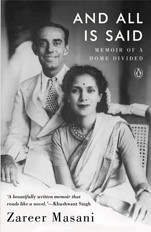
And All is Said. Memoir of a home divided by Zareer Masani. Published in 2012 by Penguin Books India, Private Limited, 11, Community Centre, Panchsheel Park, New Delhi 110017. Pp: xii+236. Price: Rs 299.
I have to admit to a conflict of interests in reviewing this book. Of course it only makes it more fascinating as Zareer Masani, historian and biographer, records the "war between the Masanis,” his parents and the reader is continually compelled to take sides.
On the one hand there is his mother, the beautiful Shakuntala from an aristocratic Uttar Pradesh (UP) family and on the other his father, the debonair politician Minoo Masani, from an equally well-established Parsi family from Bombay. Their son sets the story of his parents’ turbulent marriage and interminable divorce proceedings against the tumultuous events of the struggle for Indian independence.
On the one hand there is his mother, the beautiful Shakuntala from an aristocratic Uttar Pradesh (UP) family and on the other his father, the debonair politician Minoo Masani, from an equally well-established Parsi family from Bombay. Their son sets the story of his parents’ turbulent marriage and interminable divorce proceedings against the tumultuous events of the struggle for Indian independence.
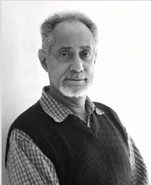
Zareer Masani: true to himself
His account suggests how both these personally attractive, well-educated and high-minded individuals firmly believed that it was in their genes to become a part of the newly emerging Indian elite. It was to prove to be as much a delusion as their attraction to one another.
Their letters and diaries were kept meticulously. This provides Zareer with a ringside view that is riveting. Their courtship was pursued with intensity and a passion that was not shared by the parents from either side; neither the austere scholar-statesman Sir Rustom Masani and his wife Manijeh with their core belief in their Parsi heritage living in Bombay; nor the wealthy land-owning UP Hindu aristocrats Sir J. P. Srivastava and Lady Kailash with their lavish lifestyles.
Minoo Masani was "not an emotional person. He rarely allowed his heart to rule his head,” observes S. V. Raju who had worked closely with him for over four decades. After reading Zareer Masani’s memoir, one could be forgiven for saying that the opposite was true of Shakuntala.
The bias is that I knew, or had met, both the author’s parents at different points in time, but liked only one of them. Liked is perhaps too innocuous a response to a mercurial personality such as M. R. Masani, or Minoo as he preferred to be called. He had an intellectual brilliance that he flaunted with a fervor that could be as exhilarating as it was tiring. He was too independent an individual to ever want any followers in the ordinary sense of the word. He expected his acolytes to be as exacting as he was, as rigorous in attacking the cant and hypocrisy in public life as he was and examining every situation in the light of one of Gandhi’s truths: "Ends and means are interlinked and the end does not justify the means. If the means are tarnished, even a good objective gets vitiated.” (From Minoo Masani by S.V. Raju)
Later in life it was always the young that he wanted to mold and mentor to be the leaders of newly independent India as the best selling book that he wrote for children, called Our India, testified. He was to return to this theme repeatedly, trying to re-kindle the exhilaration of those early years when he had walked alongside Mahatma Gandhi from village to village seeking new solutions for an old country. Towards the latter part of his life, he was also a general without an army, an ideolog for whom the quest was more important than its resolution.
I remember for instance that there was a typical Minoo Masani style of striding ahead. He walked fast. His legs propelled his tall lean body, head thrust forward. His hands flapped behind him like giant paddles. He seemed to be pushing people away from him as though to tell them: I walk alone. I am Minoo Masani.
Certainly, it could not have been easy to be his son, who was a precocious young boy much adored by his father as Zareer records with an acerbic affection as he was very much the mamma’s boy. Particularly once the Masani magic began to pall as much due to money or a lack of it and the marriage started to fall apart as the differences in their aspirations began to make themselves felt. Minoo’s career as a politician, always prone to meteoric highs and lows, took off in 1957 and he had increasing less time for his family.
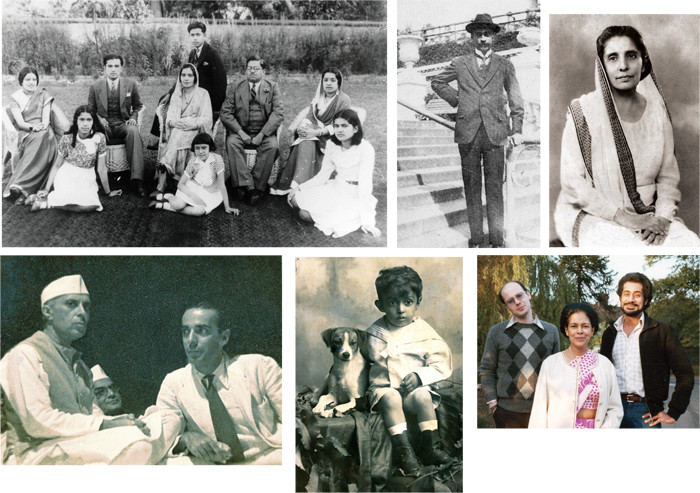
(Clockwise, from top l): The Srivastava family, Shakuntala (second from l); Sir Rustom and Manijeh Masani; Zareer with Shakuntala and his former partner David; Minoo Masani, aged five; and in later years with Jawaharlal Nehru
Photos: And All is Said. Memoir of a home divided
Photos: And All is Said. Memoir of a home divided
Zareer was just 10 years old. As he puts it: "In a family where the political always became personal, father’s immersion in national politics marked the end of my childhood.”
I met his wife, Shakuntala Srivastava, Zareer Masani’s adored mother only once. She was in the company of one of the fabled Srivastava sisters, Susheela Dayal, then the wife of Rajeshwar Dayal who became independent India’s foreign secretary. Like their counterparts in the upper echelons of society in England they had an upbringing that brought them every advantage of their class and background, which together with their beauty made them examples of the Macaulayan ideal: Indian exotics in appearance, but westernized by training and education. (It’s interesting to note in passing that Zareer Masani is now writing a life of Lord Macaulay.)
Zareer is less than flattering about his aunt, who he refers to as Sheela, and as a ‘flighty’ person in her youth, who was a ‘friend’ of the famous novelist Raja Rao, who duly recorded their friendship in his novel, The Serpent and the Rope. Sheela however was not only as glamorous as her sister Shakuntala; she was a vivacious and intelligent person. I picture her smoking a cigarette with a long holder and describing how the action painting on her wall by Jackson Pollock was inspired by her jewelry. She had dunked all her jewels in a bowl of water and kept them on her dining table. "Pollock took one look and said, ‘That’s it! That’s the effect I want.’” She had a famous guru at the time, Shri Atmananda Krishna Menon in Thiruvananthapuram, who was also a teacher to the Lebanese Druze politician Kamal Jumblatt (1917-1977), amongst their many friends. Far from being the ditsy aunt that Zareer describes, she was altogether in a different league from his mother.
Zareer is at his best in describing the rich tapestry of the lives of the Srivastava sisters. They were the new princesses before independence. Their parents raised their brood of seven children in a sprawling mansion at Kanpur amidst rolling lawns that would do justice in a novel by Henry James. It was however to be a short-lived period. When I met her, by then his mother, she showed all the signs of a self-absorbed and narcissistic persona.
Reading her son’s account of her life, this now seems too harsh a judgment. He redresses the balance by describing her accomplishments as a journalist, a dancer, an artist and a hostess of great charm who could hold her own within the political and social circles in which she and her husband moved.
Zareer notes that it was Minoo’s long absences and serial philandering that led to the couple’s frequent outbursts of acrimony. Shakuntala was his third wife. Zareer is marvelously indulgent towards his mother’s own dalliance with a number of admirers, recording how he himself would be used as a decoy to deflect any attention from these rich and attentive men with whom she played golf, spent time at various hill stations and who encouraged her artistic and creative side.
The marriage started to fall apart as early as 1960. There were periodic moves for a divorce that Minoo, the lawyer, initiated and Shakuntala resisted. She used every means at her disposal: the education of their son, Minoo’s own rising career as a political leader of eminence, even when he was in opposition and her own desire to be a career woman who had to balance her desire to be close to the centers of power at New Delhi with Indira Gandhi as her cherished patron, or to be in Bombay where she could keep tabs on Minoo to thwart him. Minoo had by that time found happiness in a partner, Sheila Singh, who is not named in the book, but whom he married two days after his divorce was granted in 1989.
Zareer describes how his Srivastava family encouraged him to call his father a "killjoy” whom he felt free to defy at every point of his life. One can only feel a deep sympathy for the Masani grandparents as Zareer describes how strict they were in bringing him up when he was left with them, since his mother never fails to describe his grandmother as the "witch,” a name that he childishly echoes in his letters to her. It’s this candor that makes the memoir finally as riveting a read for the human drama that it describes as much as for the political insights that the historian in Zareer includes with detachment and regret at what might have been.
Though he does not emerge as a hero in his son’s account, Minoo would be proud. Zareer Masani has taken the difficult path and been true to himself.
◆ ◆ ◆
From the archive