
In Memoriam
The center of Activity
Died: Dolat Hoshang Doongaji, 94, founder principal of The New Activity School (TNAS), Activity High School (AHS) and Activity Infant School (AIS) as also founder member of The Zoroastrian Student-Teacher Association (ZOSTA) on April 26, 2012 in Bombay.
"Wedded to the School… she sacrificed her life, family, everything.” Doongaji’s commitment to her Schools was commended by the current principal of AHS Perin Bagli who deemed it a privilege to have been groomed by the founder principal, having been under the educationist’s wings since she was seven years of age. At the condolence meeting convened at the School, Bagli described her mentor as a "true Montessorian who believed in ‘we learn while we play,’” and referred to her incessant efforts to impart knowledge to her students with the aid of her collection of dolls and curios from different nations and specially created charts that were housed in the School’s museum.
"Wedded to the School… she sacrificed her life, family, everything.” Doongaji’s commitment to her Schools was commended by the current principal of AHS Perin Bagli who deemed it a privilege to have been groomed by the founder principal, having been under the educationist’s wings since she was seven years of age. At the condolence meeting convened at the School, Bagli described her mentor as a "true Montessorian who believed in ‘we learn while we play,’” and referred to her incessant efforts to impart knowledge to her students with the aid of her collection of dolls and curios from different nations and specially created charts that were housed in the School’s museum.
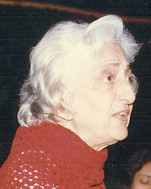
Having started the institution with five students in 1953 when her son Darayas was two-and-a-half years old, through dint of hard work, sacrifice, "putting in her personal money and jewelry” she was able to build up the School to its present stature such that the AHS (Std I to X) with the AIS function from their premises on Pedder Road and TNAS (Std I to IV) from Hughes Road. Since their Pedder Road property was in the midst of shops and unauthorized structures, Bagli recalled their making innumerable trips to the Bombay Municipal Corporation and obtaining cement when the commodity was in short supply.
Commending her for being "such a good boss and teacher… knowing every child in the School… never gossiping,” Doongaji’s daughter Hira Bhesania, principal of TNAS remarked, "She always gave of herself, time, money, love, kindness to each and every one.” When her son was lying in a comatose condition, she donated his organs so that some other deserving individual could be helped. Her own eyes too were donated after her demise. Proving her willpower and determination, at the age of 93, within 24 hours of a hip surgery, she rose to walk again. Bhesania’s twin sister Dr Hutoxi Boman who is vice principal of AHS remarked that since her mother could perform most activities effortlessly even at an advanced age she always maintained that "my mother never got old, she only got older.” The day prior to her demise she was reading and signing cheques. She was "the spirit, the brain and heart” behind the growth of the Schools, summed up Boman. Serving as master of ceremonies for the evening Boman interspersed speeches with an apt quote or verse. "Her goal was to provide education freely and equally to all,” appreciated Doongaji’s granddaughter Pirojakamal Boman.
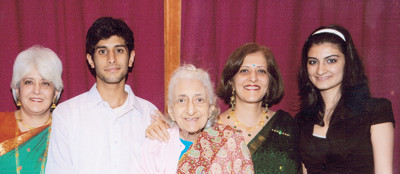
Dolat Doongaji (above and alongside center) with (from left) Hira and Sharuk Bhesania, Dr Hutoxi and Pirojakamal Boman
"All her students were her extended family,” remarked Tanaz Tarapore, trustee of the Piroja Vasunia Education Trust. Named after Doongaji’s mother who was ever willing to support her educational initiatives, it is under the auspices of this Trust formed in 1972 that TNAS and AHS function. She nurtured her staff members too as attested Sheroo Desai, headmistress of AIS. Their Hindi teacher, T. Tiwari considered Doongaji an epitome of sacrifice. Former teacher Katy Gundevia mentioned how the principal had rekindled her love for history. Being animated about the subject, to her this topic was "not his-story but her-story… She would collect information and pass it on to her students. She was their Internet in those days.” To another teacher Niloufer Daruvala who teaches cultural history, a subject that Doongaji introduced to the School so that she could impart knowledge on the lives and works of connoisseurs, Doongaji taught her more than what any BEd degree could have.
To Rashna Dutta, an ex student-teacher-parent, Doongaji was her touchstone who "taught us to be just, honest and compassionate and made sure she put problems in perspective.” She was inclined to consider her students as co-travelers who could embark with her on a journey of learning. In the middle of a French class, she would lift up her sari and demonstrate the can-can dance. Her initials DD could well have represented "Dared to be Different.”
"No matter her age, she wanted to attend every activity in School,” commented Rati Wadia, former principal of Queen Mary School. "She would never take no for an answer…She lived ‘life to the lees’” as Tennyson said in Ulysses. Fond of literature and poetry, she would teach one poem to each class from Std IV to X and would script plays for her students to enact. The playlet Zarathushtra, jointly written with A. K. Lavangia, was performed for ZOSTA in 1982. She had authored books for children, several of which like Cave that Talked and Three Fish were used as supplementary readers by many schools.
Admiring her "tenderness, warmth, charming smile,” Meher Heroyce Moos wished she had spent her years teaching at Activity instead of working for an airlines and offered to contribute her memorabilia to the School museum.
Her School accommodated students from different social and economic strata, be they children of domestic help or pallbearers. Donations were never a criterion when granting admission to her School, attested Yasmin Dhanda, vice president of the School’s Parent-Teacher Association. Those suffering from some physical or mental handicap were integrated into the regular school curriculum with additional help, as acknowledged in a message from Sultan Fazalbhoy whose wife Rehmat was the School’s resource teacher. Among the first physically challenged students of the School was Rajendra Singh who despite being deaf-blind went on to obtain his PhD.
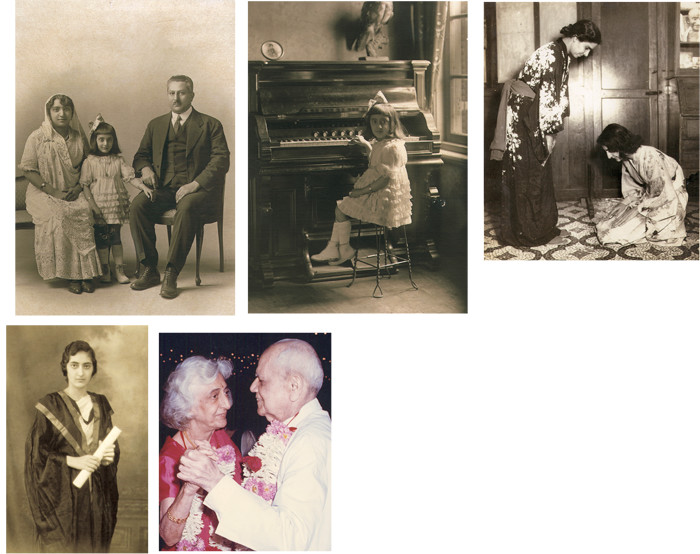
From left: Dolat Doongaji as a child with her parents Piroja and Rustomji Vasunia; at the piano; depicting Japanese customs;(below) on graduation day; with Hoshang on their 50th wedding anniversary
As reiterated her class IV employees, one of whom gave his maiden speech in English, working for her was a pleasure. Her simplicity, generosity, gentleness, understanding, insistence on perfection, were lauded by her office staff members Theresa Fernandez and Swati Kadam. Those who erred were lovingly corrected, never chided, they appreciated.
On view at the condolence meeting was a specially prepared PowerPoint presentation depicting the multi talented and faceted life of Doongaji. Born in Kobe, Japan, once the family relocated to Bombay she resumed her studies there, schooling at Queen Mary. Graduating from Elphinstone College, she stood first in the philosophy group and at the BT examination she stood first in the Bombay state. She subsequently earned her Montessori diploma from London and another from St Nicholas Training Centre. Before starting the Activity Schools she was a lecturer at Sophia College. Her opportunity to train as a Fulbright scholar came after her marriage to Hoshang Doongaji.
As president of the All India Association of Heads of ICSE Schools Doongaji steered the organization for a couple of years. She was the first lady secretary and vice president of the Youths Own Union and was even vice president of The Progressive Group. For nearly 40 years she made time for the Zonta Club for women in executive positions in business and in professions and had even served as its president. She loved working late into the night and would not sleep before 1 a.m. Since her busy days did not permit her to read the newspapers in depth, many of her vacations would be spent in a rented bungalow at Matheran where she would cart a trunk full of publications to be read at leisure. Hasekapati village near Matheran was almost adopted by the gracious lady who constantly sought to improve the conditions of the poor hill folk. In her younger days she enjoyed horse riding and playing tennis and was also a good classical dancer.
Especially fond of nature and trees, she believed in nature cure and yoga, stated Trust secretary Nariman Mehta. She was against installing a lift at the School to ensure that everyone remained active. Her students were repeatedly reminded to respect their parents and grandparents who crave for their love and care, and not to blindly imitate westerners. Mehta chose to describe her as a "non-traditionalist who did not much believe in rituals and customs. To her, God resided not in temples but in everyone’s heart.”
The pivot of Activity School is survived by her daughters Hira Aspi Bhesania and Dr Hu-toxi Hoshi Boman.
◆ ◆ ◆
From the archive