
In Memoriam
“Icon of integrity”
Died: Feroza Hormasji Seervai, 88, social activist, on March 5, 2012 in the ICU of Bombay Hospital."For nearly 70 years she was an activist for education, and for the upliftment of society, often preaching revolt,” wrote daughter Meher Pocha in a tribute to her redoubtable mother. "She was instrumental (along with colleagues), in setting up in Bombay, The Bombay International School, The Thackersey Working Women’s Hostel, The Behramji Lalkaka Balwadi (nursery school) for the children of slum dwellers and the Behramji Lalkaka Counseling Service for young adults,” Pocha added.
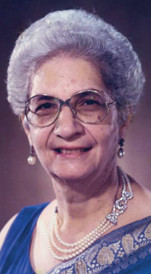
Known for her dogged determination in the pursuit of truth and what is right, sometimes raising her voice to deafening decibel levels while dealing with recalcitrant bureaucracy and red tape, Seervai achieved success in whatever she set out to do. She was equally well known for her wide, spontaneous smile, her warm and helpful nature, her love for beauty in all forms. A rationalist and self-confessed atheist, she however "believed that one should live by the principles of the Zoroastrian religion” though she rejected rituals and the outward displays of religion.
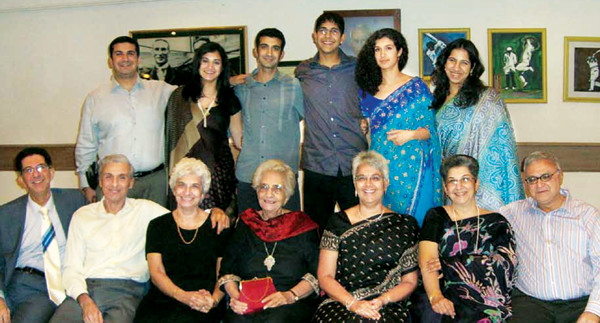
Feroza Seervai (above) and with her family. Seated (l-r) Navroz, Jehangu and Meher Pocha, Feroza and Mona Seervai, Shirin and Phiroze Madon (standing, from l) grandchildren Jehangir, Sherna, Cyrus, Riyad, Shirin and Shanoor
Her enlightened parents, Goolbanu and Behramji Lalkaka, encouraged their three children to think for themselves and express their opinions, which indeed they did, assertively. On completion of her schooling at St Joseph’s Convent in Bandra, Seervai went to Wilson College, obtaining her Bachelor of Arts degree in philosophy. She studied Latin, which was required to pursue law at Cambridge University but abandoned the idea after meeting and marrying Hormasji Seervai who later became advocate general of Maharashtra. She used to say, "I preferred the lawyer to the law.”
"If marriages are made in heaven, Seervai’s certainly was,” wrote Soli Sorabjee in an obituary published in The Times of India on Hormasji’s death on January 26, 1996 shortly after the couple celebrated their golden wedding anniversary. Speaking at a well attended commemorative meeting held for Feroza Seervai at Bharatiya Vidya Bhavan on March 9, 2012, Darius Khambata, then additional solicitor general of India, described her as "inextinguishable.” She was "the great woman behind the great man, Hormasji M. Seervai. She was his alter ego and he was hers... But she was no mere shadow...she had independence of spirit… She never gave in, never, never, never gave in.”
The proceedings of the commemorative meeting have been published in the form of a booklet with photographs of the matriarch with her family and images from her early days. Senior Supreme Court advocate and former advocate general of Maharashtra Tehmtan Andhyarujina’s tribute, "Her life was an inspiration; her memory a benefaction” was read out by lawyer Gautam Patel who himself recalled Seervai’s "integrity, zest, zeal, strength, steadfastness, inexhaustible ability to delight.” (This reporter recalls the time she chanced upon Seervai at Colaba Woods standing stock-still in the middle of the walking track rapturously gazing upward, oblivious to the walkers headed in her direction. It was summer and the laburnum trees were flowering, a profusion of blossoms festooning the trees like glorious golden chandeliers. Seervai’s greeting was a wide smile and the exclamation: "I am mad with delight at this sight!”)
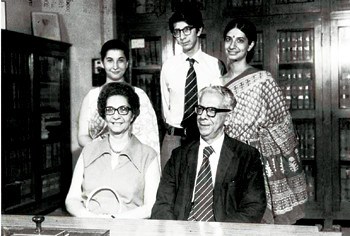
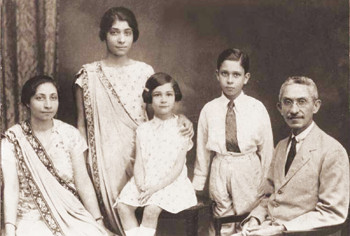
(Left) Feroza and Hormasji on 25th wedding anniversary with Shirin, Navroze and Meher; (above, from l) Mother Goolbanu, sister Freny, Feroza, brother Pheroze and father Behramji Lalkaka
At the meeting Seervai’s children Pocha, Shirin Madon and Navroz Seervai read out tributes sent by their children who are abroad. Rohini Ooman, who helped Seervai found the Bombay International School 50 years ago, spoke of her "absolute, unimpeachable integrity... she was an icon of integrity.” Yogesh Kamdar, longtime family friend, human rights activist and joint director at Bharatiya Vidya Bhavan, described Seervai as a "one woman army” in public life. She had "dynamism and courage” and believed in the "right to revolt” whether it was with her family or all the way up to the Prime Minister. In her lifetime she had received many gifts, but one that she held "most valuable” was from her father — membership of the Asiatic Society, where she remained active for 70 years and worked as "a tail twister.”
Friend from her college days, Prof Sheriar Ookerjee referred to Seervai’s going out of her way to extend help to all (whether they wanted it or not!) — the statement sending a ripple of laughter through the gathering. He spoke of how one day without any introduction she "pounced” on him in college when he was still "very shy” and demanded to know what subject he was taking for his BA. He replied, "English Literature, I think.” She retorted, "No. I heard you debating the other day. You have a philosophic mind. You must take philosophy (Must, not should)... You can do literature on your own. In philosophy you would need some guidance.” Not only did Ookerjee take philosophy, he taught it all his life, and still does sometimes, he said.
"She was a woman of action and determination,” niece Shanoor Forbes, sister Freny Mehta’s daughter said of her much loved aunt. She recalled the time her son Reshad, then a student in the London School of Economics was in Bombay and had popped in to meet his great-aunt. As she was on the way to the bank, he accompanied her there so that they could chat in the car. At the bank she was told that she would have to come back another day as the relevant papers had not yet been signed by the manager. Forbes related, "Reshad jumped out of his skin (as did the other officials and customers going about their own business), because, without warning, Feroza banged the counter with a loud reverberating thump, simultaneously letting out a roar...such as only Feroza can emit!
"She followed this thunderous bellow with a reprimand as voluminous, berating the hapless bank clerk for the delay... After this tirade was over, there was pin drop silence... The transfixed official then scuttled away, stuttering in mortification. Feroza then turned back (to Reshad) and with a charming smile and placid visage, continued talking to him, without missing a beat”... until the relevant papers were delivered to her.
Seervai’s sense of curiosity and wonder led her to master the use of the computer at the age of 75, using it to stay in touch with family and friends and get a window on the world.
"She was a terrific lady — gutsy, principled, outspoken and someone who never gave up on a cause that she felt strongly about,” wrote Tata director Homi Khusrokhan in a condolence letter to Navroz. "She was a strict disciplinarian but also loving and caring with children... We both felt the same way about... the deteriorating state of affairs at Doongerwadi... Perhaps it is only because of my interactions with her and the strong impression she made on me that finally encouraged me to take up the... issue of the ban on the (renegade) priests,” he revealed.
Neighbor Yasmin Brelvi remembered Seervai as "a lady of great determination, courage and dedication... a doting mother... always on the move and doing the best for everybody.” Kersi and Minnie Dastur, also neighbors, recalled her "infectious and mischievous smile.”
Senior tax consultant Soli Dastur described her as "a lady of character and conviction... a person of guts and yet very caring and full of concern... She had specifically requested that (no prayers) should be held. How right — it is our deeds which help one, if there is a life hereafter, and not the mumblings of a priest!”
Though Seervai dealt with the death of her beloved husband "with her usual stoicism and practicality” it led to "an outpouring of poetry in which she revealed her pain and her innermost feelings. Later there were poems of observations on the absurdities of life and comments on items of national and international news. At the request of family and friends the poems were printed for private circulation,” reveals Pocha. Seervai’s other publications include Winning Without Corruption, The Seervai Legacy and Evoking H. M. Seervai.
True to her principles, Seervai asked to be cremated, which was done on March 7, 2012. There were no prayers or ceremonies. Each one of her three children read out one of her favorite poems after which mourners maintained a minute’s silence before she was consigned. Seervai had grown up in a bungalow named Mon Repos at Land’s End in Bandra, and loved the sea off the coast there, referring to it as "mharo dariyo (my sea).” So it was fitting that her ashes were immersed there on March 8, 2012.
The courageous crusader is survived by her children Meher Pocha, Shirin Madon and Navroz Seervai.
◆ ◆ ◆
From the archive