
Drama/Cinema/Theatre
A dream drive
The lure of cricket and cars against the background of a middle-class Parsi family contributes to the box office success of Ferrari ki Sawaari
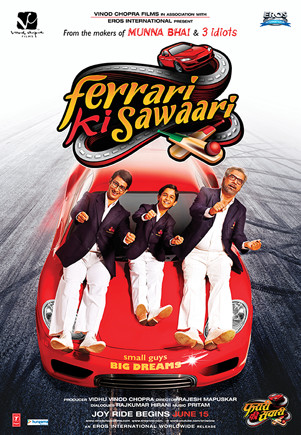
An epitome of honesty, Rustam Deboo is one who will take a u-turn to find a police official to whom he can pay a fine for inadvertently jumping a red signal. His rationale is simple. He wants to set an example to his preteen, impressionable son Kayoze for "Jo dékhéngé wo seekhéngé (one learns what one sees),” he tells the police constable in the engaging and entertaining movie Ferrari ki Sawaari, released on June 15, 2012.
When he accidentally breaks his son’s cricket bat on the eve of an important game, he reminds a despondent Kayo, as he fondly calls his son, to "look at the bright side” in every situation, pointing out that it is just as well that the bat snapped before the event and not at the match. Promising his son a new bat, he spends the night counting and recounting the money carefully saved in different nooks and corners of their Khareghat Colony flat so that he can reach the sports goods shop early in the morning with the required cash amount in currency of different denominations. Needless to say, the cricket prodigy emerges as a star with his new bat.
That the doting father is willing to make any sacrifice to give Kayo a chance to train at Lords, the Mecca of cricket, is understandable. But his compromising on principles in his desperation to raise funds within a fortnight lands him in an expected mess when he drives off with Sachin Tendulkar’s red Ferrari, required for a few hours by a wedding planner who is willing to pay him a handsome compensation that will cover Kayo’s cricket training. When the self-respecting Deboo who works as head clerk at RTO (Regional Transport Office), Worli initially submits an application to withdraw from his Employee’s Provident Fund savings, he is realistically advised he should expect the sum only after a couple of years. On overhearing that banks keep pestering mobile owners to accept their loans, he naively invests in a mobile phone. Far from being lured by any phone calls, it is he who has to badger unrelenting bank officials.
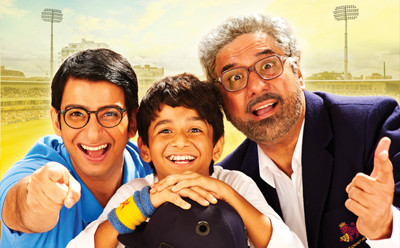
Sharman Joshi, Ritvik Sahore and Boman Irani as Rustam, Kayoze and Behram Deboo
Referring to his maiden attempt as director, Rajesh Mapuskar declared that he sees this film as "a celebration of parenting. Of fatherhood. It’s an opportunity to see your father or child in a different light. It’s about innocence. It’s about simple needs and aspirations. In the film Rusy (as Rustam is frequently addressed) puts his best into every small thing he does. (A widower) he parents his son with integrity, pushing his limitations when he has to. He lives his life in a certain way because he wants to inculcate the same values... in his son. We all grow up watching our parents and the people around us…”
Having spent many holidays in his younger days at the Dadar Parsi Colony, he had observed the community closely and as he told Mint of June 16, "When I was thinking about the car thief, I asked myself who would be so careful with a vehicle that was not his own — and only a Parsi came to mind. I love music and even before the script was decided I had decided what kind of background music I wanted. I like the sound of the accordion (made famous by players like Goody and Jehangoo Seervai as also Nelly Battiwalla) and the harmonica (made popular by Phiroze Damri) and those were going to be the instruments I used. I couldn’t relate this music to a Maharashtrian or Punjabi family set-up. It blends well with Parsis.”
There is no knowing whether audiences who come for the 140-minute movie Ferrari ki Sawaari have been enjoying the sight of the red Ferrari that was once owned by Tendulkar, or the role of a doting dad played by Sharman Joshi or a grouchy grandfather enacted by Boman Irani or the cricket crazy child portrayed by Ritvik Sahore. The Parsi community may have been excited to identify many of its own members in the crowd scenes or to recognize Khareghat Colony used as the locales for Deboo’s middle-class background, more so since a controversy had brewed over the Bombay Parsi Punchayet permitting the film production unit use of the Doongerwadi land abutting the Colony last October. In a telephonic interview with Parsiana Mapuskar mentioned that he had been forewarned that he would have "a tough time shooting at Khareghat Colony for you never know who will complain and what they will say.” To his amazement "no one complained or shouted and in fact we got a warm welcome.” It was only on the last day when they were packing up did a lady going on her morning walk come up to tell him that she found "there was too much noise.” When alerted to the Doongerwadi commotion, he initially felt he should have take permission from other quarters too but subsequently realized that it was due to factions within the community. "Really thankful to all the people” from the community who helped him, as far as Mapuskar is concerned, "This is one community that has really inspired me. Please retain your passion...”
The film has no mega star line-up, no romance and in fact has no provision for a lead female role. Whilst Seema Bhargava in her role of a wedding planner Babboo Didi does succeed in evoking a fair share of laughter, the only other female adding spice to the film is Vidya Balan who gives an item number in the form of a Lavani (traditional Marathi folk dance). Reportedly shot on a modest budget of Rs 10 crore, the film had collected Rs 24.5 crores in the first 10 days with the overseas collection being $ 650,000 from almost 250 screen releases. To celebrate the success of the film, Joshi’s father-in-law yesteryear villain Prem Chopra had hosted a party graced by Bollywood stars like Amitabh Bachchan, Rishi Kapoor, Salman Khan, at which young Ritvik was given the honor of cutting the cake in the shape of a Ferrari.
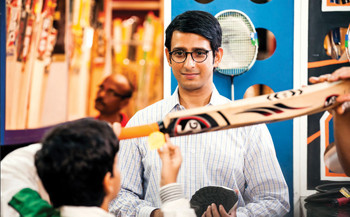
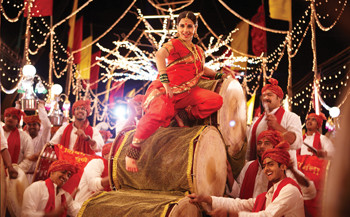
Rustam and Kayoze nurture cricket dreams; (right) Vidya Balan performs a Lavani dance
"The entire movie is a wonderful ride into your heart, into your mind, into your brain and soul,” remarked Irani pointing out that a film like this can be enjoyed by three generations. Admonishing his son for harboring unrealistic dreams, in the film Behram reminds him that there can be only 11 members on a national cricket team and cites his own example of having to content himself by sitting on a sofa in front of a TV screen, eating peanuts. "Teach him plumbing instead. There is a lot of leakage in the house,” Behram suggests alternative career options for his grandson, mowing down his progeny’s aspirations.
There is the overpowering, dominating grandfather in every family, comments Mapuskar, "The ceaseless nag who gets the best out of the person he loves. And stands by his family, no matter what.” Irani could effortlessly get under the skin of his hunchbacked character, depicting his quirks and temperament with a slurred speech and other attributed Parsi mannerisms.
"Nowadays there is a cosmopolitan influence on every community” so there are no clear-cut identity markers, explains the director. Hence, even though Rusy is shown as docile, ever-smiling, obliging and respectful, he is definitely not the prototype of a young Parsi father one encounters in real life. Further, the community’s love for two-wheelers seems to be transmuted from the scooter, as shown in the film, to the bike.
When the director showed the first schedule of his film to obtain feedback, his efforts were rewarded on being told, "You are so close to detailing the community; you have gone into the minutest detail.” Happy that he could show the community in a realistic light instead of the usual caricature, Mapuskar referred to his first impression of the community when as a child he assumed this "fair-looking group were Gujarati-speaking foreigners.” Images of their "impeccably neat and clean homes” have remained with him as also of their "white slippers with blue straps.” On returning to his hometown, Shrivardhan, he would ensure that his slippers were as "chaka chak (spotlessly clean),” he relates.
Seeing Joshi sporting a sudreh-kusti did not lead to a furore from over vigilant community members this time as they had in the past. The viewer’s attention is directed to his eagerness and helplessness to promote his son’s talent. Determined to be associated with this
film produced by Vinod Chopra Films (the makers of super hits like Munna Bhai and 3 idiots), Joshi had auditioned over 30 times for this role, he told the Mumbai Mirror of May 25. Since Mapuskar thought Joshi looked too young to depict a father, for this role he had to put on 10 kg, thicken his eyebrows, pop out his ears and sharpen his nose cosmetically. His first lesson in driving a Ferrari was thanks to actor Sanjay Dutt who trusted him with his precious car.
"The most difficult part” in the shooting schedule was ensuring that the Ferrari used in the film did not get a single scratch, confessed Mapuskar. In fact he was as particular as any Parsi would have been! Projecting Parsi nuances was easy although capturing emotions like internal conflict is always tough as "more than the dialogs it is the pauses between” that need adequate preparation with the unit members providing the necessary ambience by playing soft music and talking in undertones "to create the energy required in the scene.”
Sahore was selected for his resemblance to Tendulkar after the casting team spotted him in a mall. They had earlier tried scouting for talent by making their rounds of different Parsi schools in Bombay. He comes across brilliantly as the loving and obedient son, a dream child for the dream project. As conveyed Mapuskar, "It was never my dream to make a film but after I’ve made it, I feel I’ve fulfilled my dream.”
◆ ◆ ◆
From the archive