
Business
Forging full steam ahead
Three generations of the Engineer family work hard to see Industrial Boilers Limited expand and prosper
Ladies are not technically sound,” claims Homai Engineer. "When I went to the Hanover Fair in the ’70s and early ’80s, they would ignore us… Then I asked some questions and they were welcoming, realizing that I knew something.”
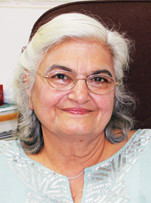
The 71-year-old chairman and managing director of Industrial Boilers Limited (IBL) built up a leading manufacturing enterprise in Vapi, Gujarat and Delhi. The company manufactures steam boilers and turbines; biomass and fluidized bed combustion (FBC) boilers; bagasse and agrowaste boilers; autoclaves and vulcanizers; bag filler and solar thermal power and cogeneration plants. It has also added pollution control equipment, thereby offering green solutions. The iron lady proudly talks of a waste heat recovery boiler, termed Tracksma, to remain current and up-to-date. The Delhi manufacturing unit specializes in turbines. Business is thus divided into boilers in Vapi and turbines in Delhi.
Engineer applauds the industrial climate of Gujarat. She attributes rapid growth to "the safe, trouble-free labor climate” in that state. She also reveals that government officers are "very reasonable and encourage industrialists.” IBL, Delhi does not find the industrial climate as favorable but it contributes heavily towards their manufacturing and exports, with more than 50 percent of the market share from the capital.
Currently their Indian customers are from the agro, brewery, dairy, paper, sugar and textiles industries. Of these about 500 are regulars though the total list of customers is around 2,000. Twelve Indian branches cater to these, operating from the geographical regions of Andhra Pradesh, Maharashtra, Punjab, Rajasthan, Tamil Nadu, Uttar Pradesh, West Bengal and of course Gujarat and Delhi. Some of the Indian clients are Clariant, Coca Cola, Essar, Garden Vareli, Gowardhan, Mapro, Mother Dairy, National Dairy Development Board, Anand (known for its popular brand Amul), Parlé Agro and Zandu among several others.
They also supply boilers to Kuiburi fruit canning in Thailand and Visdamax (M) Sdn, Bhd, Malaysia. Both the Indian manufacturing units account for 40 percent exports of turnover. Their products are dispatched to Europe — Rumania, Russia and Poland — where IBL carries the mandatory Chartered Engineers stamp. Their exports are diversified also to Asia in Singapore, Vietnam, Dubai, Bangladesh, Nepal, Thailand, Malaysia and Sri Lanka. In Africa they furnish boilers to units in Tanzania, Kenya, Nigeria and even Uganda.
The nature of IBL’s business limits export to developed countries. Industrial boilers are used to supply steam and power, though the USA is also an importer. IBL has a tie-up with an incinerator manufacturing company where they trap hot gases that are emitted and then use them for wastage power. Over and above this, they have electrostatic precipitators (ESP) where ash in the air is collected for power consumption. IBL developed technology from Bharat Heavy Electricals Limited and drew upon it. They still retain their first customer, the Shah Group of Companies, in the paper industry based in Vapi. Aggarwal Paper Mills feature among the old loyalists. Their staff too has been with them for years. Vice president in charge of production co-ordination, Adil Bhagvagar, who has been with IBL for 17 years, says orders are in hand till 2013 and there is an average waiting time of six months for boilers of 30 tons and more. Bhagvagar reveals IBL manufactures approximately 220 units per annum.
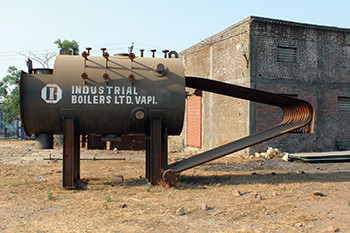
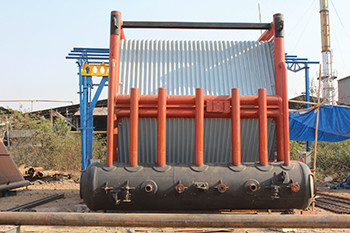
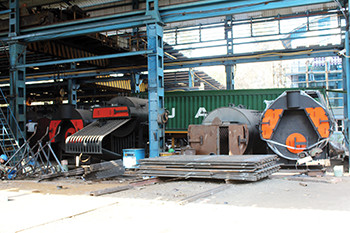
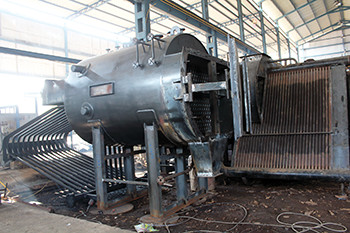
Above: Homai Engineer (Clockwise, from top l): Agropack-H Boiler; Magnum Boiler; Agropack Boiler and Petropack Boiler
"The Iron Lady”
In the early 1960s Engineer pioneered manufacturing of FBC boilers in Vapi, then an unheard of town. She talks of a time "when their factory was the only factory and there was forested land all around” -- a far cry from the 1,400 industries today, most of which are small scale ones. The pioneer gives evidence of being in charge with her peers or clients who refer to IBL as "madam ka boiler” (madam’s boiler).
Challenge it is that drives Engineer, professionally and personally. As a young woman in 1959, she accompanied her father-in-law Navroji, a competent technocrat in repairing boilers, on his visits to various customers. "Boiler inspectors thought they were too big. They made us feel very small and were rude because they saw us as repairers. They treated us like nothing. There seemed to be prestige for manufacturers — Thermax and Nestler were treated differently,” she recalls. It was then that young Homai nudged her father-in-law into the manufacturing stream and IBL was born. Navroji maintained the first boiler for other manufacturers. As a technocrat, he had no interest in manufacturing. Homai persuaded him to erect small capacity boilers of four tons. Navroji’s father, Bomanshaw, had been in the business of boiler repairs in Hubli in the late 1800s. Sensing a business opportunity, Navroji manufactured diesel generators as there was no welding technology available. With this skill, he was asked to erect and commission imported boilers. The small capacity boilers were soon replaced with larger ones, till they now produce up to 300 tons capacity.
In the year 1975, when the world oil crisis forced innovative use of substitutes, rice husk, coal, bagasse and other alternate fuels were thought of. IBL continues to use all these to date and also washery rejects and other agricultural wastes for their FBC boilers. "When evenly distributed air or gas is passed upward through a finely divided bed of solid particles, the particles remain undisturbed at low velocity. As air velocity is gradually increased, a stage is reached when the individual particles are suspended in the air stream — the bed is called ‘fluidized,’” the website explains... "Fluidization depends on particle size and air velocity.”
The businesswoman recounts her traveling travails to reach the state capital of Ahmedabad, in the days when she had to obtain various licenses for setting up IBL. For this, Engineer boarded a Gujarat State Road Transport (GSRT) bus from the highway at Vapi to get to Balsar station to catch a train at 3 a.m. to Ahmedabad, reaching the state capital at around 10 a.m. On her return journey the same day, she entrained at Ahmedabad around 6.30 p.m. reaching Balsar station at 12.30 a.m., boarding another GSRT bus, traipsing her way back on foot from the highway to her forested home in Vapi in the wee hours of the following morning. Step by step, Engineer built IBL before the Gujarat Industrial Development Corporation (GIDC) was envisaged at Vapi in 1967. In the early days IBL had an office but no manufacturing facility at Vapi.
She, however, believes that "everyone cannot manufacture as it entails skilled technology.” In fact, Engineer is reluctant to recommend the business to either ladies or to Zoroastrians in general. She knows it is an uphill task and is aware of the huge degree of commitment and capital required.
In the early 1960s Engineer pioneered manufacturing of FBC boilers in Vapi, then an unheard of town. She talks of a time "when their factory was the only factory and there was forested land all around” -- a far cry from the 1,400 industries today, most of which are small scale ones. The pioneer gives evidence of being in charge with her peers or clients who refer to IBL as "madam ka boiler” (madam’s boiler).
Challenge it is that drives Engineer, professionally and personally. As a young woman in 1959, she accompanied her father-in-law Navroji, a competent technocrat in repairing boilers, on his visits to various customers. "Boiler inspectors thought they were too big. They made us feel very small and were rude because they saw us as repairers. They treated us like nothing. There seemed to be prestige for manufacturers — Thermax and Nestler were treated differently,” she recalls. It was then that young Homai nudged her father-in-law into the manufacturing stream and IBL was born. Navroji maintained the first boiler for other manufacturers. As a technocrat, he had no interest in manufacturing. Homai persuaded him to erect small capacity boilers of four tons. Navroji’s father, Bomanshaw, had been in the business of boiler repairs in Hubli in the late 1800s. Sensing a business opportunity, Navroji manufactured diesel generators as there was no welding technology available. With this skill, he was asked to erect and commission imported boilers. The small capacity boilers were soon replaced with larger ones, till they now produce up to 300 tons capacity.
In the year 1975, when the world oil crisis forced innovative use of substitutes, rice husk, coal, bagasse and other alternate fuels were thought of. IBL continues to use all these to date and also washery rejects and other agricultural wastes for their FBC boilers. "When evenly distributed air or gas is passed upward through a finely divided bed of solid particles, the particles remain undisturbed at low velocity. As air velocity is gradually increased, a stage is reached when the individual particles are suspended in the air stream — the bed is called ‘fluidized,’” the website explains... "Fluidization depends on particle size and air velocity.”
The businesswoman recounts her traveling travails to reach the state capital of Ahmedabad, in the days when she had to obtain various licenses for setting up IBL. For this, Engineer boarded a Gujarat State Road Transport (GSRT) bus from the highway at Vapi to get to Balsar station to catch a train at 3 a.m. to Ahmedabad, reaching the state capital at around 10 a.m. On her return journey the same day, she entrained at Ahmedabad around 6.30 p.m. reaching Balsar station at 12.30 a.m., boarding another GSRT bus, traipsing her way back on foot from the highway to her forested home in Vapi in the wee hours of the following morning. Step by step, Engineer built IBL before the Gujarat Industrial Development Corporation (GIDC) was envisaged at Vapi in 1967. In the early days IBL had an office but no manufacturing facility at Vapi.
She, however, believes that "everyone cannot manufacture as it entails skilled technology.” In fact, Engineer is reluctant to recommend the business to either ladies or to Zoroastrians in general. She knows it is an uphill task and is aware of the huge degree of commitment and capital required.
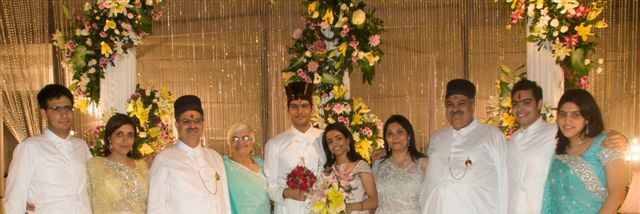
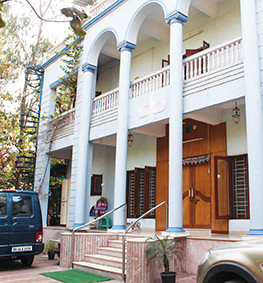
Above, l to r: The Engineer family -- Yohan, Kaenaz, Cyrus, Homai, groom Zaraan, bride Navaaz, Dilnavaz, Rohinton, Mehernosh and Rukshin. Below: The Engineer residence in Vapi
All in the family
With her in the business, are her two sons Rohinton and Cyrus. Rohinton and his wife Dilnavaz are based in Vapi while Cyrus and wife Kaenaz look after the set-up in Delhi. Rohinton’s son Zaraan is also part of the business as is his newly wedded wife Navaaz. Two generations of daughters-in-law work with the mothers-in-law without friction or getting in each others’ way. Rohinton would have become a pilot if he had not joined the family business and it is no surprise that he sees "the sky is the limit where growth of the organization is concerned.” Cyrus says that he always wanted to be in this business, "it is in our blood… we grew up amongst boilers.” Rohinton’s proudest moment was "on commissioning our first steam turbine operating on solar thermal.”
With her in the business, are her two sons Rohinton and Cyrus. Rohinton and his wife Dilnavaz are based in Vapi while Cyrus and wife Kaenaz look after the set-up in Delhi. Rohinton’s son Zaraan is also part of the business as is his newly wedded wife Navaaz. Two generations of daughters-in-law work with the mothers-in-law without friction or getting in each others’ way. Rohinton would have become a pilot if he had not joined the family business and it is no surprise that he sees "the sky is the limit where growth of the organization is concerned.” Cyrus says that he always wanted to be in this business, "it is in our blood… we grew up amongst boilers.” Rohinton’s proudest moment was "on commissioning our first steam turbine operating on solar thermal.”
The go-getter entrepreneur, Homai knows how to handle a team. "I was always a tomboy.” The matriarch has courage and unshakable faith. She narrates how she outsmarted a laborer who harassed her for three nights because she had dismissed him. She also recounts how her family got to learn about an impending strike and she had all the raw materials shifted to Ahmedabad overnight, nixing this attempt to paralyze the organization. She recalls hearing her parents worry "karaj kidhoon tau kèm karsé né kèm paisa lotarsé (How will she repay the loan she has taken)?” The lady with "an iron will” started their enterprise with an initial capital of Rs 40,000.
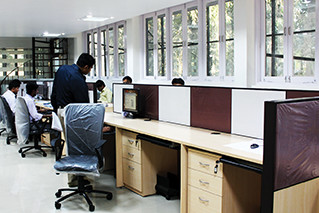
Design department at the Vapi factory (above).
Women have a special place in Engineer’s scheme of things. She has helped set up several small entrepreneurs in the vicinity. Always looking at the nuts and bolts of issues, Engineer "used to gather 30 - 40 ladies and invited the Khadi Bhandar staff of Ahmedabad to impart skills. Some of the women earn through this cottage industry training… One is a patravali who makes cones of patra (leaves) and supplies them to caterers and shops; another sells bakery items and nankhatai biscuits. One supplies snacks to industrial canteens and another lady has set up a tailoring outfit, stitching uniforms for GIDC staff.”
The owner’s attempt to extend welfare for her own staff came to naught when some laborers from North India created problems in the canteen where a full meal was supplied for Rs 10. There were continuous complaints and dissatisfaction and the management decided to withdraw this facility. Labor in the Vapi unit comprises mostly immigrants from the states of Uttar Pradesh, Uttarkhand and Bihar. In Delhi, they come from the vicinity.
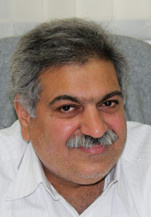
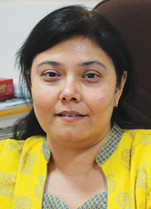


Clockwise from left: Rohinton, Dilnavaz, Navaaz and Zaraan Engineer
Competition does not bother Engineer. She has faith in her people skills, her product and her ability to convince. The family is orthodox and she does not welcome non-Zoroastrians into the family. She is a staunch supporter of dakhmenashini and visits Udvada every week, when in India. She selected her grandson’s life partner, to keep the family together. This makes her believe that the future is bright and the current turnover of Rs 80 crores will only go up. Her second son Cyrus is pleased that the new generation is already involved and young blood has started flowing in. He continues, "They (the new generation) will diversify business, create a new product line. All businesses go through cycles; IBL will do even better than the current generation.” After all, IBL is a trusted brand. It already has three generations working together to expand and prosper. As Homai says, and her sons corroborate, "I always get the order when there are two competitors. They trust and give IBL the order when they know we are Zoroastrians.”
◆ ◆ ◆
From the archive