
Books
Master mystic
A Wondrous Life: The True Story of the Master — Ustad Saheb Behramshah Nowroji Shroff by Ervad Marzban J. Hathiram. Published in 2011 by The Trustees of The Zoroastrian Radih Society, Vatsa House, Janmabhoomi Marg, Fort, Bombay 400001. Pp: 167. Price: Rs 75.
History has provided ample evidence to show that great souls have emerged on earth as and when the need arose to reestablish order/dharma/righteousness in times of chaos, confusion and degradation of values. Examples of these are to be found in the form of prophets, saints, sages, gurus and avatars. In essence they are one, and descend at a given time to show humankind the way back to the divine self within.
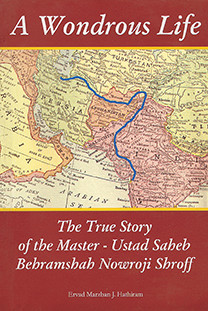
As one goes through A Wondrous Life: The True Story of the Master —Ustad Saheb Behramshah Nowroji Shroff, written by Ervad Marzban J. Hathiram, the story of the master ustad Behramshah Shroff (1858-1927), a custodian and reviver of an ancient faith, comes as a revelation, and offers hope to younger Parsis and the world at large.
The author states that the book is a result of requests made by younger English speaking Parsis to know and become more aware of the sage/messiah during his sojourn on earth during which he emerged from the sacred Mount Damavand in Iran. The main source of the material, which forms the narrative of the book, is based on a series of articles (in Gujarati) written in the Avaz (a weekly by the late Jehangirji S. Chiniwalla) who was the editor, and according to the author, one of the most devoted disciples of Shroff.
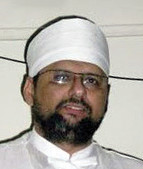
Ervad Marz-ban Hathiram: sincere effort
The book is an honest attempt to depict the life of the ustad. The first chapter which provides the historical background is suitably brief yet informative, given the time span covered by it. Of particular value and interest to those who can suspend their rational minds and believe that realms beyond the visible do exist, is the chapter on the Atash Behram of Damavand. It seeks to convey, if only briefly, how the cosmos works and which sacred energies are in place to accomplish its workings. The chapter on the Fasli calendar makes for informative reading as does the one on the Radih Society.
Shroff came from humble beginnings in Surat, where he was born and lived for the first 17 years of his life. He was chosen to undergo purification, training and initiation into the mystic mantras, practices and functioning of the universe, and was drawn to Mount Damavand by his powerful destiny. There he received all that was required for the accomplishment of his mission, which was to restore and revitalize a dying and corrupted faith when he returned to the so-called real world.Shroff also is said to have given the Zoroastrian faith a mystic revelation which he called the Khshnoom — the sacred esoteric aspect of the religion which has been long forgotten and vastly corrupted.
Hathiram has tried his best to pack in as much information as possible into the book which serves as a primer or introduction to the highly evolved soul that Shroff was. It is a praiseworthy effort. What Hathiram sometimes lacks in coherence, he makes up by the sincerity of his effort. The only drawback (if it can be called that) that the book suffers from is that it presumes a certain level of understanding and openness of both mind and heart in the reader. For those who believe, no rational explanation is necessary. For those who do not, none is ever possible. To some it may read like a work of fiction, but as the cliché goes, truth is often stranger than fiction! Being inspired by Shroff, the book will speak to a growing audience as time goes by.
TUSHNA KOTVAL
◆ ◆ ◆
From the archive