
Books
A glass of Gathas
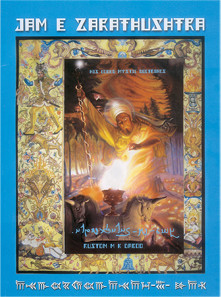
Jam-e-Zarathushtra by Rustom M. K. Daboo. Published in 2007 by the Hilla and Minocher Daboo Charity Trust, A-203, Arihant Towers, Lalbaug, Vadodara 390011. Pp: 90. Price: Rs 200 (postage extra).
The noted Parsi scholar Dr Irach J. S. Taraporewala once observed that "the interpretation of the Gathas needed to read the things of the flesh (matter) with the eyes of the Spirit.” In Jam-e-Zarathushtra, Rustom M. K. Daboo (grandson of the celebrated High Priest and scholar Dastur Khurshedji Shapurji Daboo) attempts to put before the layman the basic essence of the teachings of Prophet Zarathushtra, the gist of the religion, and the universality of truths taught by him. Daboo, who has based his offering on The Gathas of Zarathustra by Taraporewala, has no pretensions to being a scholar or an authority on the subject. He acknowledges his debt to Taraporewala and makes it clear that the book has been inspired by the work of that great scholar.
The title of the book is also significant: Jam means ‘glass’, and the author would have us believe that he has given us the very essence of the Gathas as he understands them. Lord Krishna once told Arjun: "All you need is a glass of water to quench your thirst, for it would be foolhardy to try and drink the whole flowing river!” With the same analogy in mind, Daboo tells us in the Foreword that even a glass of divine wisdom from the Gathas, which are like an ocean of wisdom, is sufficient to quench our thirst for spiritual attainment.
Daboo has divided the book into seven chapters in which he attempts to present the extracts pertaining to some selected universal concepts from the Gathas as he understands them. The first chapter forms the background for the theme of the book. The second deals with faith in Ahura and how faith is the basic requirement of every religion. In the third he discusses meditation and also gives some practical guidance. The fourth touches upon humata, hukhata, huvarashta, the pillars of Zoroastrian virtue, and the fifth on ways to achieve a state of bliss and happiness. The sixth deals with the significance of Maanthra Spenta and Staota Yasna, the fundamentals of Zoroaster’s mystic doctrines and divine sound. In the final chapter the author rounds up the discussion by touching on the omnipotence of Ahura Mazda and an explanation about the duality, Spenta Mainyu and Anghra Mainyu.
In his exposition Daboo also takes recourse to quotes and extracts from other religions, thinkers and philosophers. He quotes from the Vedas, mystic Sufi teachings and also tries to incorporate the teachings of other realized masters in his work. Such syncretism would have been difficult even for a scholar to manage, and therefore the end product must be judged in the light of this limitation. However, the attempt is a creditable one. Daboo makes up for his lack of scholarly attainments by the undoubted enthusiasm which he displays for his subject. His very genuine desire to impart whatever he has gleaned to the younger generation of Parsis who, he hopes, will carry the legacy of Prophet Zoroaster into the future is also apparent. Daboo’s love for the faith into which he was born is also evident in the series of superb paintings on religious themes rendered by him and published in the book. One of them adorns the cover.
The book needed better editing and the constant use of bold type is a bit jarring. But this is a mere quibble, considering Daboo’s aim in writing this book — to make the Parsis more aware and receptive to the teachings of the Prophet, and to touch a chord in the faithful. Undeniably, Daboo is one of the faithful, and his labor of love deserves our praise.
BAKHTIAR K. DADABHOY
◆ ◆ ◆
From the archive