
Books
Mindful of the Master
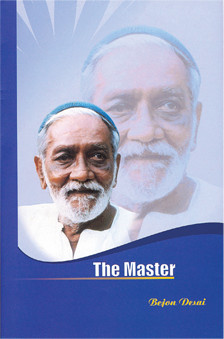
The Master by Bejon Desai. Fourth edition published in 2008 by Navaz Publications, De Sai, III-Shivagiri Desouza Colony, HPT College Road, Nashik 422005. Pp: xx+132. Price: Rs 150.
"A true Master guides his disciples to become ‘learners’ of mature, yet child-like attitudes. They are taught to become ‘seekers’ of totality by functioning from a base of healthy ignorance and absolute trust. Even more than the ‘intellectual’ aspect, what works incessantly in a disciple is the ‘emotional’ aspect… When the mind roams only on the intellectual plane, it remains dormant,” writes Bejon Desai in the fourth edition of The Master, his tribute to Kamu Baba whose abode in Goregaon has served as a sanctuary for legions of Zoroastrians. Desai himself had been first introduced to the Master by the late eminent solicitor and former trustee of the Bombay Parsi Punchayet, Shiavax Vakil, as he acknowledges in his epilog.
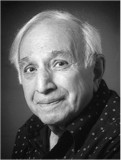
Bejon Desai: spiritual insights
In one of the chapters titled "Parsi Pateti” Desai recalls one New Year’s eve when many Parsis had assembled at the cottage to greet the Master. Elaborating on its significance the Master told the congregation, "It is a day of introspection and of coming back to light from darkness, to truth from falsehood and to immortality from death.” Advising them to spend a large part of their time in prayer, he urged them to recite in a row "at least the short prayers Ashem Vohu, Yatha Ahu Vairyo and Yenghe Hatam if… the longer prayers…are sadly forgotten. Furthermore, those who do not don the sudreh and kusti should start wearing them without fail from this very day! …Please visit your fire temple daily, insist on speaking the truth, come what may, and thus follow the path of neki (purity) as shown by your prophet…” Every Zoroastrian should remember to recite 14 Kemna Mazdas when under the pressure of misery, difficulty, fright or depression, he recommended.
In another chapter "In praise of prayer,” Desai quotes the Master to explain, "Prayer is like an umbrella. By opening an umbrella and holding it over your head, you do not stop rain or heat from descending but you surely protect yourself from their direct blast! Prayer therefore is a shield to protect you.” He further elaborates that although the Lord knows our needs and necessities before they are placed before him in the form of prayers, and although the joys and sufferings that come to a person are predetermined, with prayer the load of suffering could be better distributed so that the burden can be endured stoically.
On another occasion when a Parsi lady from Indore came to the Master in the hope of securing a taveez (amulet) or dora-dhaga (sacred string) to ward off evil, Kamu Baba convinced her, "The only amulet that you should utilize is the one that is already attached to your sudreh. It is the little pocket called gireban sewn into the front of your sudreh into which you must deposit your good thoughts, words and deeds… The threshold of your fire temple is specially designed by your pious preceptors for placing your head on it to repent and turn back from your misdeeds…”
Desai candidly recalls an instance in 1947 when the Master expressed his disappointment: Every Wednesday Desai used to deliver lectures at the K. R. Cama Oriental Institute on the Zoroastrian Yashts. On Thursday evenings he would visit the Master. On a particular Thursday Desai was admonished by the Master for his "heretical tendency to interpret the scriptures according to his own whim and fancy!” Apparently the previous day Desai had told his audience that the Tir Yasht is "only a rhetorical drama that merely tells the story of a fight between Tir Yazad and the demon Apaosha.” Just as the Master seemed to know the contents of Desai’s speech, he was also aware that the faith of two old ladies in the audience had been shattered by this comment. He thus told Desai, "You should first enhance your own faith in your scriptures, and not allow your academic philological jargon to suppress the shining faith of your listeners! On the contrary you should make use of your scholarship to enhance the faith of others!”
"Whatever I could understand and acquire from his shining words and righteous conduct is humbly placed before spiritual aspirants in this book of recollections,” states Desai, the erstwhile popular principal of the Boy’s Town Public School in Nashik, in the preface to his fourth edition published in his "twilight days…to offer my salutations to those who helped me…in so many ways.” There are many typographical errors in the book. But in a work of this nature, more important than the words is the underlying message. The forewords to the first, second and third editions were penned by Dada J. P. Vaswani, Vimalatai Thakar and Tatya Saheb Shirwadkar respectively. All these three are carried in the fourth edition plus the one specially written for this edition by Wamanrao Pai who states, "This book facilitates the process of one’s growing into a new being and also attempts to give the readers spiritual insights by means of anecdotes, proverbs, incidents and excerpts of teachings.”
Parinaz M. Gandhi
◆ ◆ ◆
From the archive