
Politics and Policy
“More beneficiary friendly”
Newly elected Bombay Parsi Punchayet trustee Muncherji Cama elaborates on his plans for the august trust
"I am sitting in Noshir’s chair,” said newly elected Bombay Parsi Punchayet (BPP) trustee Muncherji Cama with a smile and a twinkle in his eyes referring to the seat vacated by former BPP trustee Noshir Dadrawala. Dadrawala resigned in March this year and Cama filled his vacancy following a long, hard and even violent election. The trustees have "fixed chairs,” says the 54-year-old chairman and managing director of The Bombay Samachar adding that he is happy with the location as it is next to the BPP staff. "I can get information from the staff” more easily, he notes.
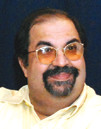
Victorious BPP trustee Muncherji Cama
"Everything I have asked for has been given. The first meeting was very nice,” he observes pointing out however that BPP trustees Jimmy Mistry attended the 5 p.m. meet at 6.29 p.m. and Yazdi Desai at 6.33 p.m. Cama intends to keep an eye on the timings as he is a stickler for punctuality. In the past when trustees were late for the BPP meetings, some of the items on the lengthy agenda were again elaborated on for the benefit of the latecomers and decisions retaken or reconfirmed. "No such things happened at my (first) meeting. I would not allow it,” Cama says emphatically.
Over a two-hour interview on July 12 at the K. R. Cama Oriental Institute (KRCOI) of which he is the president, Cama spoke of the need to make the BPP "more beneficiary friendly.” He plans to "go at least once in a year to each BPP property to meet the occupants.” He also plans on "nocturnal trips to the baugs” to ascertain "which flats are perpetually in darkness and draw an inference” as to whether the flats are in use or kept locked.
"I would like to see an agiary in every Parsi baug,” he opines. Stand alone fire temples are facing declining patronage. During the Kadmi muktad prayers at the Banaji Atash Behram this year he observed "there was hardly anyone there.” He would also like religious literature with translation, commentary and analysis to be easily accessible. He believes that religion is a "mystery” to the young and that unless the prayers are translated and explained the level of religious knowledge would remain marginal. Talks on the faith should also be held but "unfortunately there are so few people who are willing to teach;” and probably few students willing to attend the lectures. "The mobeds only make you memorize the prayers,” he observes. There is no explanation proffered. As for the tall claims made about the powers of prayers and ceremonies, Cama is categorical no ritual can be accepted unless it meets with scientific scrutiny. Only then "can children be taught to believe and have faith.”
He would like to see crèches run by elderly Parsi matrons in all the baugs to look after children when parents go to work. "The baugs must be having additional FSI (floor space index)” available to construct the crèches. "How much space do you need for a crèche?” he queries.
In order to make the workings of the BPP better known to the public Cama advocates three channels of communication. One is holding the annual samast anjuman meeting (SAM) where the trustees give an account of their activities during the past year. "In 2008 the candidates screamed from the roof tops that they would hold SAMs annually,” he recalls. After the first such meet in Dadar in 2009, the get-togethers stopped. "I shall actively put forward the suggestion we resume them,” he states.
Secondly, The BPP Review could inform the community on the major decisions taken by the board. And thirdly the BPP website could convey data such as the names of people on the waiting list for flats, the list of those allotted housing and reasons for bypassing those who did not receive flats. But Cama feels many of the Bombay Parsis may not be web savvy and therefore the website may have limited reach.
He would like to hold meetings at various baugs to help alleviate their problems. "Complaints made to the custodian are not always redressed,” he observed. He also feels that the activities in the baugs are "youth oriented” and that the needs of senior citizens "ignored… The elderly are treated with derision.” He notes at the Zoroastrian Trust Funds of India (ZTFI), of which he is a trustee, sing-along programs, movies and outings are very popular. He would also like to involve non-baug Parsis in recreational activities. "I would like on the whole to make life more comfortable,” for Parsis, to lessen the "day-to-day glitches.” A trustee of the Garib Zarthostiona Rehe-than Fund (GZRF) that manages the Marzban Colony and other properties, he recommends three or four people on payment could be assigned to assist the elderly with gas connections, payment of telephone bills and other routine chores. Such assistance would help the elderly to cope with the complexities of urban life. He would also like to see cooperative, fair price stores in every baug.
"The only colony where I saw little children in abundance” was at the BPP’s Nirlon Colony in Goregaon. But he found the physical state of the baug "shocking” and in "disgraceful condition.” The approach road is non existent, the grounds are covered with debris, there is no lighting and one has to wade through water to get to the Baug. His driver was upset at having to ply his new car over such terrain.
"Doubting Thomas”
When asked on the role of the BPP and the trustees in the community, Cama states that he is "still in a finding out curve.” He has asked for the various trust deeds which he now reserves for his "midnight reading…the area of operation flows from your deed. The trust deed states what the trustees are empowered to do and not to do…I am a Doubting Thomas. I want to see and know everything for myself.”
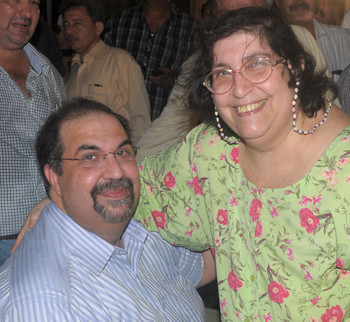
With sister Dr Villy Cama
Photo: Sarosh Daruwalla
On the contentious subject of tenancy versus leave and license status for the BPP properties, Cama says he will study the trust deeds which although may favor the occupant would not necessarily make him a deemed tenant. For example the GZRF states in its trust deed "not to give the flats on rent.” Compensation for allowing persons to stay is permitted. But as the law states otherwise, some payment is taken from each occupant to provide them tenancy status.
Cama believes "it is wrong to force a licensee status on to someone who is entitled to succeed to a tenancy” as is being done for some BPP flats. But for "new occupants I am all in favor of leave and license.” The leave and license agreement has to be renewed periodically, he observes otherwise a licensee may become a deemed tenant. He believes that with the leave and license status it is easier for the trust to evict licensees who are in violation of the trust deed or rules or laws.
As regards the status of interfaith married couples in Parsi trust housing, Cama states, "It is a difficult question to answer. You deal with each case on merit but the same rules would be applicable to all.” With the number of interfaith marriages increasing (the percentage hovers between 30 and 33 per annum) Cama states the issue is "something all Parsi trusts will have to address soon.” He cites the example of a Parsi lady married to a south Indian who upon the death of her husband moved in with her sister who resided in trust housing. The neighbor objected saying, "Saali Madraasi chhè (she is a damned south Indian).” Even when told that the lady continued to be a Parsi and was entitled to stay in the flat, the neighbor remarked, "Mané soog lagéch (I find it repulsive).” He told her she had to live with it.
"I believe in tolerance,” says Cama while at the same time not permitting any "violation of the law or the trust deed.” Regarding the Karachi Parsi Anjuman Trust Fund (KPATF) passing a resolution according the children of Parsi women married to non-Parsis equal footing with the offspring of Parsi men married to non-Parsis, Cama said he "would like to study the trust deed to see if it specified any religious role for the trustees. Otherwise the KPATF has no business to dabble in an issue like this. The trusts deal with property, not ethnicity or religion.”
Asked for his response should a Parsi woman married to a non-Parsi initiate a case against the BPP seeking rights for her children to enter a fire temple or be consigned to a dakhma, Cama said "as a trustee of the BPP, I would remain neutral. The BPP has no role to play” in the matter. Privately, of course, he could follow whatever course he chose.
When asked whether the Saklat versus Bella Privy Council decision which authorizes trustees to admit non-Parsi Zoroastrians into a fire temple if they so wished, would be applicable to the BPP, Cama replies, "I do not know what the BPP trust deeds say.”
But on the issue of the BPP demanding an affidavit from the family of a Parsi woman married to a non-Parsi (who wished her body to be consigned to the towers of silence) stating she continued to follow the Zoroastrian religion until her death, Cama termed the requirement "the most absurd thing going. Why not for men also” who marry non-Parsis? he queries. On the issue of the ban on the two renegade priests, Cama says, "I have not gone into this at all. But as a custodian/owner of property would you not have the right to deny entry” to a person?
In the controversy over Ervad Jal Balsara who oversees the priestly functions at Doongerwadi who once stomped out of a bungli midway through a funerary ceremony because his fellow priest faltered in reciting the prayers, Cama says he would have "stopped” Balsara "then and there” from reentering the premises. "Imagine the trauma of the (bereaved) family,” he remarks.
But Cama firmly believes the BPP "should keep its nose out of religion which is entirely the preserve of the high priests. The trustees’ duties are to merely maintain and keep available the religious institutions to the public for the purposes they were intended.”
Regarding the use of Colaba’s Jeejeebhoy Dadabhoy Agiary grounds being used for interfaith marriage receptions, Cama once again states, "It is a question of the trust deed. At least one party is a Zoroastrian. You’re not giving the grounds to a Mr Patel or Mr Shah.” He refers to the dinner maestro Zubin Mehta held there for his visiting orchestra and asks, "What is wrong with that?”
As for Parsi-only schools becoming cosmopolitan, Cama states the change was "out of necessity to survive. Schools like Jeejeebhoy Dadabhoy that did not, closed down.” He justifies the use of the cy près doctrine wherein trustees approach a court and state the settlor’s wishes cannot be carried out and so seek permission to amend/alter the conditions of the trust. The schools that admitted non-Parsi students did so because the objects of the trust could not be met due to the low number of Parsi students.
But in housing this is not the case. "There is a waiting list…the objects (of the trust) can be met.”
Cama is candid there is a decline in the Parsi population. "The demographic trends are laid down in the census…it’s a change — adapt to it. Don’t think you are going to stop it… Importing Zoroastrians,” however, is not an option, he opines.
But he concedes that "objective knowledge of Zoroastrianism is greater overseas. "At the KRCOI he notes "a lot more scholars from abroad are coming. Every month one or two are coming” to study the religion and the community. The KRCOI is a "secular institution…we are not out to promote any religion,” he notes though programs, seminars and talks pertaining to Zoroastrianism and its culture are held. Khurshedji Cama, the great oriental scholar, was Muncherji’s grandfather’s cousin.
A neophyte bridge player who reads English and French novels and learnt dancing at the J. J. Rodriguez school of dancing, Cama says he "likes languages.” He completed part I of his MA in Latin but not part II as there was no one competent to set the examination paper. He still regrets not completing the course. He has completed postgraduate diploma courses in Arabic and computer technology. He reads the classical novels not venturing beyond Thomas Hardy, the exception being The Pickwick Papers and popular writers such as P. G. Wodehouse, Agatha Christie and Earl Stanley Gardener. He participated in a book club with the late academicians such as Kamal Wood, Homai Shroff and Mehroo Jussawalla.
When Parsiana first asked for the interview, Cama replied that there was such a backlog of work that his table was even messier than the late Adi Marzban’s (there was so much clutter on Marzban’s table that no working space was left and how the thespian managed to locate any paper or object was a mystery). Cama had campaigned ceaselessly, delivering talks almost daily at the various colonies and spending entire days at the five polling stations. When asked whether he now felt rested, he asked incredulously, "What rest?”
At the election meets many came for the "freebies and food,” moaned Cama. He regretted the issues in 2008 and 2011 such as "religion in danger” were the "same sadly enough.” When asked to what he attributed his electoral success this time around as versus three years ago, Cama gives credit to his campaign managers, the erstwhile Adult Franchise for Progress (AFP) co-founder Kersi Randeria ably assisted by Yasmin Mistry and the Mehta brothers Viraf, Hormuz and Darayus. Also this time, "I was on my own. The electorate realized belatedly they needed a more tolerant candidate.” He felt the BPP was unnecessarily mired in conflict over non-issues. "Why get into the defrocking of priests. Learn to be more tolerant. We should be united to serve only one goal: the welfare of the beneficiary — that is the community.”
◆ ◆ ◆
From the archive