
History
Preserving the past
The UNESCO Parzor project is planning an ambitious exhibition on Parsi/Irani Zoroastrian heritage and culture at the Prince of Wales Museum in November 2010
A major exhibition and festival showcasing Parsi/Irani Zoroastrians to the public at large and the community in particular is scheduled for November 2010 at the Prince of Wales Museum (POWM) and other venues. Announcing the news on July 14, 2009 at the POWM board room to a small group of community and cultural activists, Dr Shernaz Cama stated the exhibition would mark the 10th anniversary of the UNESCO Parzor project and also coincide with the golden jubilee celebrations of the Delhi Parsi Anjuman’s Kai-khushru Pallonji Katrak Dar-e-Meher.
"If we have an exhibition in Bombay, we can then shift it to Delhi in early 2011,” stated a handout by the Parzor director. "Unfortunately, because of the Parsi demographic decline” and other cultural influences, "the contribution of the Parsis, which earlier generations acknowledged and respected, is being forgotten. We need to correct a notion of sickly, decayed people which today is propagated by even eminent social scientists in India.
"The Parsis carry an ancient culture which has contributed greatly to humanity: this must be put across in a very public yet sophisticated manner. We have now been given a possible platform at very eminent locations in both cities of India; we must make full use of this opportunity.”
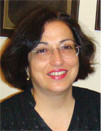
Dr Shernaz Cama: "we are carriers of a great tradition”
"We want to tell the world about our culture,” said Cama who added that noted scholar Dr Kapila Vatsyayan and renown puppeteer Dadi Pudumjee would be assisting with the venture. The exhibition will comprise sections devoted to pictorial depictions of the community, the religion, history, lifestyle, the performing arts, community contribution to various fields of endeavor, textiles… "We want to bring (Parsi/Irani artifacts) out of the storerooms into general focus,” emphasized Cama. "We want to cover the historic depth and the geographic spread” of the community. "We are a good example of a hybrid community… we are the carriers of a great tradition” having lived in Iran and India and being influenced by different cultures and colonization.
The exhibition will comprise "a series of events,” stated designer Neeraj Sahai. "We don’t want to limit it... We want interactive, simultaneous events for the youth: book readings, puppet shows, a food festival… One theme of the exhibition would be ‘roshan, roshni…light’ as this is a term common to both Parsis and non-Parsis. We want to show ‘the journey (of the Parsis) continues,’” he added. The exhibition must show "what we (India) stand to lose if the community dwindles.”
Conservation architect Pankaj Joshi noted there are "50 to 60 venues nearby to hold events.” The Kala Ghoda Festival avails of many of these facilities for their myriad programs.
Noting there will be a plethora of items to select from, author and social worker Saker Mistri said it would be a "difficult thing to pick out the most relevant material. What to exclude is one of the challenges.” The event requires "a strong and relevant message” with a "strong narrative,” she noted.
Referring to the Parsika exhibition held at the POWM in 1991 Homai Modi cautioned against displaying "too many artifacts and too much reading matter.” The mass of material "did not sink in” with the visitors, said Modi, honorary general secretary of the event.
Chemould Art Gallery director Shi-reen Gandhy suggested a curator could help with the culling. POWM director Sabyasachi Mukherjee said their services would be available to assist. Gandhy also observed the three art galleries owned by Parsis, Chemould, Pundole and Cymroza could also "do something contemporary” during the three months the exhibition would be on display.
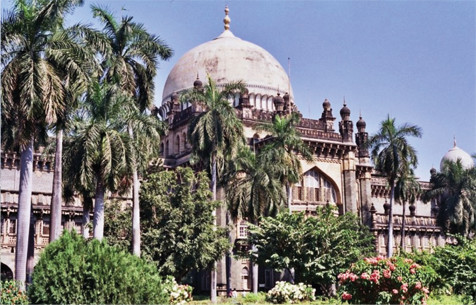
The recently restored facade of the Prince of Wales Museum
Author and Cymroza gallery owner Pheroza Godrej suggested a retrospective exhibition of the works of the late sculptors Piloo Pochkhanawalla and Adi Daviervala. She also suggested "a typical Parsi natak” should be performed. Cama replied that Yezdi Karanjia and his troupe from Surat would be performing a play.
Bombay Parsi Punchayet (BPP) trustee and property developer Jimmy Mistry referred to a 9,500 square foot exhibition hall he is setting up in the foyer of his new residential building Della Tower in the Mancherji Joshi Parsi Colony in Dadar. "It would be a walk through the ages,” he said referring to the glass reinforced concrete structures depicting the various Iranian dynasties. He termed the display under preparation as a "significant representation” of those times. The building will have fixed panels on the façade rising three storeys in height depicting historic Persian monarchs.
Author Firoza Punthakey Mistree endorsed Mistry’s suggestion to make his exhibit part of the event so that "the suburbs get coverage” as well. She also commented that Parsis are known largely in Bombay but not elsewhere in India. The exhibition should "reach out (to others) as much as possible,” she opined, a view supported by all the others present. POWM trustee Keti Mehta suggested parents should be encouraged to bring their children to the exhibition. Cama: "Let the schools come.” Mehta: Yes especially "non-Parsi schools.”
Cama said a walk through a simulated fire temple was also being considered. "We want to break the mystery” for non-Parsis as to what takes place in a fire temple. She wanted people to hear the sounds of the bells and other implements especially during the yasna ceremony. Parzor was in search of "implements from defunct fire temples” for the project. She termed the ceremony to be from pre-Zoroastrian times. A model of a dakhma would also be displayed. Firoza Mistree noted "several models are available with the BPP.” Cama also wanted to showcase conventional Zoroastrian medicine noting that the magi, ancient Persian priests, were healers.
Joshi suggested a map of Udvada be displayed as also pictures of the Bahrot Caves. Cama spoke of a portrait in leather of Sir Jamsetjee Jeejeebhoy at the Navsari Atash Behram. Katy Antia, managing trustee of the Meherji Rana Library in Navsari was present for the meeting and Cama said material from the Library would be used. Saker Mistri said focus should also be on the social history, kinship, artistic, religious and sports heritage.
Jimmy Mistry suggested robotics may be introduced to hold the interest of visitors. Mukherjee cautioned that it may be "too overpowering. We curators communicate through the exhibition.” The concept of some tactile element to the exhibit however won the support of Cama and Gandhy.
Godrej believed the exhibition would be the "right time to showcase the Alpaiwala Museum” which had been neglected by the BPP.
"I’m ashamed” of the condition of the Museum, admitted Jimmy Mistry. (The present board of trustees came into office in October last year — editors.)
"You should be,” retorted Mehta. She recalled an earlier time when one of the trusts she was associated with offered 15 lakh rupees to the BPP to refurbish the Museum. "Some trustee said, ‘What is 15 lakhs? We can manage.’”
Firoza Mistree lamented, "the BPP never poured in money” for the Museum. (The earlier trustees used to bemoan the fact that the Museum had few visitors, hence the neglect — editors.)
Cama: There is "a reawakening of interest in our heritage. Don’t throw away our heritage.” She felt the exhibition could also draw on the archives of business houses such as the Tatas, Godrejs and the Wadias. She asked what relevance the American national anthem had to the Parsis and mentioned that the ship HMS Minden on which the Star Spangled Banner was written was built by the Wadia ship builders. She felt these little nuggets of information could be made available to the public.
Cama also favored a sound and light show but that required funding. Mu-kherjee noted that some of the funding for the exhibition could come from the cultural ministry of the Government. He pointed out the (POWM) Museum could spare around 30,000 square feet for the exhibition. "We have a lot of space and the whole garden,” added Mehta.
The Museum looks after around 50,000 artifacts, observed Mukherjee. "We don’t mind taking care of another 10,000” for the exhibition. Of the collected items, "how many can you display?” he asked noting around 10 percent would be useable.
There are "many formalities” the Museum has to undergo when accepting antiquities as loans as the "Museum becomes the custodian.” He counseled the gathering to start work early on the project noting that the research should be completed by December 2009 so the process of collection and documentation of antiquities could begin. "It’s a lengthy process,” he cautioned.
The Museum has been undergoing major changes over the past two years, noted the director. A gallery has been added, electrical rearrangement is underway to make the Museum "cable free” (the wiring will be concealed), the garden is being restored. In addition a 200-seat auditorium and a Museum shop of around 1,400 square feet are being planned near the entrance so that even if events are held in the evening the Museum would not have to detain personnel to guard the exhibits. A cafeteria is also planned. "We are changing all the existing galleries,” he noted. Twelve educational CDs are being prepared. All the new projects are scheduled for completion within three years.
Farzan Mazda of Dahanu who was stuck in a train from Poona for six hours due to the heavy rains reached the meeting just when it was time to disburse. Cama noted that he had taken the plight of chikoo growers "up to the Prime Minister’s level” and asked him what was happening to the youth in the farm belt. "Everyone is migrating,” he replied. "Give us direction.” The planned exhibition will aim to do just that.
◆ ◆ ◆
From the archive