
Cover Story
Death by diva
The priests, laity and trustees have to conjointly guard against fire hazards in fire temples
A spark of divinity can ignite the most holy. But when it inflames not one, but three priests in three fire temples in three months there is cause for concern. Realizing that it is the conjoined responsibility of the mobeds, the behdins and the trustees to create a safer haven for those who are faithfully feeding the fires, in mid May Parsiana approached nearly 30 stalwarts of the community asking them for their views on the subject.
Whenever such an accident has occurred, invariably it is the long flowing jaamaa (robe) that first catches fire and engulfs the hapless priest whose life thereafter depends on the emergency aid available. While two of the priests in the recent past lost their lives following the fire ordeal, other survivors have been scarred for life or too traumatized to resume their priestly duties.
The attire of the priests when reciting the prayers for the deceased — afringan, farokhshi, satum — should be changed from the "labarto jaamaa (excessively long robe trailing the ground) to a modified dagli stretching to the knees,” recommended Dastur (Dr) Firoze Kotwal who felt directives in this matter should be given to the priests by the dasturs and the panthakies. Having worked at the Malesar Agiary in Navsari during his younger days he remembered this dress code being adopted there. Although there were 15-20 panthakis in the H. B. Wadia Atas Bahram when he was High Priest there, he mentions that the panthakis were "very cautious so there was never a misfortune in his presence.” He is happy too that at the spacious Wadia Atas Bahram there is a separate area reserved for divo-batti (oil lamps) which may not be possible in smaller agiaries. Even if fire extinguishers are installed "koiné vaapartaa nahi aavré tau soo kaamnu (if the onlookers do not know how to use them what is the sense)?” he enquires. According to Kotwal, "self precaution” is most important for self preservation.
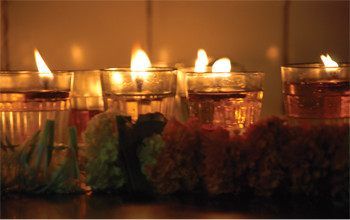
"Prayers can be offered through one divo or 10 diva”
Associated with the Kadmi Dadysett Agiary for many years and having observed the Irani priests there, Ervad Adi Gowadia who had contested the last Bombay Parsi Punchayet trusteeship elections too felt that the sahio (a longer version of the dagli worn by Kadmi priests) would be preferable to the flared jaamaa usually made of stiff mulmul. When Ervad Ramyar Govadia was scorched this year, holding a khumcho (platter) in his hand, he had not realized that his jaamo below had caught fire, reveals Adi Gowadia. He also referred to the asana in which priests recite their prayers. Since most priests sit cross legged in prayer, when getting up they tend to take the support of the ground rather than hold on to the jaamo, Adi Gowadia relates the practical difficulty. A better option, and a more comfortable one would be paatlaas (low stools) of six or nine-inch height for the priests to sit on during prayer. This would also ensure that the priests don’t skip through prayers when their legs are jammed in one position, he candidly admits.
Fortunately, Udvada has never seen a fire mishap in the sacred precincts, mentions Dastur Khurshed Dastoor, probably because they are "not cramped for space like the Bombay agiaries.” At the Iranshah Atash Behram in Udvada they ensure that when priests sit down at prayer, there is only one afarganiu (fire container) per shétranji (mat) as against the Bombay practice of several pairs of priests praying before two or more afarganias on a single mat. When devout behdins feel inclined to bring more diva and lay them around the afarganiu, it is the duty of the panthakies to restrict that practice among the laity. To the priests tending the fire, Dastoor advises that there is no need to keep piling on the small afarganiu the sticks of sukhad brought by the laity. When some senior priests pray whilst seated on a chair, often they do not realize how close their jaamaa is to the diva burning below. "It is the responsibility of each and every one to be more alert,” sums up Dastoor whilst emphasizing, "installing fire extinguishers at fire temples is necessary.”
In Nagpur, the Anjuman unanimously decided to install two fire extinguishers at their agiary with a subsequent demonstration on how to use it, reported the honorary secretary of the Nagpur Anjuman Shiraz Gimi. Recollecting how one of their young priests Ervad Kaizad Taraporewala had been scorched in the kebla (sanctum sanctorum) after offering a private maachi, Gimi could empathize with the trauma the youngster faced and the pain and anguish following innumerable plastic surgeries.
There are plans to install three fire extinguishers at the Vachaghandhy Agiary on Hughes Road, hopefully before the muktads in August, 2009, conveyed Ervad Aspandiar Dadachanji. Appreciating that the behdins want to light more diva around the afarganiu with "laagni (due to sentimental reasons),” instead of dissuading them because of the danger it poses, he would prefer to request them to place the diva in a separate khumcho kept on a side. He has also noticed that "bhinu sukhad naa chhatak-laa bau oodé né jaamo pakrilé (offering inferior, wet sandalwood can cause a lot of embers to fly onto the priest’s robes).” Such fire episodes have occurred in the past too, states Dadachanji referring to the priest who was fatally burnt at the Aslaji Agiary nearly four decades ago when praying the satum bhantar. He was rushed to the well in the agiary complex to douse the flames but succumbed to his injuries in three-four days. On another occasion in Navsari at the time of the paatliraatna (pre-dawn) prayers at a residence Eruchsha Karkaria who was set aflame, rolled on the shétranji and managed to save himself.
At the Patel Agiary in Mazagaon, around 10 years ago when a priest’s jaamo caught fire, Ervad Nariman Dalal had to use his bare hands to tear off the robes, he remembers. "Maaro haath daaji gayo pun chhokro bachi gayo (my hands got burnt but the boy was saved),” he related. He was also concerned about the new crop of "seekhav mobeds (trainee priests) bètha, bètha sukhad mookiyaa karé (unnecessarily pile sukhad on the afarganiu).” To prevent embers scorching the shétranji at the Patel Agiary they have aluminium foil or stainless steel sheets laid over the mats, he added. Since many Iranis feel inclined to bring in additional diva at the time of prayers Dalal insists that such diva be laid on a khumcha on a table or on a separate aanni (tripod stand). "Ek diva thi bhanai né das diva thi bhanai (prayers can be offered through one lamp or 10 lamps),” he noted.
Safety measures for fire temples
Parsiana specifically met the chief fire officer of Bombay P. D. Karguppikar to ascertain the fire safety rules applicable to religious shrines but we were told that under the Development Control Regulations, 1991, fire safety measures are mandatory only for buildings above 24 m in height. Under the Maharashtra Fire Prevention and Life Safety Measures Act, 2006 that we studied, we realized that fire temples would probably lie within the purview of "Assembly buildings” less than 10 m in height which see a congregation of up to 300 persons, for which a fire extinguisher, hose reel, automatic sprinkler system and manually operated electric fire alarm system are required to be installed. For buildings between 10 and 24 m in height, an additional automatic detection and alarm system needs to be installed too.
"Non-combustible flooring and wall linings” are ideal, said Karguppikar who further recommended that there should be "no oil painting of walls.” Wooden furniture too could be coated with one layer of fire retardant paint or where possible replaced with steel furniture. "Good ventilation is essential and therefore windows should be open-able,” he advised. When storing sandalwood and bawal wood, a layer of sand below would make the precincts safer.
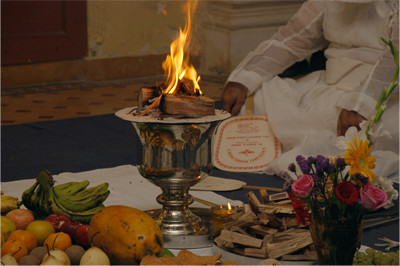
Mobeds should desist from piling sukhad on the afarganiu
Protecting the priests
To bring to light this sensitive issue and elicit responses from decision making authorities, Parsiana had stated in its letter: "The priests in our fire temples are in constant proximity with fires. This can sometimes result in tragic consequences especially when cinders from a flame or a divo on the ground sets a mobed’s garments ablaze. Unfortunately not much thought has been given on safety measures that the trustees and priests can initiate to better safeguard the well-being of our priests and all those who work in fire temples…On auspicious days our fire temples are crowded with worshipers. Diva are lit in various parts of the premises. The possibility of worshipers’ clothes being set aflame and people crushing one another in a stampede to evacuate the premises is real.
"We wondered if your fire temple/organization/trust has initiated any steps to safeguard the priests and others from the inherent dangers of the fires/diva. It is customary to state ‘the mobed should be on guard and alert to the dangers’ and end the matter there but there is much that can be done institutionally to prevent injury and/or loss of human life. Could we therefore request you to kindly share your thoughts on this subject with our readers?”
We received 14 responses in writing — from the anjumans that we approached as also a High Priest and some scholar-priests, trustees of fire temples and other concerned individuals. The edited responses are presented alphabetically, starting with the anjumans of — Bangalore (president Dinshaw Cawasji), Bombay (president Dinshaw Mehta), Delhi (honorary secretary Adil Nargolwala), Karachi (president Byram Avari) and Secunderabad and Hyderabad (honorary secretary J. D. Batliwalla), and proceeding to the individuals — Ervad Burjor Antia, Ervad Parvez Bajan, Cowasjee Dinshaw, Marzban Giara, Ervad (Dr) Ramiyar Karanjia, Ratan Lalkaka, Dastur (Dr) Peshotan Mirza, Ervad Nadir Modi and Parsiana subscriber Dr P. D. Sunavala who wrote in response to our appeal to readers to offer their viewpoints on this subject. Dastur (Dr) Kaikhusroo JamaspAsa being out of India we were not able to follow up with him and Dastur Meherji Meherjirana of Navsari declined to comment on the matter saying, "Tamaaraa Bombay na dasturo saathé vaat karo (speak to your Bombay High Priests).”
We appreciate the thought and efforts put in by our respondents and are hopeful the measures suggested by them will be implemented for the well-being of our priests.
Dinshaw Cawasji
President
The Bangalore Parsee Zoroastrian Anjuman
Your letter touched me and the trustees of The Bangalore Parsee Zoroastrian Anjuman. After having lost two noble souls under similar circumstances, the issue of safety in the agiary has been dwelt upon. When the late Dasturji Nadirshah P. Unvalla was praying in our agiary for a behdin his jaamo accidentally caught fire from the divo placed near the afargan. Unfortunately the jaamo being of extremely inflammable material went up in flames even though he was immediately attended to. Similarly, his brother, late Ervad Jamshed P. Unvalla also suffered a similar accident, but succumbed to the injuries while praying for his dear departed wife in our agiary. Once again his jaamo caught fire and the flames were put out when water was used to extinguish the flames.
This matter had been discussed by Nadirshah’s two sons Ervads Adil and Yezdi, and myself in the hospital while Nadirshah was recovering. Various options were discussed and alternatives suggested to him. However, being a very orthodox Dastur, none of the alternatives were acceptable to him. Nevertheless, the precaution of a fire extinguisher was implemented and kept near the place where our priests pray in the agiary. In recent weeks, the trustees and our community members have discussed various options and alternatives due to the fact that Ervad Jamshed succumbed to the burns while praying in the agiary. It is easy to pass judgment in hindsight but due to advanced age, both Dasturji Nadirshah and Ervad Jamshed were not able to react fast enough as a younger mobed could have. However, it goes to their credit that neither of them knew the meaning of the word "retirement” and both prayed and performed their priestly duties till the very last. In the recent past the trustees have also discussed various alternatives for the safety of our mobeds. We now have, in addition to the fire extinguisher, kept two handis (containers) of water adjacent to the prayer area for emergency use.
Various other methods have been pondered upon to alleviate this problem. We have also decided that during the next painting or renovation of our agiary, a sprinkler system would be installed which could be activated immediately if any such unfortunate mishap occurs. This system seems to be acceptable to mobeds also as there will be no electricity or electronics used for implementing this system thus adhering to the customs and precedents set in our religion. We have also started to use an afargan that is about 12 inches in diameter so that the sparks and burning sukhad pieces that normally fly out from the burning afargan do not fly out on the priest’s jaamo or the carpet used on the floor.
Various other issues were also explored such as whether the afargan can be placed at a higher level on a table about one-and-a-half to two feet above the ground and the mobeds use a chair to sit on while praying. The alternative would be to get a large granite base to put the afargan at a higher height which would be like the base of the main atash in most of our agiaries. Further, while due to the age factor, certain elderly priests who need to sit on chairs would be comfortable with this situation, priests who sit on the floor and pray would not be comfortable with this situation. Hence we are currently continuing to keep the afargan on the floor and priests who need chairs to sit on do so while praying bending over the afargan.
When you publish articles on safety of our mobeds in agiaries, if there is some response from our Vada Dasturjis, who endorse the system which is religiously acceptable, we would be most willing to implement such a system in our agiary. We also feel that fire retardant material, if used for the jaamo, would be an alternative to the thin material used at present. Further, we notice that the quality of wood has a bearing on the sparks and embers that fly out of the fire. We suggest that if some arrangement could be made whereby good quality of wood is supplied to all agiaries, it would help in mitigating further accidents.
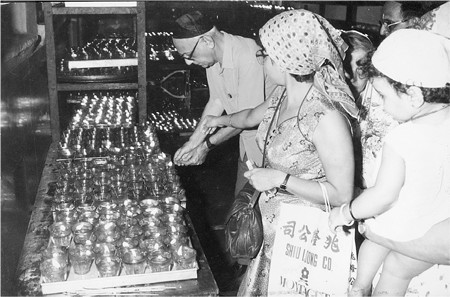
Devotees lighting diva: demarcated areas necessary
Dinshaw Mehta
Chairman
Bombay Parsi Punchayet
The board appreciated the points raised by you and your concern shown towards the mobeds who are susceptible to fire due to their closeness to afargans which have sandalwood burning while performing religious rituals and prayers.
Even the points raised by you regarding auspicious days on which the fire temples are crowded with worshipers and diva are lit at different places, which gives rise to apprehensions of worshipers’ clothes being set aflame and consequent stampede are very real, and necessary safety measures are required to be taken.
We have decided to install fire extinguishers in the first phase in our agiaries. Your points are well taken, but we have to inform you that most of the agiaries and atash behrams do not fall under the jurisdiction of the Bombay Parsi Punchayet. They are governed by the respective independent trusts and are, therefore, under the ambit of their own trustees.
Adil S. Nargolwala
Honorary Secretary
The Delhi Parsi Anjuman
The following could be done to avoid or handle mishaps with priests and other devotees praying at our fire temples.
Ensure that a fire extinguisher and a first aid box are kept in the agiary premises.
Priests and agiary attendants are given basic information on tackling an emergency situation.
Keep a list of important telephone numbers handy in case of a mishap (local doctor/ambulance, etc).
Have a proper exhaust system to avoid buildup of heat and smoke.
When agiaries are going in for extensive renovations fire retardant materials could be used… though in our context most agiaries are of stone or concrete and there are no combustible soft furnishings around.
Byram D. Avari
Chairman
Karachi Parsi Anjuman Trust Fund
We have hardly 1,700 Parsis now in Karachi and with two fire temples there is not much usage. Even on our religious holidays most people tend to go to work and people come in dribs and drabs in the fire temple.
So we have never had any incident of fire and in actual fact have not taken any precautions.
With the age of the priests increasing, most of the jashans and other ceremonies are conducted on a large square table, which makes the priest sit quite far away from the fire.
J. D. Batliwalla
Honorary Secretary
Parsi Zoroastrian Anjuman of Secunderabad and Hyderabad
The trustees of the anjuman and a few committee members had a meeting to discuss the subject in detail. The twin cities of Secunderabad and Hyderabad have three agiaries, of which two are situated diagonally opposite each other at Secunderabad and one agiary is situated at Hyderabad. The views given below pertain to the agiary at Secunderabad which is managed by the Parsi Zoroastrian Anjuman of Secunderabad and Hyderabad (PZASH).
The diva at the agiary are kept at a segregated place, on a metal stand which carries a metal tray. This practice has been in vogue for years, and worshipers are not permitted to keep diva at any other place.
A dry chemical fire extinguisher has been installed at the library verandah, which is in the proximity of the agiary verandah. The staff at the agiary are trained in the operation of the fire extinguishers.
A thick blanket has been kept at a handy location when liturgical ceremonies are performed by the mobed(s).
Wherever only one mobed is required to perform prayers in front of the fire, instructions have been given to the other mobeds/chasnidans to remain present in the vicinity to cater to an emergency situation arising from accidental fire.
We propose to carry out at the earliest the following additional measures for the safety of the mobed sahibs and worshipers:
A fully equipped first aid box will be provided outside the anjuman office.
Behind the agiary, there is a kusti room where we will be providing adequate fire fighting equipment along with a stand with four buckets, two for sand and two for water. In this regard we have consulted a Zoroastrian gentleman who is a trader in fire fighting equipment and is also knowledgeable on the subject of fire fighting.
Suitable notices are being put on the agiary and library notice boards giving the emergency telephone numbers of the fire station, police, ambulance, etc.
In the next newsletter due for publication on Parsi New Year in August 2009, we propose to give a write-up on this subject for creating awareness amongst the Zoroastrians of the twin cities.
Burjor H. Antia
Chairman, N. M. Wadia Charities that manages the Iranshah Atash Behram in Udvada
It is a matter of shame and regret that our community and more particularly our punchayets, anjumans and the trustees of fire temples have failed to look after the interest of our priestly class in all respects including safety from being burnt by fire.
It is my fervent view that as the Christian community takes care of their priests, our community should also take care of our priests along similar lines by providing them free housing, free education to their children and free medical treatment otherwise there will be no priests in the community after 50 years. In my opinion, all our full-time priests should also be fully insured by the trustees of the concerned fire temples, to safeguard them in case of any ailment or calamity.
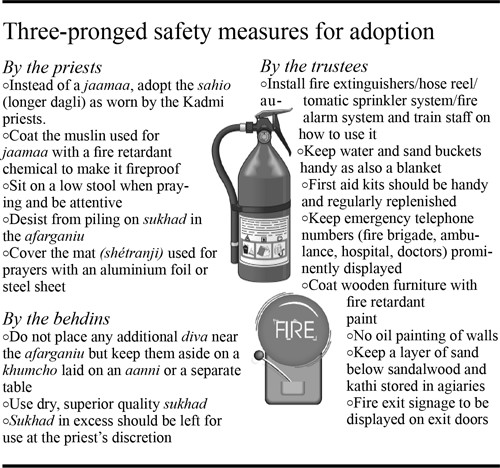
I agree with your suggestion that in every fire temple, fire extinguishers, smoke detectors and sprinkler systems should be installed. But as a matter of fact, very few fire temples have such equipment. In Bombay, there are more than 40 agiaries and four atash behrams. The problem of saving the priests from burning due to diva or sparks coming out from the afarganias, is applicable to very few fire temples of Bombay and therefore the trustees of those fire temples should take proper precaution by installing fire extinguishers, smoke detectors and sprinkler systems.
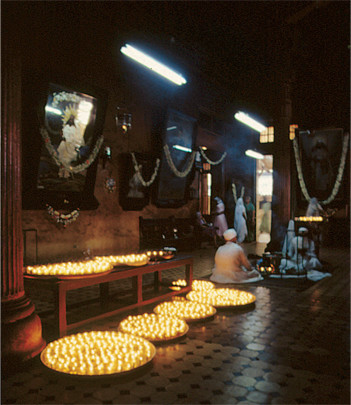
On auspicious days a large number of diva are lit. In larger fire temples separate areas are reserved for diva-battis
Photo: Gustasp Irani
Ervad Parvez M. Bajan
Panthaky
Mevawala Agiary
All Zoroastrian ceremonies are normally performed in the presence of fire, and thus the prima facie function of a priest is to tend the fire during the performance of religious ceremonies.
In spite of the presence of fire/diva during the ceremonies, individual behdins light other diva and insist on putting them on the carpet where the priests are praying.
The priests performing the outer liturgical ceremonies normally wear a long flowing gown (jaamaa) made of fine cotton fabric which is susceptible to fire from the various diva burning around him, or due to cinders from the fire on account of the natural flow of wind or from the wind blowing from the fans generally switched on by the laity when they pray.
The majority of priests today recite prayers from the books and thus their concentration is more on the books than tending the fire. Earlier the prayers were recited from memory by well-versed priests.
Thus to minimize recurrence of such tragic incidents, the wrong practice of putting diva on the carpet should be stopped and the use of sandalwood should be to the bare minimum.
Cowasjee Nusserwanji Dinshaw
Chairman and managing trustee
Cowasjee Dinshaw CIE Aden Agiary Trust
I fully concur with your views that the safety of the poor mobeds must be secured at any cost. The worshipers are equally entitled to be protected from the hazards of accidental blaze.
However, as regards a solution to the problem that can be decided uniformly for all the institutions I think if the high priests work in collaboration with experts they would be best able to decide in the matter.
I would certainly support any proposal for the well-being of the priest but in a technical matter of this complexity, I hardly consider myself competent to give an opinion.
I suggest that you consult vada dasturjis and experts in this matter.
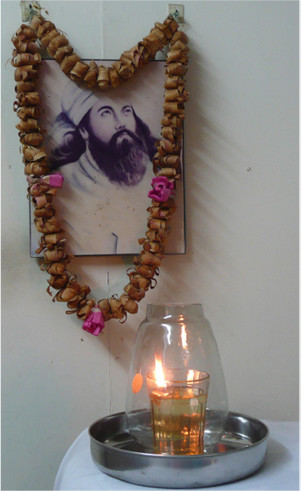
A glass covering over a diva flame is a worthwhile safety feature
Photo: Jasmine D. Driver
Marzban Giara
Author , Global Directory of Zoroastrian Fire Temples
I have talked to several priests and panthakies as also to devotees on this subject. Some agiaries already have a fire extinguisher and a first aid box. Every fire temple needs to have a fire extinguisher and a first aid box. Both priests and the staff at every agiary need to be trained to use the fire extinguisher as also in rendering first aid. The Athornan Mandal, the trustees of fire temples could seek the help of the Parsi Ambulance Division to organize mock fire drills as also to provide training in rendering first aid. The fire extinguisher and first aid kit need to be topped up regularly and a person given the responsibility for doing so. Agiaries could also display useful telephone numbers of the nearest doctor, nearest hospital, Parsi Ambulance Division.
Prevention is always better than cure. Rather than trying to douse the fire after it occurs (aag laagé taaré kuvo khodvaa jaay) precautionary measures need to be taken.
The existing practice of lighting diva in fire temples needs to be discouraged. There is no religious directive to light a divo in a fire temple. It is done more out of sentiment. It also provides income for the priest/sukhad/diva seller. The late Dasturji Kaikhushru Mahiyar Kutar used to say in his religious classes that where an atash padshah is present there is no need to light a divo. While devotees may light a divo in their home in the absence of an atash in their house, such a divo flame needs to be partially covered with a glass so that the flame is not exposed to wind.
In some fire temples devotees light multiple diva in a bowl. An educated community like ours should put on its thinking caps and not blindly follow practices. The open diva glasses pose the risk of a fire hazard. Besides the nuisance of smoke and carbon dioxide, precious oil is burnt up for no purpose.
On certain auspicious days devotees flock to agiaries in large numbers and offer precious sandalwood/kathi in huge quantities or a maachi worth thousands of rupees. While every Parsi Zarathushti devotee is free to do so, would it not be better to conserve our scarce resources of sandalwood and kathi firewood and use it more judiciously throughout the year thereby saving on the expenses of sustaining a fire round the clock? The excess amount can be put in a kathi fund or charity box or for better accountability paid by a/c payee cheque into a common pool. Some agiaries are well patronized. Others are starving for want of funds with very few devotees going there regularly. A common pool of funds would help to maintain agiaries in remote places.
Some agiaries authorize the panthaky/manager to collect a percentage, say five or 10 percent on kriyakaam charges, and credit the same to the agiary maintenance and repair fund. Some agiaries collect 10 percent from the priest’s salary and offer 10 percent as matching contribution from the Trust and this amount is deposited in the name of the priest in a recurring deposit scheme. Such a scheme would encourage a saving habit as also provide the priest a lump sum on maturity. Some agiaries provide life/accident insurance cover for their priests/employees.
Ervad (Dr) Ramiyar Parvez Karanjia
Principal
The Athornan Boarding Madressa, Dadar
Of late it has been observed that serious and often fatal burn accidents occur in fire temples. We Zoroastrians venerate fire in the fire temples as the living representative of Ahura Mazda. However, if a fire tends to be destructive it should be controlled and if necessary extinguished.
The safety measures need to be three-pronged:
By the priests themselves
By the management
By the behdin clients
The word for priests in Avesta is athravan, which means "one who tends fire.” The assistant priest is referred to as atarvakhshi (later, atrokhshi), which again means "one who tends fire.” Hence it is part of a priest’s job to deal with fire. Priests need to be very watchful, observant and attentive every second of the time they are sitting in close proximity to fire, because it does not take more than a second for a flying shard of ember to start a fire in the muslin clothes that the priests are wearing or the cotton shétranji spread under them.
The management of the fire temple need to take certain measures for the safety of their personnel as well as their property. Not only do they need to install basic fire fighting equipment in the agiary, they also need to ensure that the regular staff knows how to operate it and that it is serviced from time to time as per the requirements.
The behdins/clients need to cooperate in certain matters and at certain times with the priests and management. Like, for instance, at public jashans and uthamna, when there is a lot of sandalwood offered, the priest should not be expected to heap it all on the fire, but it could be used later on. Moreover, there is no need for additional diva next to the afarganiu, other than the one mandatory diva, when the priests are praying on the shétranji. It adds to the fire hazard.
These measures and vigilance will go a long way in safeguarding precious lives and property.
Ratan Lalkaka
Trustee, H. D. Saher Agiary Trust
I share your concern on this lurking danger, however remote the possibility of such an event coming to pass. It is best to be prepared and stay ready for any eventuality.
The precautions I would take are:
Provide an adequate number of fire extinguishers at the proper locations with instructions as to their use written in Gujarati and English.
Ensure that these extinguishers are refilled before their expiry dates.
Conduct a fire drill from time to time so that the persons involved are ‘au fait’ with the procedures.
Keep some buckets of water handy nearby.
Have a thick blanket at hand to smother any burning material.
Above all, to impress all concerned to be careful and always watchful near the places of fire.
Of course, an accident is an accident but the above mentioned simple precautions should reduce chances of fire.
Dastur (Dr) Peshotan Dastur Hormazdyar Mirza
High Priest
Iranshah Atash Behram, Udvada
In the Zarthosti religion the fire occupies a very revered position. As the representative of Lord Ahura Mazda, the presence of fires in our ceremonies is inevitable. Our priests have been tending the holy fires and performing ceremonies from time immemorial.
Understanding the concept of maintaining the fire during our ceremonies would help eliminate the risk of accidents. Fire is maintained on a fire tray (sarposh) on a fire vase (afargania) so that it burns smoothly with radiance. For this purpose our scriptures enjoin offering of aesma (firewood, kathi) and baoidhi [fragrant wood; namely sukhad (sandalwood) and loban (frankincense)]. Kathi burns slowly and sustains the fire with smooth burning. Sandalwood burns much faster than kathi and is offered for the purpose of fragrance (khushbo). As enjoined in the Avesta, these offerings should be properly dried, cleaned and examined that it is not decayed with rot. Thus adequate quality and quantity of kathi and sukhad are required for proper burning of the fire during the ceremonies.
It is observed that at times ceremonies like jashan, afringan and farokhshi, etc are attended by a large number of devotees and they bring a sizeable quantity of sukhad for the same. The sum total of the sukhad offered during the ceremony (lasting for three-fourth to one hour) is thus more than required. Many priests out of devotion and good faith are of the opinion that every piece of sukhad brought by the devotee should be consumed before the ceremony is over. At the same time, there are devotees who insist that all the sukhad brought for the ceremony should be consumed before the ceremony is over. There are instances when a priest who has not offered all the sukhad, i.e. only the required quantity was offered, was accused of stealing the sukhad. Whenever the quantity of sukhad offered is in excess, the possibility of cinders falling out of the fire tray increases as the fire tray gets overloaded.
The quality of sukhad available in the market these days ranges in price from Rs 300 a kg to over Rs 7,000 a kg. The spurious sukhad is also sold in the market which when offered to the fire, cracks and burns with splinters (sparks) with partial combustion. Thus spurious and poor quality of the sukhad also adds to the risk.
The presence of one divo is essential alongside the afargania. There is an increasing practice of keeping more number of small diva during the ceremonies which are not necessary and they can also increase the possibility of accidents.
Thus:
The kathi and sukhad should be of good quality.
Whatever the quantity of kathi and/or sukhad brought by the devotees for a particular ceremony, only the adequate quantity should be used. The rest may be offered to the holy fire in the sanctum sanctorum and/or to the dadgah in the urvice gah (where higher liturgies are performed) as and when required.
The priests as well as devotees should not insist on burning all the kathi and sukhad brought by the devotees, thus overloading the fire tray.
When we pray to the holy fire, we pay our homage to the holy fire as well as all the holy fires installed elsewhere. Many fire temples particularly in the villages of Gujarat are always short of kathi to maintain the holy fire due to lack of Parsi devotees in those areas. It will be a meritorious act if devotees attending ceremonies keep aside a part of their contribution to finance the Kathi Fund for maintenance of holy fires at remote places and obtain divine blessings.
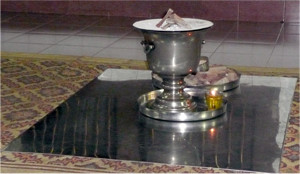
Stainless steel sheet laid on shétranji under the afarganiu at Seth F. N. Patel Agiary Photo: Jasmine D. Driver
Nadir A. Modi
Chairman, Athornan Mandal
I continue to spend my life full throttle from 8 a.m. to 8 p.m. fire fighting for people in the forests of the law.
However, regarding the subject of fire hazards in our fire temples, apart from keeping portable fire extinguishers within available reach I cannot think of anything else which would be really useful.
Dr P. D. Sunavala
Parsiana reader, former professor at
Indian Institute of Technology
The major cause of fire in fire temples is on account of the priest’s robe (jaamo) catching fire as was reported in Parsiana (June 7, 2009) about the tragic death of Ervad Jamshed Unvalla in Bangalore.
So the most important thing is to make the jaamo fireproof by applying fire retardants.
The most widely used fire retardant for cotton fabrics is Tetrakis-hydroxyme-thyl-phosphonium-chloride (THPC). This is a water-soluble crystalline compound produced from formaldehyde, phosphine and hydrochloric acid. The formulation for applying on cotton fabric consists of THPC, urea and trimethyl-melamine in the ratio of 2:4:1 plus various auxiliaries. Normally about 35 percent solution is applied. After impregnation the fabric is dried and subjected to the standard vertical flame test for its fire retardancy. The finish is durable to both laundering and dry cleaning. Its primary limitations are stiffness and reduction in tensile strength on some fabrics. To overcome the limitations several other formulations of THPC have been developed.
◆ ◆ ◆
From the archive