
Seminar
“A journey of discovery: IV”
Dr Katy Gandevia’s interviews with doctors reveals that the community’s ill health is due to loneliness and insecurity as well as a sedentary lifestyle and food habits
The first part of the report on the two-day Parzor seminar held in Bombay last December focused on Dr Shalini Bharat’s study on family and marital issues. The second part dealt with Dr Lata Narain’s report on a quantitative study of the Parsi youth. The third instalment covered Dr S. Siva Raju’s research on the elderly, both home based and institutionalized. The fifth (concluding) part of this series will deal with demography and genetics.
Identifying health problems
A survey of 60 general practitioners and 100 specialists from all over Bombay, Parsi and non-Parsi with a sizable Parsi practice, revealed four major illnesses to which Parsis are prone: cardiac problems including hypertension, heart disease and blockages; cancer, especially of the breast and uterus among women and the colon for men; a rising incidence of diabetes including juvenile diabetes; osteoporosis; and stress related problems be it anxiety about bringing up children correctly or serious psychiatric problems. "It’s not just a joke that bawajis are mad!” warned Prof Katy Gandevia, of the Centre for Health and Mental Health at the Tata Institute of Social Sciences (TISS). "Some are quite paranoid,” noted the researcher adding that loneliness and insecurity compounded the problem. Certain skin problems also afflict the community due to consanguineous (cousin) marriages so common earlier.
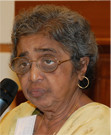
Dr Katy Gandevia: "mental health problems in the community”
Other common ailments identified were asthma, irritable bowel syndrome and acidity.
Most doctors were of the opinion that Parsis are very particular in following instructions about medication and adherence to treatment is very good among most of them. But the rider here is that they do this only until symptoms disappear. They do not always complete the prescribed course. Many are scared of cardiograms and the general emphasis is on curative rather than preventive measures.
The doctors attributed the incidence of these diseases to the community’s sedentary lifestyle and rich food habits leading to obesity. Their attitude, including their "superiority complex” stemming from feelings of insecurity and the need to stay well, also contributes towards the incidence of the above mentioned diseases, noted Gandevia.
"Even if we didn’t ask, the doctors wanted to refer to dwindling numbers (of the community),” said Gandevia. Her report mentions the usual suspects: late marriage, inter-community marriage, housing and the emphasis on quality of life that leads couples to opt for only one child. While most doctors recommended early marriage with the support of the family for the young couple, many did not concur with the idea of accepting the children of intermarried couples, Gandevia informed the gathering.
In the discussion that followed then Bombay Parsi Punchayet (BPP) trustee Rustom Tirandaz asked about sexuality levels and the incidence of venereal disease and HIV-AIDS. "Only two doctors mentioned such cases — one of STD (sexually transmitted disease) and one of HIV. It is data that doctors are not comfortable with revealing,” responded Gandevia. When Jamsheed Kanga, a member of the B. D. Petit Parsee General Hospital’s (PGH) executive committee, asked if all the hospitals do such testing, session chair and eminent physician Dr Farokh Udwadia noted that only the Breach Candy Hospital does it as a matter of course, not the PGH. "You can’t force a person to give blood for testing. People being operated have to be so tested because of the risk to medical personnel. Most patients understand. The results are kept very confidential.”
Dr Shalini Bharat, professor in the School of Health Systems Studies at TISS, noted that it would be inappropriate to infer about sexuality from the incidence of HIV/STD. That kind of data is not collected community-wise. "It would be a very good idea to study sexuality in the community,” concurred Udwadia. "Model it on studies and questions outlined by various researchers, though I don’t know how truthful will be the answers you get!”
"By and large Parsis don’t go out for sex. Look into the libido,” suggested neurologist Dr Noshir Wadia. It would be good to know what the sexual habits of the community are, agreed Udwadia adding, "GPs don’t inquire into this aspect very often until they feel that the problem may be related to sex. Doctors in the West routinely ask about sexuality.” "We have to be very careful though because of the (small) size of the community. The statistics have to be very carefully handled,” maintained Wadia.
However, he was surprised there was no mention of stroke. "It’s the second most frequent problem after heart disease,” he noted. Gandevia said it had been clubbed under heart problems.
"Parsis register the highest incidence of cancer in Bombay,” said Dr Rajiv Dixit of the Tata Memorial Hospital, "almost two to three times higher than others.” Enumerating the various types — lymphoma, leukemia, prostate, even lung cancer — he urged the researchers to investigate "why it is so high.”
"The idea is to use this session to create a group for special research,” responded Parzor director Dr Shernaz Cama, adding that while the Government of India has given permission to Parzor to take blood samples out of India, the ideal setup would be to generate transfer of technology into India.
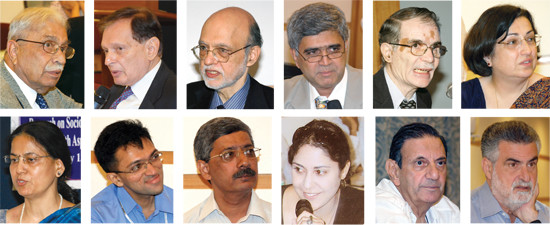
L to R (1st row): Noshir Wadia, Farokh Udwadia, Nadir Bharucha, Rajiv Dixit, Ruzbeh Bhath-ena, Shernaz Cama. (2nd row): Shalini Bharat, Girish Nair, Thomas Kuruvila, Shirin Cama, Jamsheed Kanga and Rustom Tirandaz
Kanga suggested the use of PGH data for research purposes. At PGH "we’d be looking at a particular sector of the community. If it is done in contrast with the general (Indian) population, the research would give much greater knowledge,” said Udwadia. "For example, ischemic heart disease is much higher at the PGH as against other populations.”
Shirin Cama, a medical student from the US was interested in the community’s mental health problems. How often are people referred for psychological treatment? she wanted to know. "Parsis are by and large a neurotic community. If I were to send all my neurotic patients to the psychiatrist, he would not survive for more than 10 years!” noted Udwadia, adding he normally sends them for counseling instead. "It is not easy to push a person to a psychiatrist. The madder the patient, the more difficult it is.”
"Perhaps they don’t want to reveal (their problems) to Parsi doctors. They may prefer the anonymity of non-Parsi doctors,” ventured Kanga. But Gandevia said, "We took this aspect into consideration and spoke to non-Parsi psychiatrists. Even they say that mental health problems are high in the Parsi community. There are people with schizophrenia but there are also lay people who feel they are losing their mind.”
"The Parsis were a stronger, healthier community in 1950 than they are today. Why? It’s a totality of psycho-social malaise. You hear the community is dying out. We brought the question of demography to the Fifth World Zoroastrian Congress (in 1989). Now people are obsessed with producing babies! But the community is suffering from loneliness and insecurity. The community is suffering from hypertension — mixed marriages, conversion, social problems. Look at the totality. Scholars who look at the problem of what makes communities survive or collapse refer to two factors: natural disasters which are environmental factors and bad governance which is the source of the psycho-social malaise,” noted social commentator Aspi Moddie.
Udwadia put it another way: "It’s a question of a civilization’s response to a challenge. When it fails to give a fitting response, the civilization declines. The same applies to communities.”
According to clinical psychiatrist Dr Kainaz Dotiwala our reaction to stress depends on two factors — heredity and mindset. "High anxiety is (transmitted) in (some) families. Also a very negative attitude and psychosomatic illnesses. How do we turn the mindset more positive?” she asked, adding, "In Jamshedpur’s 200 population the first reaction of people, what they want to know, is how much confidentiality can the clinicians maintain?”
"God is protracting the agony of the community,” noted Udwadia. "We live to a long age. We have the longevity gene. I have a patient who is 106 and reasonably fit. Disease is also age-related. The alarm clock in each cell signals cellular death which leads to degeneration. You can improve health to a certain point. After that you die. How are you going to increase your numbers to prevent extinction? Let no one fool you that the numbers are not declining.”
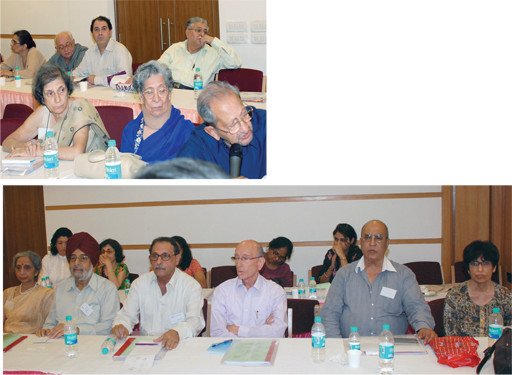
Alongside (L to R, front); Avan Khullar, Kitty and Aspi Moddie, (rear) Godrej Dotivala and Keki Gandhi (2nd and 4th from left) Below: Ms and Mr Tirlochan Singh and members of the audience
Neurological diseases/hypertension
Neurologist Dr Nadir Bharucha and his team comprising Dr Girish Nair and Dr Thomas Kuruvila provided statistics based on follow-up action on studies conducted in 1985 and 1987. They sought the mortality rate for patients who had been identified earlier with neurological disorders and hypertension in the subsequent 20 and 18-year periods respectively.
In studies in the multicultural population of the US, across various ethnic groups, the impact on mortality of the two groups of diseases varied widely. In the Parsi community the study established increased mortality among such patients, noted Bharucha.
Bharucha had conducted a pilot study at Khareghat Colony in 1984. He said that the door-to-door survey had found that the numbers were much smaller than he had been led to believe. But he admitted that he did not have data for a control population and that the response from households had not been particularly good. In 1987 he said he had done a random number study for high blood pressure among people over 20 years of age.
Nair, who sought to know how many of Bharucha’s identified patients had died, studied the BPP death registers. He said that the cause of death reports were fairly accurate between 1985 and 2005. He found that 146 of 161 patients who had had a stroke had died. The mortality rate was higher for those between the ages of 45 and 60 years. Fifty-one of 56 patients with Parkinson’s disease had died. Nair noted that while the median age of the group was 75 years, mortality among younger age groups was strikingly higher when compared to the general population. Parkinson’s disease is also higher in high income communities, he added. In the same period 47 out of 108 epileptic patients died at the median age of 46.5 years as also 19 of 61 patients with cerebral palsy.
Kuruvila spoke of the 20/10 rule governing patients of hypertension: The "silent killer” seems to become more virulent whenever the systolic rate rises by 20 or the diastolic pressure by 10, though there are great differences between ethnic groups. He found that more women died of hypertension than men. Hypertension is found to be the main risk factor for strokes, he noted.
"One needs sustained input,” said Bharucha noting that spot checks at a particular point in time have limited value. But he did notice that stroke occurs in the community at a much higher age when compared to others.
In the discussion that followed Kanga wanted to know why hypertension was a bigger risk factor for women. "Are they more stressed? Is it genetic? Is this typical of Parsis or does the same apply to other communities?”
"People are reluctant to talk about those who have passed away,” said Bharucha indicating that no correlation between disease and circumstance can be established.
Gynecologist Dr Ruzbeh Bhathena wished to know about the incidence of Alzheimer’s disease but Bharucha did not have hard evidence. However, he said that a large number of persons had told him about people who need to be looked after 24 x 7. To be concluded
◆ ◆ ◆
From the archive