
Comment
Putting the pieces together
Failure of intelligence management rather than lack of timely information weakens our speedy response to terrorism
Disaster and intelligence failure go hand in hand. You can’t have the first without the second. At least that’s what a layman would say. What has been happening in India is not so much a failure of timely information as a failure of intelligence management.
In 1999-2000 K. Subramaniam headed an enquiry commission into the Kargil fiasco. I had written an article based entirely on the Kargil Review Committee Report and showed that most of the intelligence, though in bits and pieces, was available. No one had put the pieces together. I didn’t touch on the other factors — that the RAW (Research and Analysis Wing) was made to withdraw its half yearly report where Kargil was the focus. Nor have we talked about the fact that the entire area and the border posts were in any case under the army. So the army should have known what was happening in its own yard. But Kargil is dead and buried. We didn’t even indulge in an air strike on Tiger Hill and other high altitude posts the Pakistan army had occupied by stealth. Instead we sent our soldiers led by young lieutenants and captains to heroic death. (Heroism doesn’t mitigate the finality or the tragedy of death).
An overcrowded nation with a thousand ethnicities and a hundred languages, an undisciplined people, ignorant, incompetent and (often corrupt) politicians whose only aim is to garner more votes, and an unimaginative and stick-in-the-mud bureaucracy is an invitation to disaster, be it Bangladeshis swarming into our country or Pakistanis counterfeiting our currency in crores or sending us terrorists. And there is no political management. Over 60 years we should have engaged Deoband, Christian missionaries and militant groups in the North East, the Kashmiri parties (not just the semi-treasonous separatists so beloved of activists like Pankaj Misra and Arundhati Roy) in a continuous dialogue. Nothing of the kind has happened barring the talks with the NSCN (National Socialist Council of Nagaland) which have gone on for nine years.
Our armed forces have dealt with insurgencies, helped by China (till 1979) and East Pakistan in the North East. Regrettably the DGFI (Directorate General of Forces Intelligence), as also the fanatic Islamic fringe of Bangladesh are lending a helping hand. But they have not had much experience of terrorism. Mostly that is a police function. Till 26/11 terrorism was limited to placing explosives with time-triggering devices in crowded places, or planting landmines or sporadic attacks on security forces in the Kashmir valley and in Naxal-affected areas. So it is squarely the job of the police and the intelligence agencies to tackle terrorism through human informers, infiltration into militant groups, intercepts, phone-taps and putting the jigsaw pieces together.
That the police has no anti-terrorist cells to physically nullify a terrorist attack is well documented. Even Bombay’s ATS (Anti-Terrorist Squad) had just 35 officers, I am told. And bold as the gallant officers were on the night of November 26, 2008 they were casual. The entire top team does not sit in one car. They ignored the bullet proof car which they already had. They had sub-standard bullet proof vests which, according to media reports, had failed trials earlier. The NSG (National Security Guard) commandos on the other hand wore NIJ level 13 (National Institute of Justice, US) bullet proof jackets. These had armor plates both back and front and groin pads to boot, and weighed six kilos.
The response time of the NSG (perhaps, also the police) was pretty awful. The NSG had no plane, and one had to be called in from Chandigarh. There was a time (when terrorism in the Kashmir valley was rife, and terrorists had literally captured Hazrat Bal) when the Commandos would sleep at the airport. The orders were that they had to be airborne in 51 minutes. Why were things allowed to slacken now? And the NSG commandos accompanying Mayawati and other politicians need to be withdrawn. Two or more gunmen from the police should suffice for the Mulayam Singhs, Jayalali-thas and Karunanidhis.
According again to media reports an IB (Intelligence Bureau) report of March 2007 had indicated that the Lashkar-e-Toiba was charting a sea route to Bombay. A trawler was even said to have intercepted some fedayeens but let them off after receiving a bribe. In February 2008 Fahim Ahmed Ansari and seven others, in custody with the Uttar Pradesh Police had confessed that they were sent to blow up the stock exchange and maps of Chhatrapati Shivaji Terminus and the Oberoi were found on them. This information was shared with the Bombay Police. The RAW inputs of September 18 and 24, 2008 had talked of hotels near the Gateway of India being targeted. The November 19 report of the RAW was more specific — namely that the terrorists were on their way. Even the coordinates of the boat were reportedly given. These reports were based on satellite phone intercepts.
No agency can be more specific than that. The RAW were not reporting on a brigade level or battalion level attack. The reports referred to terrorists sneaking in. Their ingress can’t be verified physically till they are upon you. Enough care was obviously not taken of the reports.
Since 1968 when the IB was divided into two wings, coordination between the two agencies has never been at a 100 percent optimum level. Turf wars intrude. The RAW are supposed to confine themselves to external intelligence. For instance, what happens if they get good information on militants in the Kashmir valley? Obviously they tell the IB, the army and the J&K (Jammu and Kashmir) Police. The level of credibility such reports will have depends on the past performance of the RAW outfit there, and the attitude of officers posted in the affected area. If they are of the cynical kind, the report will not get the required attention. Some reports will turn out to be red herrings. You will lay ambushes and the militant or terrorist will not cross the border or land on our coast. (The same happens in anti-dacoity operations. I have had two postings in the Chambal valley, and found that even when a member of the gang was our informer, we would lie in ambush waiting for nights in vain. So many factors come in the way — weather, change of plans, even superstition. If a bull snorted, the bandits would change their plan or their route or attack another village.)
Coordination of intelligence can’t be left just to the Joint Intelligence Committee (JIC). Each agency coordinates and collates intelligence, and is aware of the larger countrywide picture. They have committed officers who put in very hard work. With the appointment of a National Security Adviser (NSA) and Deputy NSAs the JIC perhaps stands devalued. It hasn’t had high caliber officers of late. The agencies are on the defensive and wish to avoid blame. As a result, even when they are not very certain of the reliability of a report, they ring the alarm bells. Crying wolf too often has its own hazards.
We have a pro-active Home Minister now. But if he starts personally muscling in too much, the JIC and the NSA would become irrelevant. That would hardly be desirable. Better coordination, posting of the NSG to various metros, withdrawal of NSG personnel from VIP duties with politicians facing phony dangers, should go some way to improve our ‘defences’ against terrorists. And yes, the police (including officers of ATS) need much more and better training in field craft and handling terrorist situations.
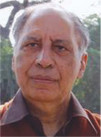
Retired chairman of the Joint Intelligence Committee, Keki Daruwalla joined government service in 1958, serving for many years in the Indian Police Service before joining the Cabinet Secretariat in 1974. A prolific writer, the Lahore born Daruwalla has published nine volumes of poetry (he won the Sahitya Akademi Award for poetry in 1982), three of short stories, a novella and a unique travelog of a car trek to the Siachen Glacier. His first novel wil be published in early 2009.
◆ ◆ ◆
From the archive