
Books
Of fasting and feasting
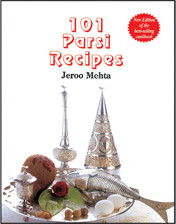
Even if the Parsi community fades into oblivion, Parsi cuisine will continue to shine. Or so it appeared from the praise heaped on this eclectic food at the launch of the new edition of epicure Jeroo Mehta’s 101 Parsi Recipes (148 pages; price Rs 250) on March 24, 2008 at the Crossword bookstore. The first edition was published in 1973 and the book was subsequently reprinted four times.
The publisher, Harsha Bhatkal of Popular Prakashan (301, Mahalaxmi Chambers, 22 Bhulabhai Desai Road, Bombay 4000026; www.popular prakashan.com) said he brought out the book "in anticipation I would get to eat a lot of Parsi food” courtesy the author.
Food writer and author Rashmi Uday Singh stated she was "completely passionate about Parsis — everything Parsi. Your lust for life, your joie de vivre” and of course the great Parsi chefs. "When I came to Bombay in 1980 I fell in love with the Ripon Club,” Singh recalled. She looks forward to "lagan nu bhonu.”
Actor Perizaad Zorabian Irani while confessing "I’m a horrible cook,” said her husband Boman had bought her a heap of cook books from around the world of which "I’ve not read a single one.” But she promised to "cook for Boman starting with this book.”
Urban historian and author Sharada Dwivedi mentioned that when she married her Punjabi husband she noticed "Punjabis add tomato ketchup to everything… including dosas and medu vadas.” Parsis in contrast "added jam to everything.” She was probably alluding to murumbo, a jam like sweet preserve.
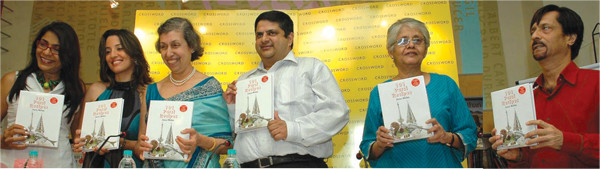
At the book launch (from left) Rashmi Uday Singh, Perizaad Zorabian Irani, Jeroo Mehta, Harsha Bhatkal, Sharada Dwivedi and Vinod Advani
Dwivedi noted that when food writer Sally Holkar and she did an article on Parsi cuisine for Marg magazine they realized "how adaptable Parsi cuisine is.” The Gujarati dish oondhiu was converted to umbaryu by adding meat. Dwivedi observed that "unlike all the other communities, Parsis never fast.” According to the scriptures "fasting serves no good purpose.”
Mediaperson Vinod Advani said he looked up the meaning of dhansak on the Internet but found no satisfactory explanation. Mehta stated that the word is derived from dhan (rice) and sak (lentils and vegetables). She pointed out to the sizeable gathering of friends, well-wishers, book lovers and media personnel that dhansak was not cooked on auspicious occasions. The reason: dhansak was served on the fourth day after a person was deceased.
Dhansak on Sundays is a ritual in many homes. While she was fed up eating it every week at her childhood home, when she married she discovered to her chagrin that her late husband Dorab also wanted the dish on Sundays!
Mehta recalled how "she could not make a cup of tea” almost till the time she married. A cookbook gifted to her did not correctly specify the ingredients to be used. Thus water instead of coconut water was stated for fish molee which resulted in a gastronomic disaster. All her guests kept asking what the dish was. "The skin was on one side, the bones on the other and I could not see the flesh,” recalled Mehta. Another recipe said "salt to taste… How do I taste raw meat?” she queried. "When I learnt to cook 12 years later I decided to write a book.”
Mehta studied journalism at New York University and was associate editor of the erstwhile Eve’s Weekly. Some of her recipes have been published in the Time-Life series The Good Cook. Mehta has authored two other books, Cooking for the Family and Enjoyable Parsi Cooking.
A press release issued at the launch of 101 Parsi Recipes states "the new edition of the book maintains the look and feel of the original book, but with new photographs by Bharat Bhirangi, the food preparation and styling for which was done by Farrokh Khambata of Joss” restaurant.
CHICKEN IN MILK
Serves: 4
Chicken (1¼ kg — skinned and cut into eight pieces)
Onions (2 medium — finely sliced)
Cinnamon stick (5 cm)
Red chilli (1 — dried)
Salt (as needed)
Milk (1 cup)
Sugar (1 tsp)
Vegetable oil (4 tbsp)
Potatoes (3)
Seedless raisins (kismis — 1 tbsp)
Grind to a paste
Garlic (6 cloves — ¾ tsp)
Ginger root (2 cm piece — fresh)
Heat oil and fry onion till golden. Remove excess oil. Add garlic-ginger paste and blend well. Cook five minutes, adding a little water if paste sticks to bottom of pan. Add chicken, blend well and allow chicken to brown nicely on all sides (about 10 minutes). Add cinnamon stick, whole red chilli and 1¼ tsp salt. Mix well. Add ¾ cup warm water, bring to the boil and simmer, covered, till chicken is tender and half cup gravy remains. Add more water if necessary. Add milk and sugar and allow to boil, uncovered, for 10 to 15 minutes till some of the milk has dried away and the gravy is thick. Peel potatoes and cut them into tiny squares. Pour oil in frying pan to a depth of 1 cm. Heat to medium hot and fry potatoes in it till crisp and golden. Remove and set aside. Sprinkle with salt. Fry kismis for one minute in same oil and remove. Place chicken with gravy in serving dish and sprinkle with potatoes and kismis.
DRUMSTICK AKOORI
Serves: 4
Drumsticks (18)
Onions (2 large — finely chopped)
Coriander (3 tbsp — finely chopped, fresh)
Green chillies (2 — finely chopped)
Gram flour or plain flour (4 tsp)
Salt (2/3 tsp)
Vegetable oil (3 tbsp)
Cut each drumstick into three or four pieces and boil in water till tender. Cut each piece down middle then remove pulp from inside. Discard skin. In a pan, heat oil and fry onion in it till soft and pale gold, not brown. Add coriander and chillies and cook five minutes. Add drumstick pulp and salt and continue cooking five minutes. Add gram/plain flour and stir briskly for two or three minutes, then remove pan from heat. Fry or toast four slices of bread, spread drumstick mixture evenly on each slice and serve.
CARROT AND BRINJAL BAKE
Serves: 6
Brinjal (750 g — sliced into 1 cm rounds)
Onion (250 g — coarsely chopped)
Carrots (250 g — grated)
Chilli powder (¼ tsp)
Sugar (2 dessertspoons)
Tomato ketchup (6 dessertspoons)
Salt (to taste)
Vegetable oil (as required)
In a large frying pan pour four tablespoons oil and heat. Place in the frying pan as many slices of brinjal as will fit and fry about three minutes on each side. Remove and keep aside. Add more oil if necessary and continue frying slices of brinjal till all have been fried. In the same frying pan in four tablespoons oil fry onions till soft and pale yellow. Add carrots, mix well and cook about 10 minutes till carrots are soft. Add one cup water, chilli powder, sugar, tomato ketchup and 1½ teaspoons salt. Cook another five minutes, mixing all ingredients well. In a deep, round baking dish cover bottom with slices of brinjal and sprinkle some salt over slices. Over these spread a layer of carrot mixture. Cover this with more slices of brinjal with a sprinkling of salt and carry on with alternate layers of carrot mixture and brinjal ending with carrot mixture for the topmost layer. Cover baking dish with a tight-fitting lid and bake in moderate oven for 40 minutes.
◆ ◆ ◆
From the archive