
Food
A subtle blend of flavors
What we have today is the classical cuisine of the Parsis evolved from the Persian and adapted to local conditions
I believe that Parsi cuisine came into existence after we landed on the Gujarat coast so many years ago. It is an evolved cuisine that developed through a conscious adaptation of dishes and cooking techniques from other regions across the country and the world — probably owing to our zest for good food.
Iranian food is bland compared to what Parsis eat today. The major changes entered our cuisine when we came into contact with the spices of the west coast. As we started acquiring a taste for them, we gradually introduced them into our dishes, starting with coconut, chillies, ginger, garlic and whole spices, blending them with the Iranian proclivity for vegetables, meat and rice. It continued to evolve as we came into contact with other people and Parsi cuisine today is a result of this evolution.
At the same time we have retained the sweet and sour flavor that is inherent amongst the Parsis in several of our dishes such as khaatu meethu eestu, machhi no saas, gor amli ni kachumber, lagan nu achar… And sugar is sprinkled by most Parsis on their plain dar. The pomegranate, which is used in our rituals, is an inheritance from Iran. What is interesting is that Iranian names are similar to those used in North India, such as badam (almond), limoo (lemon), sib (apple), zardaloo (apricots), khiyar (cucumber), zaaferon (saffron), sharab (wine), chai (tea), piyaz (onion), pista (pistachio).
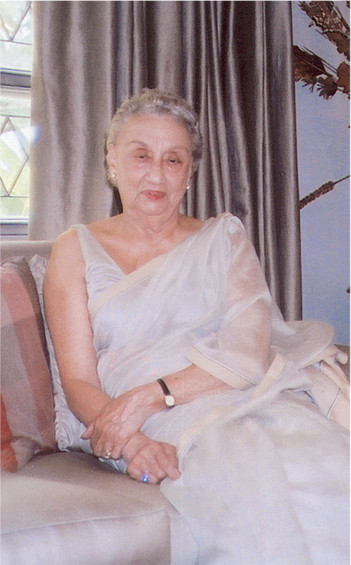
Bhicoo Manekshaw: "Cooking is like a prayer”
After reading A Treasury of Persian Cuisine by Shirin Simmons, I feel that dhansak was created in India from the Iranian dish khoresh, which is a combination of meat or poultry with pulses, vegetables, nuts, herbs, turmeric, cinnamon and fruits. It is eaten even today in Iran with pulav or chelov (the famous Iranian rice). This combination of vegetables, fruit and meat, such as jerdaloo ma gosht and kéra per eeda is still retained by us in India. Dhansak of course is completely different from khoresh today, after the spices of the west coast were blended so superbly into the masala ni dar.
The introduction of vindaloo and curries are the influence of the Goan staff who worked in affluent Parsi homes and our version of the Goa fish curry is as much a part of our daily fare as salli ma gosht. The use of vinegar is another Goan influence, but while they use palm vinegar we use cane vinegar made in Navsari. Our vindaloo too differs from the Goan one, which is fiery hot.
On coming into contact with the British, we introduced our famous lagan nu custer and machhi no saas. My interpretation of the saas is that perhaps a Parsi gentleman who did business with an English man was invited by him for a meal at his home. He was probably served baked fish or fish with béchamel sauce. On his return home the wife must have asked, "Su khadhu (What did you eat)?” The gentleman may have described the dish and his wife improvised and created our traditional saas. I feel this could be a possibility because flour is used to prepare the dish and this is most unusual in an Indian or Parsi home, but I may be wrong. We have certainly converted scrambled eggs into the exotic akoori, spiced up the omelette as the Parsi poro and transformed fried chicken into murghi na farcha, not to mention our masala crumb-fried lamb chops.
Parsi cuisine grew steadily during the time of our great-great-grandmothers who continued to combine vegetables and fruit with meat and chicken; and eggs baked on different vegetables and bananas. Our non-vegetarian pickles use predominantly seafood — the result of living along the coast. We have absorbed patrel, kadhi and the different dals and pickles from Gujarat and Maharashtra; and patti na samosa and Moghlai murghi from the Muslims; but the murambas, sev and ravo, and the use of rose water are Iranian.
What we have today is the classical cuisine of the Parsis and it will never change. We are fond of good food and eat a variety of cuisines from different countries and communities and we may introduce additional dishes in our homes. We may even — horror of horrors — gravitate towards a greater vegetarian diet, but the cuisine will remain the same. Its greatness lies in the subtle blend of flavors, herbs and spices from around the world. No single flavor predominates, and it has just the right mix of spices and chillies to suit every palate. The dishes are light, not too oily or spicy and unique in the art of combining vegetables with meats in the same dish.
Regarding my career — I don’t consider it exceptional. I was just lucky and it was my passion for cooking and good food that took me forward.
From tasting Meherbai gorani’s excellent food cooked in my grandmother’s home during the muktad days, to that cooked by the Goans, to taking the domestic science course at the Senior Cambridge level. (But I could not give the examination, because from a class of nine I was the only one to finish the course and an examiner could not be called for the practical examination all the way from England just for one person — probably there was no one qualified enough in India to conduct it at that time; so I got a school-leaving certificate from my beloved Queen Mary’s High School.)
After I got married my friends asked me to give them cooking lessons, and so I started. Since my late husband, Air Vice Marshal J. H. F. Manekshaw, was a doctor in the Indian Air Force, we did a lot of travelling, and while the men worked, the wives would meet in the mornings for ‘elevenses,’ share recipes and have coffee and snacks made by the hostess. That is how I collected recipes from all over India and brought out my first cookbook Traditional Recipes of India. Later, when my husband was posted to London I did the Advanced Certificate course at the Cordon Bleu School of Cookery as the 11th pupil, though the course took only 10. After I gave a demonstration of papéta ma murghi and kéra per eeda, and the principal read my manuscript for Traditional Recipes of India, I was accepted as the 11th pupil.
When we returned to India we were posted at Bangalore and there I was the catering consultant to the West End Hotel and to governor Dharma Vira. When we came to Delhi I joined the India International Centre (IIC) and Air India as catering consultant. (The latter appointment was through Indira Gandhi.) At the West End and the IIC, a du jour was introduced in the menu.
And now I am catering consultant to the restaurant Basil & Thyme run by my son-in-law, Sunil Chandra.
Though I have taught Parsi food as well as other Indian cuisines in my cookery classes, it is mainly Continental cuisine that I have been involved with in my professional life — perhaps because there was a lack of expertise in the country at that time. Today, anyone who wants to take up cooking on a professional basis has a variety of schools to choose from. It has, in fact, become mandatory to attend a professional course to get a foot into any profession.
One can never say that one knows everything about good cuisine. It is a subject that can never be completely reached and known. I think I have arrived at a point in my professional life where I still need to gain a refined simplicity in the food I cook — it could be the kallaiwalla’s khichdi, Puranvati’s chutney or something from one of the ‘greats’ like Escoffier, Carmen, or Fenand Point, the owner of the famous La Pyramid just outside Paris, and alas no more.
To cook a meal slowly, without haste, enjoying each movement, and bringing it to the table, to sit amongst friends, slowly relishing each morsel, appreciating each ingredient that has gone into the dish. But today there is too much haste — no relaxing and gentle talk after dinner over coffee.
I am 85, and at times don’t feel up to going to Basil & Thyme. I go nevertheless, knowing that once I am in the kitchen, giving instructions and getting involved with the cooking I get back my passion for it. Cooking is like a prayer that is within you and will be there till you die.
PULAO
Serves 12-16
This pulao, made with my cousin Bapsy Mehta’s recipe, is one of the finest I have tasted.
Basmati rice (1 kg)
Salt (½ tsp + ½ tsp)
Saffron strands (1 tsp — soaked in 2 tbsp warm milk)
Yoghurt (2 cups)
Onions (500 g — sliced, fried crisp and drained on kitchen paper)
Kharu gosht made with 1 kg mutton or chicken and 500 g potatoes (recipe given later)
Ghee (as needed)
Milk (as needed)
Stiff wheat flour dough for sealing pan
Garnish
Onions (2 — sliced, fried crisp and drained on kitchen paper)
Almonds (2 tbsp — peeled, slivered, fried and drained on kitchen paper)
Raisins (2 tbsp — seedless, fried and drained on kitchen paper)
Wash rice in several changes of water and soak in cold water for 20 minutes. Drain through a strainer and leave for 20 minutes. Divide rice into two portions. Cook one portion in hot water with ½ tsp salt and saffron till three-quarters done. Cook the second portion in hot water with ½ tsp salt till three-quarters done. Gently mix in yoghurt and fried onions, using a fork. Place kharu gosht in a large pan and cover with rice and curd mix. Spread saffron-flavoured rice over this. Sprinkle with ghee. Cover rice with a clean handkerchief or kitchen cloth. Sprinkle milk over the cloth. Cover pan with a tight-fitting lid and seal with wheat flour dough. Cook on dum — very low heat, with a few pieces of hot coal on the lid — or place in an oven preheated to 150ºC (350ºF) for about 20 minutes. Serve sprinkled with the garnish and masala-ni-dar and kachumbar.
Variation: A vegetable pulao can be made using mixed vegetables instead of the mutton or chicken.
KHARU GOSHT (FOR THE PULAO)
This dish can be served as is (for 8 servings), or omit the potatoes and serve it sprinkled with sali.
Oil (4 tbsp)
Onions (3 — large, sliced)
Cinnamon, cloves and black cardamom (1 tbsp — mixed, whole)
Ginger (2½” piece — ground)
Garlic (1 large head, ground)
Red chilli powder (½ tsp)
Turmeric powder (1 tsp)
Cumin powder (2-3 tsp)
Salt (1 tsp)
Tomatoes (2 medium — chopped, optional)
Leg or shoulder of lamb (1 kg — cubed with bone)
Green chillies (2-3 — slit and seeded)
Potatoes (500 g — peeled and cut lengthwise in half)
Heat oil in a pan, add onions and whole spices and fry till onions are brown. Stir in half cup water. Simmer till onions are mushy and water has evaporated. Mix in ginger, garlic and spice powders. Add salt and sauté for 1-2 minutes. Add tomatoes (if used) and meat and sauté till meat is light brown. Stir in chillies and 1 cup water. Lower heat, cover pan with an inverted lid, pour some water on lid and simmer till meat is three-quarters cooked. Add potatoes and cook till meat and potatoes are tender and gravy is thick. Stir occasionally, adding water as required.
BHAAJI DANA
Serves 6
Fenugreek leaves (18 bunches — small variety or 2 bunches of the large variety, chopped)
Salt (1 tsp + extra to taste)
Ghee (2-3 tbsp)
Onions (4 — sliced)
Cumin powder (1 tsp)
Coriander powder (1 tbsp)
Green chillies (4-5 — seeded and chopped)
Coriander leaves (1 cup — chopped, include the stems)
Ginger (2” piece — chopped)
Garlic (1 head — chopped)
Onions (2 — cut into fine rings, optional)
Green peas (1 cup — shelled, boiled)
Green cardamom (1 tsp — powdered)
Nutmeg (1 tsp — freshly grated)
Mix fenugreek leaves with 1 tsp salt and set aside for 15 minutes. Squeeze out water and set aside. Heat ghee in a pan and fry sliced onions till translucent. Do not let them change color. Add all ingredients except onion rings, green peas, cardamom and nutmeg. Mix well. Arrange onion rings (if used) on top, cover pan and simmer over low heat till the liquid has evaporated. Mix in green peas, cardamom and nutmeg. Taste and add more salt if required. Serve hot.
Variations: Use any leafy green vegetables in place of the fenugreek.
DOODH PAK
Serves 8
This is my sister-in-law, Villie Mehta’s recipe and makes the best doodh pakh I have eaten.
Rice (3 tbsp — coarsely ground)
Milk (10 cups)
Condensed milk (¾ of a 400 gm can)
Sugar (2½ cups)
Salt (a pinch)
Almonds (1 cup — peeled and finely ground)
Pistachio nuts (1 cup — shelled, peeled and finely ground)
Green cardamom (1 tsp — powdered)
Nutmeg (½ tsp — freshly grated)
Mix rice with one cup cold water. Add to milk and place over high heat. Cook, stirring continuously till it comes to a boil. Lower heat and simmer, stirring occasionally, till milk is reduced to about seven cups. Add condensed milk and sugar and continue cooking till it thickens a little more. Remove from heat and stir in remaining ingredients. Cool, and serve chilled with hot puris.
◆ ◆ ◆
From the archive