
Books
Right thinking
The major redeeming aspect of Dr Mehroo D. Bengalee’s monogram titled, Research Project Report on All India Birth Rate of Parsi-Zoroastrians from 2001 till August 15, 2007 is that a member of the orthodox group has finally conceded that the community’s population is declining precipitately.
A founder trustee of the orthodox World Alliance of Parsi Irani Zarthoshtis (WAPIZ), a former trustee of the Bombay Parsi Punchayet (BPP) and currently a member of the National Commission for Minorities (NCM), Bengalee notes that while the Indian government "has tried about every population disincentive including paying people to stop having children… the Parsi community is paying couples to have children. Call it a sign of demographic desperation… one of the most distinguished communities… appears to be declining.”
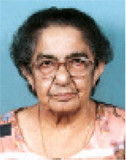
Dr Mehroo Bengalee: reaching out
Of course her observations are prefixed with several constraints for "real birth rates” are not available in India, only "crude birth rates,” and "in addition, a classic apathy within the community makes the maintenance of accurate records difficult, despite there being various community organizations and associations.” But the demographic safeguards notwithstanding, the birth statistics quoted by Bengalee are even less than those quoted by Parsiana (which is alleged to have a hidden agenda in downplaying the birth figures! Incidentally Parsiana’s name does not feature even once in the report though the magazine is the main, if not the only community body collecting and collating data on the community in India and abroad).
For this research project sponsored by the NCM, Government of India, Bengalee notes letters and forms were sent to "136 Parsi anjumans, 11 welfare centers, 16 youth associations, two research assistants, nine miscellaneous trusts, 24 health officers of (the) Mumbai Municipal Corporation, 20 prominent social workers, seven municipal commissioners, nursery and primary schools in Mumbai and four maternity hospitals. Door-to-door distribution of about 10,000 proformas was done in various Parsi colonies and baugs.”
The data collected shows that the highest number of births all India was 223 in 2001 and 171 in 2005. But the figures for Bombay alone as obtained by the BPP from the Bombay Municipal Corporation (BMC) show a figure of 180 for 2005. If the New Bombay, Thana and rest of India figures were added the total may increase by around 70.
In his Parsi/Irani population projections made in 2004 noted demographer Ashish Bose, honorary professor, Institute of Economic Growth, Delhi University had estimated a higher birth rate. Bengalee’s figures are therefore lower than all the "liberal” demographers, both amateur and professional. But in her "Acknowledgement” Bengalee humbly notes, "Within the constraint of the time-frame of three months, it was difficult to reach out to all Parsis scattered in every nook and corner of the country… The responses were not as quick as desired and some are still trickling in... In the nature of things, such a report cannot be expected to be the last word on the subject.”
But what is disturbing is that in the list of people she thanks for their cooperation which includes a lawyer and educators amongst others, there is no reference to any demographers. Her bibliography lists 19 sources, 13 of which are websites. Most of the references appear to be articles written by journalists. Not a single authentic or authoritative study by demographers such as the late Dr Malini Karkal (who did an extensive study for the 1960 census), Dr Ketayun Gould (professor emeritus of the School of Social Work, University of Illinois), Bose, J. K. Banthia (former census commissioner for India), Ava Khullar (who compiled demographic profiles of several anjumans for the Federation of Parsi Zoroastrian Anjumans of India), D. P. Singh and V. Gowri (of the Tata Institute of Social Sciences) is cited. Nor does Bengalee compare her figures with any of the projections made by these experts.
There is no reference to the disturbing trend of sexual determination of the foetuses with more male babies being born than females.
Bengalee’s treatise is couched in purposeful ambiguity. She does not want to annoy her right-wing orthodox supporters nor appear as though she is cow-towing to the liberal lobby. "There are two view points: there are those who believe that as the ‘crude birth rates’ show the Parsis are dwindling… the race which survived through all harsh times may well see its extinction by the end of this century. A growing number of Parsis on the other hand believe that the community population has at best reached a plateau, that deaths are declining and crude birth rates are no real indication of declining numbers especially as out-migration is not accounted for in the decline of numbers and that the worldwide Parsi population has remained steady at a 1,25,000 for over 80 years.”
On the contentious issue of how much emigration has resulted in the shrinkage of the Indian Parsi/Irani population, she notes, "The factor of outward migration still has to be considered as it’s an important factor in the study but only projections of it with no references are available with the census.” There is no scientific way to gauge the number of Zoroastrians who migrate as many embassies either do not maintain religion wise data or if they do, will not part with the information.
While talking about separation and divorce as factors impacting the size of the family, Bengalee alleges the number of such incidences "is increasing.” But she cites no data to substantiate her claim.
Being an educationist of repute and a former vice chancellor of Bombay University Bengalee is certainly capable of tackling the subject of demography. Perhaps she did not fully realize the scope of the project nor was she conversant with the previous reports presented by scholars and experts in the field. A more thorough and critical investigation would be most welcome from a person with her qualifications. But for now this study should be viewed as the first step by our orthodox brethren to approach the subject of demography objectively, instead of myopically.
◆ ◆ ◆
From the archive