
Books
The ethical industrialist
Author Russi Lala recalls “the little things” that made J. R. D. Tata great
With the end of World War II in 1945 and India’s imminent independence set for 1947, industrialist J. R. D. Tata sent India’s first prime minister-to-be Jawaharlal Nehru a telegram wishing him well. "Tata knew Nehru since 1924. By ‘an accident of history,’ Nehru’s father had stayed with Tata’s father,” narrated author and biographer Russi M. Lala, addressing members of the Rotary Club of Bombay on the subject "The little things which made J. R. D. Tata great” on February 5, 2008 at The Taj Mahal Palace and Tower.
"Till the end, JRD and Nehru were very good friends — but totally different in their viewpoints. Nehru had got the ‘socialist bug’ and never consulted JRD on economic affairs; JRD felt very sad about this. On aviation, of course, Nehru respected and consulted JRD. (But came the day that brought nationalization and ‘the socialism’ of insurance, aviation, banks and so on.)”
JRD found himself "a Prometheus bound by the license raj,” said Lala. "Others found a way around it, they knew how to do it.” In 1979 when Lala once questioned Tata why his companies’ growth was not as great as others’, he replied, "We could have been twice as great as we are today had we done some of the things those companies have done.”
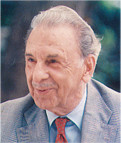
J. R. D. Tata: a man of few wants
In 1945 Tata "conceived of a great engineering company to make locomotives; but it was a failure at first. Sumant Moolgaonkar (Tata director) even went to the extent of saying that it produced more general managers than locomotives, because nobody knew how to make locomotives. After Moolgaonkar got into the act, he lifted Telco which went on to manufacture trucks and now cars,” said the biographer.
When researching Tata’s biography Lala used to largely interview Tata over weekends at his home. JRD’s study-cum-bedroom consisted of "two swivel chairs, two telephones, a bookcase, a sofa and a writing desk which was hardly used.”
When asked why he used only one room while residing in such an enormous house, Tata replied, "It suffices me,” stated Lala.
Earlier when he had returned from France to join the business at his father’s insistence, the young scion found himself in difficulties. His father died within nine months. With financial liabilities and four siblings to look after "Jehangir sold his house to pay the debts his father had run up and decided to live in the Taj Mahal Hotel, where he occupied a little room.”
A diligent person, JRD used to work till late in the evenings and when his secretaries suggested he retire for the day (because they to wanted to return home), Tata would query: "What have I got to go home to? There are no children, no grandchildren, just a dog and a wife in a wheelchair.”
When Lala contracted cancer in 1989 and was undergoing chemotherapy, he visited the Sloan-Kettering Hospital in the USA for a consultation. By sheer coincidence, Tata and he were in the same hotel the night before. Tata invited Lala for tea and said "Russi, I wish they would stop your chemotherapy.” The next morning when they met the doctor, he concurred. "It’s time to stop it now. Let your body fight” the cancer. Tata was overjoyed when Lala conveyed the news to him.
After Tata’s demise Lala confided to his successor Ratan Tata, "I don’t miss him as my chairman, but I miss his affection.” Ratan replied, "So do I.”
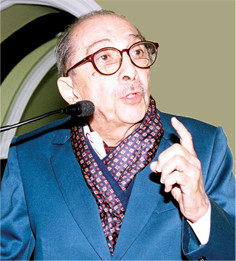
Author Russi Lala: Missing J. R. D. Tata’s affection
A lifting experience
Rotary Club of Bombay president and noted eye surgeon Dr Rumi Jehangir who chaired the proceedings narrated an incident when JRD used the side entrance of Bombay House instead of the front and entered the lift ahead of others. "Line ma aavo (await your turn),” the liftman told him sternly. Tata walked back to the end of the queue and entered after everybody else.
"There was a stunned silence in the lift. The moment Tata went out of the lift, the staff members… berated (the liftman) for not recognizing Tata. The man said he had not seen his face, hence he had not recognized him.
"Soon, the news spread in the Tata headquarters (Bombay House). And within half an hour the liftman was called to Tata’s chambers. The man was petrified. He went up but Tata made him sit down, gave him a cup of tea, complimented him on doing his duty diligently and gave him Rs 100!”
Jehangir pointed out that Lala’s first book, The Creation of Wealth — the Tata Story was a bestseller as was his biography of JRD Beyond the Last Blue Mountain. A director of Sir Dorabji Tata trust for 18 years, Lala co-founded the Centre for Advancement of Philanthropy and became its chairman in 1993. Lala’s book Celebration of the Cells is "a testament to how cancer could attack a man’s body but could not conquer his soul,” said Jehangir.
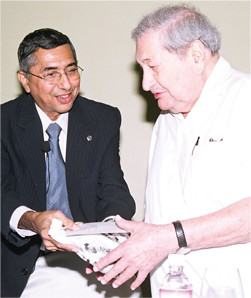
Jamshed Guzder (right) being felicitated by Dr Rumi Jehangir
The Rotary Club also felicitated Jamshed N. Guzder on his 91st birthday. A prominent businessman and chairman emeritus of the Bombay Parsi Punchayet, Guzder is the "longest serving member” of the Rotary Club, noted Jehangir.
"Interestingly, if Jimmy’s years in service to Rotary (61) were to be added to those logged in by his father Nusserwanji and his two sons, Cyrus and Farokh, the grand total would be a mind-boggling figure of 154 years,” he added. Guzder donated a lakh of rupees to the Club on the occasion.
Dr Sam Mahaluxmivala, who proposed a vote of thanks, said Lala was one of JRD’s favorite people. He termed Lala’s book Celebration of the Cells "a must read” for all. "Doctors take credit for curing patients,” without always realizing the importance played by devotion, meditation and prayers, he observed.
◆ ◆ ◆
From the archive