
Medicine/Health
Myth and medicine
Dr Farokh Udwadia capsulizes 5,000 years of medical history
"More often than not it is faith that works. It’s the most important factor in healing” said noted physician and author Dr Farokh Udwadia addressing a gathering at the National Centre for the Performing Arts, Little Theatre on April 26, 2008. His 45-minute talk on "Man and Medicine, a history” was delivered as part of the birth centenary celebrations for the late noted naturopath Dr Jehangir M. Jussawalla.
Describing Jussawalla as "a gentleman, a good doctor,” Udwadia said he got to know him towards the end of his life when he was his patient at Breach Candy Hospital.
"Nature heals assisted,” Udwadia cited Greek historian Herodotus. Terming alternative medium a "complementary” treatment, the doctor said it "did less harm” than some conventional forms of medicine. "First do no harm,” is what the Greek physician and father of medicine Hippocrates directed.
"Most people in the world do not practice western medicine,” said Udwadia. People in China, Africa and elsewhere still opt for alternative medicine.
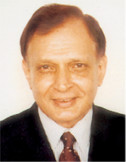
Dr Farokh Udwadia: "nature heals assisted”
Noting the many twists and turns in the history of medicine, Udwadia claimed there is "no greater saga than the epic of medicine.” The history of civilization would show that "Man influenced medicine, medicine influenced man...
"The roots of medicine were in magic,” he noted. Ancient people believed "evil (disease) entered the body orifices” and spread destruction. Magic-cum-religious medicine and the priest-physician were the front-runners of the medical profession. Even though civilization grew on the banks of the great rivers, western civilization took birth in Greece which was not a river valley civilization. "Medicine started in philosophy in Greece,” said Udwadia.
Around 470 BC Hippocrates "divorced medicine from myth,” he noted. Bedside observation of the ill was practiced as was the belief "that the patient is more important than the disease.”
But the strides in scientific inquiry lapsed with the fall of Rome and the onslaught of the Dark Ages. Medicine stagnated for 1,000 years (476-1200 AD). Asking himself the question which is more important, law or medicine, Udwadia said the answer was law, for without it there could be "no civilization.”
With the advent of the Renaissance around the 14th century "humanism broke with dogma,” said the doctor. Men like Leonardo da Vinci, Andreas Vesalius, professor of anatomy at the University of Padua, studied and wrote about the human body.
The Baroque period, 17th century onwards, saw William Harvey study the "motion of blood” in the human body. Harvey applied the principles of research in natural sciences as followed by Galileo, Newton and Kepler.
The invention of the stethoscope (initially a piece of rolled up paper with one end on the patient’s chest and the other at the physician’s ear) and the microscope assisted medical examination and research.
The realization that the simple procedure of washing hands after treating/examining patients could save lives was noted by Hungarian Ignaz Philipp Semmelweis. He observed that the high mortality rate of young mothers was caused by the attending doctors who customarily carried out autopsies before attending to patients in the ward. By washing hands with calcium chloride the mortality rate was reduced to almost zero in two years.
Around the same time a medical student, Joseph Lester, after reading a paper by Louis Pasteur on how infection was caused by germs, used carbolic acid to disinfect wounds. None of his patients, operated on for compound fractures, died.
Coming to the present day, Udwadia rued that "mechanization has spoilt the relation between doctor and patient.” Referring to the increased commercialization and "crippling costs,” he remarked, "medicine has become a business… patients have become fodder for machines.”
As gadgets become outdated, and new machines replace them the "cost benefit ratio” diminishes. He cautioned that microbes evolve as humans evolve, thereby complicating medical treatment.
Speaking about the advances in science and new genetic materials, stem cells, etc he said the day may come when "designer babies” may be born as per the specification of the parents. The advances in science had to be matched by similar development in ethics, he stressed.
"Respect, not disdain”
Adil Jussawalla, who along with his brother Firdausi planned the talk as part of their father’s birth centenary events, said people may ask "why an allopath” was selected to speak. Adil referred to the "tolerance and respect, not disdain” Udwadia had for naturopathy. He described Udwadia’s tome Man and Medicine — A History (see "To take away suffering,” Parsiana, September 2001) as a "wise and compassionate book.”
Citing literary references to medicine, Adil, a poet, quoted from Rustom Bharucha’s book The Politics of Cultural Practise, Gieve Patel’s poem, The multitude comes to a man and Saeed Mirza’s AMMI letter to a democratic mother.
"When my body eventually broke down, disproving (the doctor’s) seemingly non-negotiable expertise, I found that my greatest source of comfort — my secret therapy — in the Infectious Diseases Ward in Ljubljana, was to drink hot water. Not mineral water but, I insisted, ordinary drinking water: my therapy was just to sip it, after bouts of fever and near-delirium. This water became my ‘home’ in the hospital,” wrote Bharucha.
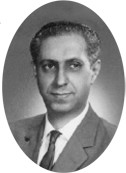
Dr Jehangir M. Jussawalla: pioneering naturopath
"Indeed, once my malaria was diagnosed as ‘malignant’ and not just as the ordinary ‘recurring’ kind, I realized that I had become a celebrity of sorts. Now I was compelled to hold forth on this mysterious tropical disease that had not crossed the borders of Slovenia for about a quarter of a century. Clad in my hospital gown, I addressed solemn medical students who asked me obscure questions about ‘how I was feeling.’ Needless to say, this was my opportunity to dwell on the innermost secrets of my malarial being. But how could I explain to them that the body itself is the deepest repository of secrets, the most deceptive carrier of germs and parasites that can get past even the most nit-picking surveillance of health officials? My body broke down only after I had entered Slovenia, but while I was crossing the border the parasites in my blood were already gestating invisibly, rather like illegal immigrants concealed in the hidden corners of registered vehicles.”
Patel, a medical doctor, poet, playwright and artist wrote about healing in his poem:
"The multitude comes to a man
When he acquires the power
To heal: slowly the multitude
Comes dragging
Its heel. What
Can the multitude want
As I join it to visit
The man who can heal?
The multitude sees its own power
Accumulate before
The healing man, and exchanges
Willingly power
For power.”
Mirza writes about an imaginary conversation between the Emir of Bukhara and a court physician, Nuh Ibn Mansur in the year 1000 AD:
"Tell me, Ali Husain,” asked the Emir, "how did you learn so much about medicine and the cures for so many diseases?”
"It was gained from my own experiences in dealing with the sick, but also because I studied logic and metaphysics thoroughly, my Lord…But there was one book that I found in the market place that really opened my eyes.”
"Which book?”
"It was a book on metaphysics by a Greek philosopher with a commentary by al-Farabi…It helped me to think deeply and maturely, to find the causes of things and the effects of these causes and then to find the cures, my Lord.”
"Does this knowledge only apply to medicine?”
"No, my Lord. It applies to everything around us. It helps us understand our world, the stars, and the universe. There is, I believe a grand design behind all creation. Our job is to find out the reasons…”
"Who was this scholar of metaphysics?”
"His name was Aristole.”
"You mean you learnt all this from a heretic and a pagan?”
"My Lord, I believe you can learn a lot from people who think differently.”
◆ ◆ ◆
From the archive