
Books
A physician’s patience and passions
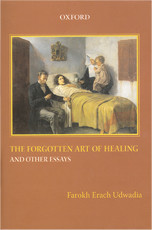
The Forgotten Art of Healing and Other Essays by Farokh Erach Udwadia. Published in 2009 by Oxford University Press, YMCA Library Building, Jai Singh Road, New Delhi 110001. Pp: 184. Price: Rs 695.
"The art of medicine is the art of healing, not just treating, not even just curing… (It) lies in hearing an unspoken subtle nuance in a patient’s history and in the ability to spot and appreciate the significance of one or more subtle physical signs that no gadget or machine could possibly recognize… Above all it consists of… assessing not just the body but the mind.”
Dr Udwadia’s choice words defining his professional philosophy provide an inkling into why people are willing to wait weeks and months to get his appraisal of their illness.
The lean book comprises nine essays covering a gamut of health related topics, in the past, present and the foreseeable future. Case histories and a lucid style, quotes from outstanding men of medicine and their relevance to issues we face today make the work a compendium to which the layman can relate.
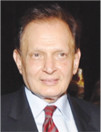
Dr Farokh Udwadia: "practice of medicine is an art”
The fine art of diagnosis — Ud-wadia’s most potent attribute — is delineated in the first essay which gives the book its title. Drawing his inspiration from Hippocrates and Paracelsus, Udwadia believes in establishing empathy with his patient, a "sympathetic communication with the patient’s spirit” by taking his history, listening to the patient "not just with the ears but with one’s whole self, with all of one’s senses… to assess his emotional state, to get to know the province of his mind which could either color his disease or actually be responsible for his complaints. Listening can provide a therapeutic catharsis for a patient, an education for the doctor and is thus often the secret of healing. The importance of listening to a patient’s family history, social, personal and marital history cannot be overstated.”
Distinct from intellect and knowledge is an often inborn faculty known as clinical judgment: "the wisdom to know what to say and do and what not to say and do; when to wait and watch and when to treat vigorously without delay; when to fight death and when to give in to it; when to press for cure and when to console with words or to rest content with palliative relief.”
In 2004 the Benaras Hindu University, said to be the oldest surviving university in the world, conferred its honorific Doctorate of Science on Udwadia. Invited to deliver the convocation address on the occasion, he urged the graduating doctors to remember that "The practice of medicine is an art, not a trade, a calling, not a business; a calling in which your heart will be exercised equally with your head.”
In his speech he referred to the "attributes of a good physician:” competence honed by experience and laced with care and compassion for the ailing men and women in their charge; honesty and intellectual integrity… "In medicine it is common to jump to a preformed diagnosis and then delude yourself by making the clinical features fit this diagnosis,” conveyed Udwadia, admitting that he too has been guilty of it. The other hallmarks are humility — the wisdom to know that you don’t know; judgment — an innate quality which may be strengthened by a broader study of the humanities — art, culture, literature, history, philosophy; equanimity — to present "a picture of fortitude and calm from which your patient imbibes sustenance and strength.”
The second part of Udwadia’s address focused on the history of the profession starting with the great Egyptian physician Imhotep (circa 2700 BC) through to the cracking of the DNA molecule by Watson and Crick in 1953. This discovery has spawned advances in biotechnology, genetics and reproductive physiology at a breathless pace, aided and abetted by the burgeoning field of information technology so that in the 21st century medical science faces issues of ethics and morality. Udwadia fears a new class divide as the rich countries of the West could deploy genetic engineering to endow their future citizens with "greater intelligence, powerful mental attributes and greater physical strength” to create supermen and superwomen in the future — something the poor countries will be unable to afford.
In the chapter on Art and Medicine Udwadia quotes Thomas Mann: "Great artists are great invalids” and T. S. Eliot: "Ill health not only favored religious illumination but also artistic and literary composition” and goes on to examine the truth of the statements through the endeavors of writers, artists and composers. The hall of fame rings with the likes of philosopher Frederick Nietzsche, painters Edward Munch and Vincent Van Gogh, musicians Beethoven and Robert Schumann, poets Byron and Keats, novelists Dostoevsky and Flaubert. Even the front cover of the book bears a reproduction of Picasso’s canvas Science and Charity. He accepts however that there were as many great artists "whose genius was not tempered by serious disease or great suffering.”
Udwadia devotes 30 pages of the book into examining the impact of their ailments — not only the loss of physical attributes like sound or sight, but also the impact of mental ‘imbalance’ produced by epilepsy or depression, deformity or unrelenting pain — in the work of innumerable artists. He writes that there are well over 200 references to diseases of the body and mind in Shakespeare’s plays.
In Religion and Medicine the doctor examines the contribution of each of the great schools of thought but it is in the chapters on contemporary medicine and the anticipated future that the author’s views gain the most relevance. He chides the increasing super specialization and its handmaiden, mechanization, for dehumanizing medicine and adversely affecting the doctor-patient relationship: "Medicine cannot be compartmentalized. No organ functions in splendid isolation, for the human system is a mysterious yet integrated whole.” The advent of technology has led to a deterioration in professional ethics. "Patients become the fodder for these machines. If an audit were carried out on the cost-effectiveness of modern-day investigations in medicine, the result would be shocking,” notes Udwadia. Also, the "more potent the drug, the more sophisticated the gadgetry and the more invasive the procedures used in diagnosis or management, the greater risk of harm to patients.”
Also, "the modern physician in his love for science and technology has forgotten to appreciate that faith and nature are two of the greatest healing forces that can mend and restore the mind and body,” writes Udwadia, preaching the judicious need for "masterly inactivity.” Victory over disease has been the result of increasing hygiene, sanitation and education, clean drinking water and better nutrition. The poor countries of the world continue to suffer from tuberculosis and other infections because of the lack of these amenities.
Examining the other side of the coin the author refers to the greed and frustration of patients and relatives that "is often translated into litigation and a demand for compensation.” To protect himself, a doctor "over-investigates to ensure that he is not sued for missing out on a rare disorder, he uses the more powerful weapons of medicine and science involving greater risks… when simpler ones would have sufficed… He progressively divorces himself from all that really matters in medicine.”
"Medicine in the future” almost depicts a scenario from science fiction. He examines the impact of genetic science born of the cracking of the human genome and leading to fantasies (or nightmares?) of unending life and the elimination of natural selection by the (more limited?) human mind. "As with the development of stem cells, cloning could in the future also help to develop organs for transplants or healthy tissues to replace diseased tissues. In the not too distant future organs and tissues for transplants may well be up for sale in the shopping centers of many large cities of the world. If animals can be cloned, the cloning of humans though technically more difficult will almost certainly one day come about. The emotional, ethical and legal problems that the future would then face may well be insurmoun-table…Could we stop a new genetically engineered evolution of humankind, even if we wanted to?”
The essay "Euthanasia” examines the question of "aided suicide” from various points of view. Emphasizing the "sanctity of life” and "reverence for life” Udwadia notes "there is a qualitative difference between killing on intent and allowing the process of dying to take its natural course.” Noting the implicit need for "justice” he says, "even in the West there is an ever increasing financial crunch for health care. Would it not be more useful to expend resources on the ailing young who are more useful to society and have a greater chance to survive than the very old who suffer dreadfully from chronic incurable illnesses or the terminally ill who clutter critical care units and hospital wards?... In developing countries where resources are even more limited, justice dictates that treatment is administered to patients who are most likely to benefit from it.” This, however, is but one aspect of the argument. Interested readers can look forward to much more.
Udwadia’s vast experience of life, literature, art and music (he is said to be immensely fond of his violin) makes for a heady distillate for the reader to sip and enjoy and return for refills and, maybe, conjure visions of his/her own.
◆ ◆ ◆
From the archive