
Politics and Policy
Determining our fate
The original role of a trustee was to provide leadership and guide the community honestly
In the early 18th century one rich merchant, Daver Banaji Limji, who built the first dakma in 1672, along with five leading merchants of Bombay, created the Bombay Parsi Punchayet (BPP) because they realized that when Parsis from Gujarat started streaming into Bombay the atmosphere of the city with its colorful mixture of immigrants represented a danger for the individual Parsi often separated from his family. And it was felt that such an organization would be necessary to look after them.
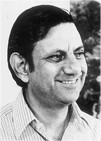
Jamsheed Kanga: "Lead by example”
The role of the BPP was to help the new entrants and to try to create community consciousness amongst them as also to decide civil disputes in the community. Since then and till very recently, the trustees were all eminent persons who had been very successful in their business or profession and were willing to serve the community without seeking any gain either materially or in personal prestige. The list of trustees would include some of the most eminent persons of the community and the chairmen were also the accepted leaders such as Sir Jamsetji Jejeebhoy, the first Baronet who was succeeded by the second, third and fourth Baronet from 1851 to 1898. Thereafter, there were other eminent persons like Cawasji Jehangir, the first Baronet, Sir M. P. Khareghat, a retired ICS (Indian Civil Service) officer and High Court judge, Sir S. P. Billimoria, an eminent chartered accountant, Sir Cawasji Jehangir, the second Baronet, Lady Hirabai Jehangir, Nadirshaw Mulla and Eruch Desai, both eminent solicitors and many others. I was a trustee from 1979 to 1994 till I resigned, and I had eminent colleagues on the board such as Dr Aspi Golwalla, Justice Jal Vimadalal, Naoroji Godrej, Jamshed Guzder, Desai, Dr Mehroo Bengalee and Minoo Shroff. None of these persons needed to be trustees to enhance their personal stature as they had already distinguished themselves in their own fields. Rather, their presence brought glory to the BPP.
The role of the trustees was to look after the welfare of the community and to provide leadership. It was never meant to propagate a particular ideology, or version of the Zoroastrian faith. They were responsible for managing the various colonies (baugs) as well as the community properties such as the Doongerwadi and to speak on behalf of the community whenever the need arose. Over the years, the role of leadership almost disappeared and the BPP’s main activity became the allocation of flats in colonies and to look after them.
Fortunately the system of election has been drastically changed by the High Court and every Parsi member can directly participate in the election of every trustee, as there is adult franchise; earlier, the election of trustees was through an electoral college. This has stymied the effort of certain groups who had packed the Anjuman Committee in order to capture all the trustee vacancies.
It is necessary to understand why the organization is in disrepute today. Earlier the trustees never directly participated in any financial deal or in matters connected with the purchase or sale of land, etc. Also, the allotment of flats in the various colonies was done strictly on the basis of merit for which an elaborate system was introduced to ensure honest and correct allotment. In recent times, however, the method of allotment has changed despite the fact that the original benefactor had charged the trustees to allot to only the poor and deserving. Now the BPP and the Wadia Trust have changed the policy and allow the original occupants no longer requiring the flats but who cannot be evicted due to Rent Control law to negotiate with the BPP and transfer the flat to other persons who may not be most deserving so long as they share the transfer price with the BPP. The main criterion is not genuine need but the size of the purse.
Also the role of the Chief Executive Officer (CEO) and administration in processing the matters coming before the trustees is very crucial... Golwalla as the chairman insisted on the CEO giving an objective opinion on each proposal and the practice continued under his successors. I understand that now this system is not followed and some trustees who have the time and desire to read the papers are allowed to put forth their version before the board (without the administration’s comments) which is then approved.
Now that the community has a chance to elect seven trustees directly, it is necessary that in the selection, due care is taken to see that the original role of the trustee which is to provide leadership and guide the community honestly will be performed.
So what are the characteristics that one should look for in a trustee? I would suggest the following:
A person who has a record of public service and who is of good/impeccable character would be ideal. I recall that an eminent person like Godrej was willing to stand as a trustee despite his heavy work load because he felt it was his duty. And so did many others. This was in keeping with the old tradition when after having become eminent in their own professions persons felt that it was their duty to serve the community. However with the present low respect accorded to BPP trustees, such persons are not likely to stand. We should find such persons and persuade them to stand.
We should avoid electing a person who wants to be a trustee in order to enhance his own image in society, if elected. Some businessmen with lots of money but poor reputation or record of service may aspire to be trustees. Such persons would be more interested in publicity and less in social work. Trustees have to show courage and be prepared to take unpleasant decisions in the interest of the community, and not play to the gallery. We should carefully examine how such persons have acquitted themselves in other organizations, and decide if they are worthy.
Since the BPP has to deal with a lot of land matters, a trustee who is dabbling in land matters would definitely have a conflict of interest situation. Builders and persons dealing in property would have to be extremely scrupulous when dealing with BPP properties and should as far as possible not be selected, and if they are, should be carefully watched.
A person who has good experience in a profession or business and has administrative acumen would be the ideal candidate. In our community we have a number of eminent professionals who have achieved excellence and now being retired can take on the responsibility of a trustee. There will be a lot of responsibility on the new chairman who will have to lead by example and show courage of his convictions. A retired Supreme Court or High Court judge would be ideal as the next chairman. I would strongly urge my friend Justice (Retd) Sam Variava to stand, and the community to elect him with a huge majority.
In my opinion it is most important that we do not vote for a trustee who has an agenda for bringing about a particular religious ideology. Since the BPP trustees are not required to give any decision on religious matters except where it affects the use of property like the Towers of Silence, I feel it would be dangerous to elect persons who have a rigid fundamentalist ideology and are trying to force their views on the community. By and large, an average Parsi is not a fundamentalist. At present a fundamentalist organization has openly said that it would try to capture the BPP in order to force its narrow fundamentalist views on the community. Such persons would do a lot of harm as trustees and would completely change the functioning of this great organization, lowering its prestige. I would strongly advise not to vote for such candidates. We do not need a Parsi Taliban! My advice would be that in the interest of the community we should elect reasonable people who are prepared to see both sides of any situation and try not to force their own rigid views on the community, those who have an impeccable record of honesty and service, and can be considered as worthy to lead a distinguished community such as ours.
The fate of our community is now in the hands of the voters and I sincerely hope that they will discharge their responsibility in an intelligent and honest manner and restore the BPP to its former glory.
A retired Indian Administrative Service officer, Jamsheed G. Kanga held senior posts in government including that of the municipal commissioner of Bombay. He is at present a senior corporate advisor to the Tata group of companies. A former trustee of the Bombay Parsi Punchayet, he is on the board of several companies and is active in heritage conservation and town planning.
◆ ◆ ◆
From the archive