
Zoroastrians Abroad
“Anyone can win”
ZAC president Hosi Mehta has shown that bonhomie, faith and hard work can lead to entrepreneurial success
"The problem with our religion is that we talk about it; we argue about it, but we don’t live it. Something that ties you to how you conduct yourself is lost in frivolous discussions and arguments,” says Hosi Mehta, president of the Zoroastrian Association of Metropolitan Chicago (ZAC).
Mehta’s deep involvement with Zoroastrian principles is reflected in his "President’s Message” in the ZAC newsletter. "Whenever we have the urge to correct someone, judge someone, we are reacting from our ego. When we leave people alone, accept them for who they are, we look for a solution of peace, we are acting from our conscience, our Fravashi because that part of Ahura Mazda in us is always looking for harmony, peace and tranquillity,” he had noted in the March 2002 issue. "When will we have the maturity and wisdom to recognize what our true wealth is? Our future, our youth. When will we have the wealth of wisdom to recognize that forcing others to do what we want them to do, does not resolve issues in the long run?” he asked in April 2007.
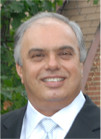
Hosi Mehta: sense of direction
However, Mehta is by no means a pontificating busybody. Full of bounce and cheer, the man we met in the aisles of the XIV North American Zoroastrian Congress is an untutored but award winning entrepreneur. Adjudged Entrepreneur of the Year 2004 by the World Zarathushti Chamber of Commerce (WZCC) the owner of Mehta Motors spends an hour a week mentoring "at risk kids” in middle school in his city. "There are 80 to 90 people doing this and everyone says ‘I’ve gained more from this than I’ve given,’” he noted as he volunteered as a mentor on the Zarathushti mentorship program launched at the Congress. For some years past, Mehta has also been co-chair of the FEZANA (Federation of Zoroastrian Associations of North America) Welfare Committee and along with his committee members is currently involved in organizing free treatment in Boston for Ushta Confectioner, the young girl who accidentally fell into a vat of boiling milk in Bombay. They are also trying to get the parents of the child across and organizing their stay in the US, maybe for some months during the course of the treatment.
The genial Mehta has not forgotten how his mother Freny, widowed at an early age when husband Pervez Mehta suddenly passed away leaving her to bring up their two Bombay-born boys, decided to return to her native Ahmedabad, working as an embroidery teacher in the Zoroastrian Ladies Industrial Institute. "She was a very soft person. She slapped me only once and then she cried!” For Mehta, "masti, dhamaal (mischief, noise)” was important at that stage. "I had a lot of fun. I was also often in trouble,” he recalls. Sports minded and good at it, he represented the state in cycling. Swimming and hockey were other pastimes. "Also football, but never cricket.” His aim, while in school had been to join the army, but he backed off on his mother’s tearful opposition. He decided to join the commerce stream but "knew that’s not what I wanted to do.” Recalling his trepidation at the prospect of being stuck with it when he "unfortunately passed” his first year exam, Mehta notes that it was a bout of typhoid that rescued him from that unhappy prospect. Always a "hands on” kind of person, he joined a two-year course in automobile engineering.
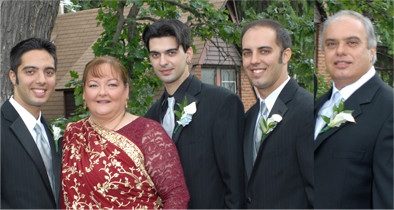
From left: Shazad, Kimberley, Sheroy, Shawn and Hosi Mehta
"I always wanted to be in business… to hold my own destiny. Even though my grandfather chaffed, ‘Kaya baap-daadaaé dhandho keedhélo (which of your forefathers were entrepreneurs)?’ I had a strong sense of direction.” Working in a garage, training under service managers at Burmah Shell, Mehta says he bided his time to come to the US. When he reached there in 1973 he found he had only two options: to work with a car manufacturer or learn to be an automobile mechanic. Always mechanically inclined, he says he joined a two-year course to become one, simultaneously taking on a job as an electronics technician and became good at it. "It became the turning point in my life,” he notes. He met Kimberley. They were married when he was 23 and she was 19. Always interested in going back to India, they spent five years in Ahmedabad. He started a garage there; their two younger sons were born there. "It was tough,” he recalled. They lived in a lower middle class locality, Kimberley gamely carrying water up two flights of stairs.
Mehta’s message of acceptance for the WZCC award had noted, "Honoring a person like me and a business like ours, all you judges have sent out a message that anyone can win…We have learnt and grown. With confidence and faith one cannot go wrong.”
In 1983 the Chicago Darbe Mehr was built. The Mehtas were back in the US, volunteering with the community. "As compared to Bombay, the ZAC constitution is liberal. We allow everyone in,” says Mehta adding, "To keep the community cohesive, you have to keep the family together. Some people got turned off. But they have softened now…The community has grown and in some ways we have become complacent. The newness has worn off…”
The Mehtas have three boys — Shawn, Sheroy and Shazad. "They all work with me (in the garage and gas station into which the business has expanded), we are truly blessed,” he notes happily. The family also includes a couple of greyhounds. But Mehta dreams of going back to India. "I am still an Indian citizen…”
◆ ◆ ◆
From the archive