
Books
A body in balance
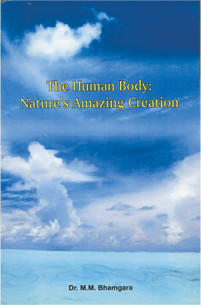
The Human Body: Nature’s Amazing Creation by Dr Meherwan M. Bhamgara. Published in 2005 by Health Science Trust, 19 Ravi Society, Ryewood, Lonavala 410401. Pp: xiii + 170. Price: Rs 100.
The Human Body: Nature’s Amazing Creation by Dr Meherwan M. Bhamgara. Published in 2005 by Health Science Trust, 19 Ravi Society, Ryewood, Lonavala 410401. Pp: xiii + 170. Price: Rs 100.
"Let there be respect if not reverence for the miracle of nature which our body is. We are but a part of nature, a part which cannot comprehend the whole,” writes the author Dr Meherwan M. Bhamgara in The Human Body: Nature’s Amazing Creation. This book, packed with information on the human anatomy as also the need for a healthy diet rather than medication, instills in the reader a sense of awe and admiration for nature.
A human body has 60,000 miles (two and a quarter circles around the earth as measured at the equator) of vascular network to transport blood! The heart is like a non-stop pump which in most humans performs its duties without any need for cleaning, repairing, recharging or changing of worn out parts. Such details are mentioned not once but repeatedly in the book to ensure that the reader does not underplay the importance of any organ.
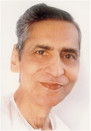
Bhamgara: care and cure
An average adult uses no more than 13 percent of his brain’s abilities, states the naturopath citing the golden rule for muscular or brain tissue – "use or lose.” For him, physical fitness or exercise is not to create bulging biceps or a well chiseled abdomen but to generate stamina or endurance, flexibility, balance, strength, agility and power. "Return to the use of the legs,” he constantly advocates to the city dweller who is dependent on the comforts of modern transport and communication. Prescribing a simple exercise like singing he explains how it can help bring down blood pressure as also soothe frayed nerves in the tension filled hectic scenario.
Man is the only creature capable of sleeping on its back, Bhamgara refers to the human skeletal system which demands that a good posture be maintained at all times.
Postural defects like slouching result in poor ventilation of lungs, and could contribute to the inefficient functioning of organs like the stomach, liver, pancreas, intestines. When the author states such facts with conviction we feel almost guilty for misusing our body.
"Caring is in doctors’ hands; curing is not,” says the 77-year-old naturopath who in the course of his five decades of practice in Surat, Bombay and Lonavala, must have helped innumerable patients to regain their health potential. He studied naturopathy under Acharya K. Lakshmana Sarma of Pukukottai, Tamil Nadu and Dr Dinsha Mehta of Poona. After being conferred the Fellowship of the Indian Institute of Natural Therapeutics, he earned a J. N. Tata Endowment scholarship to pursue his studies in the UK. For dissemination of health knowledge he formed the Health Science Trust in 1964 under whose auspices he has been delivering lectures and authoring books, both in English and Gujarati. Advocating holistic health he notes, "We need healthcare centers; not disease-scare hospitals,” as he has titled one of his chapters.
A strong proponent of self cure, he constantly urges the reader to have faith in nature’s healing abilities, citing his own instance of curing an acute appendicitis (even though he was cautioned of its fatal consequences if he refused surgery) and cancer of the throat (which was fortunately not too advanced) by changing his lifestyle and diet. Although naturopathy may not cure all ills, fasting when necessary, reduction in spices, avoidance of processed and chemically treated foods, as also limiting salt and fried foods can work wonders. Those who like their food steaming hot or well chilled are recommended by the naturopath to eat room temperature foods which can be better digested. "We dig our graves with our knives and forks,” Bhamgara quotes the famous French maxim.
"Traffic jams, whether in our bowels or in our brains, have to be cleared so that the natural healing forces work freely without impediments,” believes the author. Advocating a vegetarian diet, Bhamgara maintains that biologically humans are not programed to be either carnivores or omnivores.
When unwell, neither visit a doctor, nor a druggist. Just stop abusing the body, he keeps reiterating. In case of swollen tonsils why should surgical removal be necessary? he questions, pointing out how they are the first line of defense in the upper respiratory area, preventing tracheal and bronchial infection. Diseases will continue to assume more devastating forms due to the ‘drug mentality’ of doctors and ‘quick relief at any cost’ attitude of the modern patient, he is convinced. In over 70 percent of all ailments the medicines prescribed are either unnecessary and/or with harmful side effects, is his view. And yet he acknowledges the contribution of allopathy and surgery as in getting bedridden patients to walk, giving babies to sterile couples, repairing the hearts of blue babies, separating conjoined twins and removing a bullet lodged in a body.
Diabetes, another disease which can be controlled with the right foods, has witnessed a rise in India, regrets the naturopath. In fact, India has topped the world in the incidence of diabetes —over 30 million diabetics in this country as compared to China’s 25 million and USA’s 15 million. With one in every eight Amdavadis being a diabetic, Ahmedabad is branded the ‘Diabetes Capital.’
Obesity which is on an alarming rise throughout the world is also rooted in faulty eating habits. He cites the findings of The Center for Obesity Research in Kanpur which revealed that between 1998 and 2003 obesity related ailments cost us Rs 3,750 billion. Barely five percent of our population is said to consume as much as 40 percent of fats and oils produced in the country.
"Eating for pleasure alone is eating for pain ultimately. But eating without pleasure is eating without life,” Bhamgara quotes E. E. Purinton to reinforce that whilst there is no need for us to become hypochondriacs, becoming excessively concerned about our intake and ailments, we should be happily consuming food instead of the food consuming us. He cites from several sources and exemplary lives like Mahatma Gandhi’s to propagate his views.
Avoid overeating, ensure exercise, keep mentally active, engage in philanthropy — are the four steps Bhamgara recommends to lead a meaningful life. His ultimate aim is to make the reader health conscious — create harmony inside and symphony outside. As he reminds us of the English pun: "Life depends on the liver.”
P. M. G.
◆ ◆ ◆
From the archive