
Books
Highway to health
Nature Cure: Dr J. M. Jussawalla’s Drugless Healing by Rajendar Menen. Published in 2013 by V& S Publishers, F-2/16, Ansari Road, Daryaganj, New Delhi 110002; website: www.vspublishers.com; email: info@vspublishers.com. Pp: 216. Price: Rs 150.
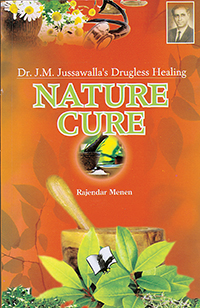 "The human body is a miracle and works in mysterious ways. It can heal on its own. You need to bite the ‘bullet’ only in dire circumstances,” advises the author to whom an injection or antibiotic is equivalent to subjecting the body to a gunshot. The main purpose of the book is to help the reader decide if he/she needs allopathy for immediate relief or if it is better to change one’s lifestyle and remove the cause of disease from the root using nature cure methods.
The book opens with a dedication "to Dr J. M. Jussawalla and the Nature Cure Movement” with a subsequent amplification that Jussawalla’s sons Adil and Firdausi "wish to honor him, the staff of (Jussawalla’s) Natural Therapy Clinic, Bombay and their beloved mother Mehera through the pages of this book.” For Menen, a senior journalist and author whose latest book is Karma Sutra — Adventures Of A Street Bum, Jussawalla was "the poster boy…who gave nature cure a respectable, educated, influential and urbane voice.” That Mahatma Gandhi, Jawaharlal Nehru, Morarji Desai, Meena Kumari and several other well-known names were treated by Jussawalla is periodically impressed upon the reader by the author who is an adherent of The Tibetan Rites and additionally draws his inspiration from Osho and Sri Aurobindo.
Even before the 41 chapters are listed under Contents, there is a note on how to use the book: "At the outset I must insist that this is not a self-help book. If you have an ailment, please visit a medical professional for treatment. If you are on medication of any kind, do not stop it without expert advice…Research in medicine opens new vistas all the time, and we have highlighted some of them.”
The first few pages of the book focus on Jussawalla’s early life and influences, his family, how nature cure changed his life, the methods employed by him to treat his patients, and the Dhanvantari Award conferred on him at the age of 82, being the first naturopath to receive this honor, eight years before his demise in 1997. "My years in the scout movement, physical culture and nature cure have all helped me to realize…that man’s most rational approach to himself and his problem has always lain along the path of self-control, self-discipline and self-denial,” Jussawalla is quoted here.
Impressed and influenced by Dr Dinshah K. Mehta, among the pioneers of naturopathy in India who came to be respectfully addressed as "Dadaji,” Jussawalla started assisting at his clinic in Poona and subsequently took charge of the Bombay clinic. He fell in love with Mehta’s sister Mehera and following their marriage chose to branch out on his own. Both of them went to the Davidson College of Natural Therapeutics, Jehangir on a Wadia scholarship to specialize in naturopathy, osteopathy and chiropractic treatment, and Mehera on a Tata funding to qualify as a masseuse. The uncaptioned photos in the book reflect his early years but fail to generate reader interest. On their return to India Jussawalla started the Natural Therapy Clinic in Bombay which some dismissed as "fad, humbug, quackery” yet drew many elite members of society including leading cine stars who turned to him to improve their complexion.
Always respectful of all modes of treatment, his reasoning was simple: "Never utter… ‘I do not know this therefore it is false.’ One must study to know, know to understand, understand to judge.” He further clarified that nature cure practitioners are not against medicine, drugs and surgery; they are opposed to wanton misuse of antibiotics and poisonous drugs. "Suppose you have a hemorrhage, a blood transfusion has to be given. We won’t say go on a fast.”
It is the condition of the body that determines whether virus and bacteria can be warded off or admitted in. "No infectious disease can be caught unless there is a soil in which the germ can flourish,” maintained Jussawalla. And toxicity is caused not just by wrong diet but even by negative emotions like hatred, envy, jealousy, fear, naturopaths are convinced. The author cites Prof Robert Emmons of the University of California who conducted studies to show that people who kept weekly written records of gratitude slept longer, exercised frequently, had fewer health complaints when compared with those who were asked to only record their complaints.
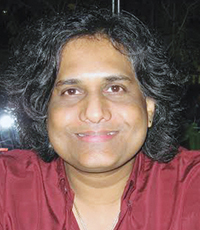
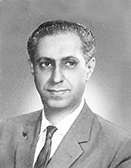
Author Rajendar Menen and Dr J. M. Jussawalla (right)
The subsequent chapters focus on different methods employed by nature cure: electrotherapy (electrical stimulation), heliotherapy (sunlight), chromotherapy (colors), chiropractic (pressure), osteopathy (maneuvering the musculoskeletal framework), vibrotherapy (applying low frequency mechanical vibrations to the whole body), orificial therapy (nerve balance), spondylotherapy (stimulating the spine), psychotherapy (addressing the mind), zone therapy (stimulating prana, the life force)… Within the two to four pages devoted to each of these methods, the author ensures that Jussawalla’s views and experience of the system are included. The book though devotes more space to topics like exercise, massage, dietotherapy (right foods) and fasting.
Whilst diets like the Atkins Diet, the Mediterranean Diet and a Low Calorie Diet may be familiar terms, among the 27 listed in this section are some little known like the Flexitarian Diet (where a little meat is occasionally consumed), the Breatharian Diet (no food is consumed), The Purple Food Diet (only purple fruits and vegetables like plums, grapes and eggplant are eaten three days a week because "a plum a day keeps facelifts away”). Voted the most popular diet in the US is the DASH (Dietary Approaches to Stop Hypertension) Diet Eating Plan that is effective for people with high blood pressure, heart disease, stroke, kidney stones and diabetes. This meal plan includes three whole-grain products each day, four to six servings of vegetables and fruits, two to four servings of dairy products and several servings each of lean meats and nuts/seeds/legumes.
Readers also learn of the "Clean 15” list of vegetables and fruits (as certified by the Environmental Working Group in the US) which limit one’s exposure to pesticides by almost 90%. These include onions, sweet corn, pineapples, avocado, asparagus, sweet peas, mangoes, eggplant, cantaloupe, kiwi, cabbage, watermelon, sweet potatoes, grapefruit and mushrooms. Conversely products with high pesticide residue are apples, celery, sweet bell peppers, peaches, strawberries, spinach, nectarines, grapes, green beans, lettuce, cucumbers, blueberries and potatoes. In these days of contamination, a reader would have loved to understand the rationale behind this classification.
The start of every chapter includes a quote by some philosopher or seer. As reminds one ancient Ayurvedic proverb, "If diet is wrong, medicine is of no use./ If diet is correct, medicine is of no need.” One of the sure methods to eliminate poisons from the system, believe naturopaths, is through intermittent fasting coupled with high intensity exercise "to raise one’s fitness to the next level.” The Parsi community, to whom fasting is alien, may be surprised to learn that "Fasting is difficult only for the first three days…After that the body will have adjusted itself to the changed conditions. The most effective way is not to gradually lessen the amount of food, but to stop eating altogether and to drink nothing but plain water” so that the stomach nerves are not stimulated. Cautions Jussawalla, "Fasting is a double-edged sword. Long fasts should never be conducted without the supervision of an experienced nature cure physician.”
To naturopaths who consider vaccines as offering only "temporary, typically inferior immunity compared to what the body would receive from naturally contacting and recovering from a disease,” the three-fold increase in the childhood vaccination schedule in the US is a cause for concern. The chapter dealing with vaccination elaborates on the dangers and complications arising from injecting live virus in a healthy body yet concedes that unless poverty, ignorance and living conditions improve, "there is no alternative to mass immunization and early childhood vaccination.”
Whilst the book endeavors to provide insights to create "a healthier, happier, you” it has no ambitions of transforming the reader for the author believes, "Do not try to change the world; it is unnecessary stress. Start by changing yourself and you will see how difficult — and worthwhile — it is.”
◆ ◆ ◆
From the archive