
Institutions
IZA: Coping with change by Arnavaz Mama
Along with their institutions, the Irani community of Bombay is changing, very slowly
"We are green card holders but our roots are here. An Irani will never sell his business. He will develop new things. He won’t cut bridges. Basically we are very hardworking — both men and women. We believe in the dignity of labor,” says Mehrwan Irani, the current president of the Iranian Zoroastrian Anjuman (IZA) who owns and runs Olympia, a Hindustan Petroleum gas agency in Bombay.
Anyone who knows Bombay knows the flavor of Irani restaurants, once aggressively prominent, now elbowed out of the spotlight by South Indian eateries. Declared a "nomadic tribe” by the Government of Maharashtra (GoM) in June 2005, seeing such landmarks as Bastani, Perks, Light of Asia restaurants disappear, with increasing outmigration to the West, with the prosperity of Dahanu orchards on the decline due to industrial pollution, Parsiana had wondered about the community’s bill of health and how economic, social and political developments were affecting its stalwart members.
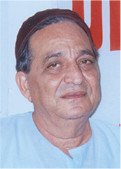
M. Irani: entrepreneurs all
"The community is doing very well. We are entrepreneurs in all walks of life,” asserts Mehrwan. Going into specifics he tells us that Café Mondegar in Colaba is being run by the third generation of the family; so too the Byculla Chemist and Bakery; the City Bakery at Worli; Kyani Restaurant at the Metro junction; Café Royal opposite the Regal Cinema is on a modern footing; Paradise is still run by Jimmy Irani and his family. "Zend Zend’s family is fully here and one of his sons, Perzon, has gone into (civil) construction.” Zend’s bakery — Yezdani in Bombay’s Fort area — is renowned for introducing different types of bread, their Peekay Wines in the Crawford Market area is always crowded with consumers who appreciate the variety of liquor on offer at a reasonable price. As against A1 Restaurant at Grant Road which has been sold to Muslims and the whole family is now in North America, others like National, Sunlight, Felicia and Leopold have been converted into beer bars, says Mehrwan. Outstanding among Irani entrepreneurs was long time IZA president, the late Noshir Mulk Irani, creator of some of South Bombay’s most celebrated addresses as well as the popular beer London Pilsner which was sold by the family’s second generation to Vijay Mallya of United Breweries.
"The old Iranis captured street corners, but Light of Asia or Perks or the others was never a one-man show,” Mehrwan speaks of their business strategy. "Our forefathers came, made their living, often working in the community establishments. Then 16 people would get together to do business — the rupee then being comprised of 16 annas, each one had a one anna share in the business. They worked and got their share as working partners.” Over a period of time, as their families grew, as the first generation of partners passed away and the one-sixteenth share became increasingly diluted among the inheritors, the fights between partners became more and more difficult to contain. Like the others Bastani, Cecil and various other establishments closed down or passed out of Irani hands, he explained.
"Most Iranis are in the baking business. Khodadad Irani of Wibs Bread has three factories with automated plant. All his kids went abroad but his son has returned with a masters in business administration and his daughter Sharmeen (with an undergraduate degree in bakery science and management, according to World Zarathushti Chamber of Commerce magazine Synergyz) is running Wellbread Bakery in Houston. Jimmy Boy is being run by the father here while his daughter has settled in Australia. Merwan’s (the celebrated baker of Andheri) has the second generation of the family running the business.
"Even if educated, the Irani will eventually settle for business,” iterates Mehrwan referring to Just Baked in Poona. Former IZA president and architect Burjor Aga’s sons all went abroad but his grandson has returned to India and is running the Armayesh embroidery business in saris and shawls in Bombay and Poona. There is also the Irani owned florist shop Apollo Florist.
"The youngsters migrate to New Zealand and Australia, to Toronto and Vancouver and take up franchises,” says Mehrwan. He cites the case of the family owning Sassanian Restaurant at Marine Lines where the whole family has settled abroad with the father maintaining links in both areas and his sister running the restaurant in his absence.
The Iranis have also been large landowners. Rashid Jamshed Irani owned most of Thana and Ghatkopar, says Mehrwan, noting that the man’s sons continue to be a force in Thana. The family of builder Boman Irani had a lot of agricultural land in Dahisar. The family had an agency for Java Motor Cycles. Boman is now building on his own land, adds Mehrwan. One Irani family has become legendary in the profession of horse racing and training. Going into four generations according to Mehrwan, Rustom Byramjee and his son Rashid were icons of the Indian turf.
Even some of those who have gone into the professions have a business link, according to Mehrwan. Boman Irani, the photographer turned actor, owns Golden Wafers; the family of Kaikhusro Tavakuti, a criminal lawyer, is into the tea trade; Dr Faram Irani is a gynecologist. Government service has also been popular with the community, says Mehrwan, naming a few who readily come to mind: Khurshed Sorab Irani, inspector, state excise department, Cyrus B. Irani, sub inspector, traffic police, Kayomarz Boman Irani, police sub inspector…
A lot of Iranian Zoroastrians still come to India for tertiary studies, the Poona Parsi Panchayat giving them accommodation. They go mainly into engineering and information technology, says Mehrwan, adding, "It is not easy to get into a college in Iran. They have a tough entrance exam.” Most of these students, for whom the IZA is an unofficial guardian, go back after their studies are completed. Some of them are second generation students, their fathers or mothers having studied in Poona before them.
But the migration of Zoroastrians from Iran to which most of the existing community owe their antecedents, has petered off "because there are not too many Zoroastrians left there. Also, many have businesses there and have adapted to the new regime,” reasons IZA vice president Pervez Irani, a Dahanu resident who along with his partner Banu Azargoshab in the Yzad Education Trust has built a cosmopolitan high school, the Shirin Dinyar Irani Learners’ Academy, named after the lady who has donated five acres of land to the project. Two years ago they started the Jamshed and Shirin Guzder College of Visual Arts which gives two and four-year diplomas in painting and sculpture recognized by the GoM J. J. School of Fine Arts. There are 550 students from the nursery to standard X and 25 in the College, he notes. Previously the students had to go to Vasai to study. Now the Trust is tapping students from Safala, Kelva and Palghar, he tells us.
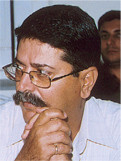
P. Irani: art, lear-ning and sports
Pervez is also upbeat about their Yzad Sports Club which is open to all. "The students of Dahanu taluka have become national level champions in shot put, discus and basket ball. Recently we won the Under-14 trophy for basket ball in the interschool sports in Bombay held by the Mumbai School Sports Association,” he exults.
Not so happy is the perception of the chikoo and coconut cultivators of Dahanu, a once affluent Irani Zoroastrian community. Their income has dropped consistently since the establishment of the thermal power plant – against which the redoubtable Nergish Irani had fought hard but lost — in that eco-fragile zone. There may also be other reasons, like locust infestation because of the depleting forests in the area, smog from Tarapur and Dahisar, speculates Pervez. "The chikoo is very delicate. Any change of temperature and flowers drop,” he says, adding that the same applies to the coconut. Nor can the orchard owners go into an alternate crop. "If you do, you are putting yourself back 15 years because a new crop will take between five and 15 years to mature,” he tells us. Besides, they cannot cut down trees easily. Government restrictions require a panchnama and other formalities before a log can be transported out of the premises, notes Pervez.
The result is that the youth are migrating abroad to study and then settle, the US, New Zealand and Australia being favorite destinations. Very few have taken up farming. Architecture, commerce and hotel management – after which they get jobs in hotels in Dubai and Switzerland — are some of the chosen fields of specialization. A few parents have joined them. Some lease their properties out to others to run. In Dahanu itself, commerce and electronics are two favorite options in terms of economic activity, apart from farming. "Our electricity situation has improved,” says Pervez, with a four-hour power cut between 6 and 8 a.m. and 5 and 7 p.m., Fridays excepted when it is available through the day. A 25 percent drop in population is partially offset by Parsis from Bombay who choose to live in Dahanu and work in Bombay. It is easier to commute from Dahanu than from Virar, says Pervez, adding that there are three or four shuttle services between the two towns every morning and evening.
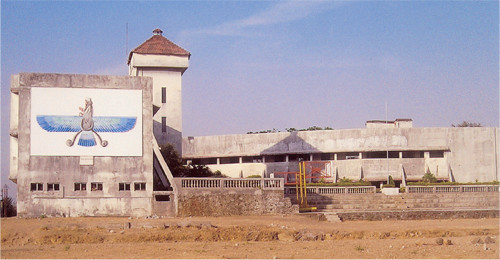
The Shirin Dinyar Irani Learners’ Academy is built on five acres of land donated by Shirin Irani for the project
"We Iranis of Bombay consider ourselves Parsis. But the Iranians of Iran look down on us as ‘Hendi (Indian).’ We believe a lot in prayers, especially after-death prayers. Our diet is more vegetarian,” Mehrwan’s wife Benafshay (née Arestani) describes the community’s mores. Their abiding attachment to the atash is reflected in their contributions to the renovation and repair of agiaries, the case of Gustad Dehmiri of Leopold and Universal Cafe — who saw the project of renovation of the dadgah unit of the revered Dadysett Agiary to fruition despite repeated cost overruns — being a recent example. Some years ago he had similarly salvaged the deteriorating Umrigar Daremehr in Uran with the help of others in the community.
The Iranis are more conservative than their Parsi counterparts, Benafshay continues. "Irani parents are very strong. We make sure the children get married,” she says. "We are still narrow-minded. The pressure starts building in our households to get the girls married before they go to college. Like the Gujarati banya community we also get the boys married early,” she adds. The result is that the Iranis do not face the problem of non-marriage that afflicts 33 percent of the Parsis. In the upshot, their birthrate is also healthier. According to Pervez, the average age at marriage is 24-25 years; the average size of the family, two children per couple.
Also, the community members are a lot more tolerant. The marriages endure, Benafshay says. "It is an ego point with our men that their wives shouldn’t go to their mothers’ house.” Not when there are quarrels; not when she is pregnant. "Parents don’t interfere, don’t reaccept a daughter who is married,” she describes the code of conduct.
Amplifying the difference of approach between Parsis and Iranis, Mehrwan and Benafshay say, "In a Parsi household everyone has a car. But even a rich Irani will use a taxi, underplay his wealth. Most of us are down-to-earth. Simplicity is the key word for Iranis.” Having observed a casually clad Mehrwan cycling between work, the Charity Commissioner, the High Court and sessions with solicitors and counsel in his 18-year, eventually successful struggle to preserve the 13-acre Tithal Sanatorium land for the community, we understood what they meant.
◆ ◆ ◆
From the archive