
Zoroastrians Abroad
"I can make a difference"
Modernizing the Iranian Zoroastrian community needs to be done in small, gradual doses, says educationist Mehran Sepehri
"In Iran there has been no proper management of business. Fifty percent of our students go for PhD abroad. We are training a new generation of managers,” says Mehran Sepehri who holds a master’s degree in business management from Stanford University and has been invited to help start the new postgraduate school of management studies at the Sharif University of Technology in Tehran.
Sepehri was in India last December to present a paper at the Project Management Congress of the International Project Management Association in New Delhi, the first time such an event has been held outside the US or Europe, he said. He had taken the opportunity to visit Bombay, make contacts within the community and the profession, find ways to transfer technology, have joint projects.
Speaking to Parsiana about the new business school being set up in association with the government, he noted that the two-year course in English will be training 50 of the best students in Iran. Sepehri who will be having administrative duties apart from teaching, consulting and organizing seminars says that admissions and appointment of teaching staff will be the prerogative of the faculty. The course is expected to be modeled on that of the Harvard Business School. The perceived need for managers on par with international standards is a direct concomitant of Iran’s application for membership of the World Trade Organization (WTO). This year the country has been granted observer status, he informs us.
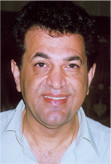
Sepehri: valueing customs, traditions
Sepehri divides the people of Iran into two categories: the educated intellectuals who want the country to succeed in business and economic affairs and the traditionalists who want to turn the clock back. "I feel I can make a difference. I don’t want to get into politics.”
Having gone to Stanford on a scholarship, Sepehri says he stayed back in the US because of the Iran-Iraq war. During his 20-year sojourn there, teaching at the California State University and Santa Clara University, "my heart was back home.” A member of the Zarthoshti Anjuman of Northern California (ZANC) and the Persian Zoroastrian Organization (PZO) of which he became vice president, Sepehri says he worked for unity between the Parsi and Iranian Zoroastrians who at one time just couldn’t see eye to eye. "The new generation is a lot better,” he affirms.
A former assistant secretary of the Federation of Zoroastrian Associations of North America (FEZANA) Sepehri found the "progressives and traditionalists canceling each other’s efforts.” But, he maintains, the FEZANA administration remained aloof from the feuds, and carried on with its programs. Referring to Prof Farrokh Mistree of Atlanta, currently FEZANA’s webmaster, Sepehri says, "he and I disagreed but laughed about it. But some Parsis with whom I disagreed made me feel they wanted to kill me!” Having attended events organized by the Traditional Mazdayasni Zoroastrian Anjuman (TMZA), the California based bastion of traditionalism, Sepehri describes its president, the wealthy Tahamtan Aresh, as "using his money to help society.” Though labeled as "progressive,” Sepehri says he values the traditions and hard work that Parsis have done. "I value their customs and rituals. I don’t want to be labeled as anti-traditionalist. I want to maintain unity.”
The Zarathushti community in Iran is an aging one. The younger generation is leaving, he says. Though variously estimated between 30,000 and 100,000 and keen to preserve its representation in Parliament, "the youth have left for the West and aren’t interested. (The community) is also prone to infighting…
"The way to work in the Zoroastrian community in Iran is to make small moves,” as Sepehri found out when he started working with the late Kasra Vafadari who was assassinated in Paris in May 2005 (see "The price of commitment,” Parsiana, August 21, 2005). "We translated books, had a website, worked all the way into the villages in Yazd and wanted to make big changes but the community was not ready. We had a lot of opposition. We were trying to build a new organization from the grass roots. The established anjumans didn’t like that. Kasra and I didn’t like dogma. (There are these) pilgrimages to the Sabz e Pir (and other shrines in the Yazd desert) where they slaughtered animals. We said this is not the religion. People didn’t like it. Trying to do it fast will make me a loner. There is a lot of opposition.”
The blood money law in Iran which originally postulated that only the family of a killed Muslim was to be recompensed in cash, not that of a non-Muslim, has now been altered and is applicable to all, but how much discrimination there is between Muslims and non-Muslims in employment is uncertain. "No high school principal can be a Zarathushti,” affirms Sepehri who "personally haven’t experienced it,” but knows of those who have left Iran because of it.
"In Iran we used to have lots of converts but not any more. A lot of people come (and join the association’s activities) as guests, but under the present regime we can’t recognize them as Zoroastrians, can’t let new people be included as members of the community. The universal message of Zarathushtra can be studied. It can’t be preached.”
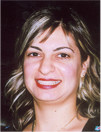
Keshavarzian: practising dentist
There are a "lot of new Zoroastrians in California,” says Sepehri. Referring to scholar and founder of the Zara-thustrian Assembly Ali Jafarey, Sepehri says, "It is a name I knew even in Iran. New Zoroastrians will add, not subtract from our community. Like everybody else I first had doubts. But I have found that they are not opportunists. There may be some, few and far between, but most are attracted through marriage or intellectual interest. Some come and go, but some families have been consistent for years and have kept coming (to the darbe mehr). There are more Iranian than American or Indian converts. A percentage claim Zoroastrian heritage. Some young ones just feel they hear the message…We can’t stop them. It is better that we help them and get their help. They do not even constitute 10 percent of our population. They go through the education, take the insults (from traditionalist members of the associations) and still stick on…they want to learn, ask questions. Some people just hate the converts. It’s not the right thing to do.”
Sepehri tells us that four or five years ago he had been legally accused in California. "It was a false case of harassment, of character assassination. I want people to know that the court totally cleared me…”
Accompanying Sepehri on his India trip was his fiancée Ramak Kesha-varzian. The only daughter of a traditionalist family, she was educated in Hungary, is a practicing dentist in Teh-ran. Happy to see another country Kes-havarzian excused herself from the interview to take a walk and breathe the sea air at Apollo Bunder.
"Iran is not so bad,” smiles Sepehri. "With all our political problems there is no bar to Parsis coming to visit. A lot of people are afraid to come. We will make every effort to welcome them.”
◆ ◆ ◆
From the archive