
Zoroastrians Abroad
Zoroastrian entrepreneurship in Iran
Zoroastrian businessman Khodayar Attaie speaks of the community's commercial activities
"We hope to register the Iran chapter of the World Zoroastrian Chamber of Commerce (WZCC) under the umbrella of the Iran Chamber of Commerce, Industries and Mines some time after Navroz,” says Khodayar Attaie, the leader of the 160-strong contingent which had hosted the India chapter of the WZCC in 2005. The meet had been a fruitful eye-opener for Zarathushtis on both sides of the international border. In Bombay to participate in the meet with the delegation of the Kerman Chamber of Commerce (see "Joint ventures improve logistics,” page 64) Attaie briefed Parsiana on the commercial elements of life for Zarathushtis in Iran.
Attaie credits Koorosh Niknam, the Zarathushti representative in the Majlis, with active support for the project. Official registration would also mean getting government approval for the body. "In Iran unless you are registered, people hesitate to join. They feel it could be a bogus body,” says Attaie, adding, "Niknam has a good base among Zoroastrians in Iran. His grass roots contacts could help the membership increase in the communities based in Yazd and Kerman.” Pistachio farms, fruit orchards, farming of vegetables and wheat are the prime activities among the traditionally landowning class with their deep attachment to the soil, Attaie informs us.
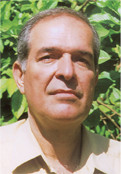
Attaie: carpet auctions on the internet
Though the urban community in Tehran is involved in construction activities, owns small manufacturing units producing auto parts and refrigerators, there is no large scale industry, nothing to compare with the Tatas or Godrej. "Most industrialists have sold and gone.” There is a rentier class, living on the rents from the buildings they own. "There is no Rent Act like you have in India. There are yearly contracts,” the rent in force being determined by the market. Shops and supermarkets are other commercial activities of the community which Attaie estimates at 30,000 souls. Most young people are migrating to the West, he adds.
Managing director of Pars Business World Company Limited, a construction materials supplier making wooden doors, insulated windows for sound proofing, flooring, interior designing and carpets, Attaie says he loves art. He is currently developing a website www. zorocarpets.com to showcase the ability of "our carpet weavers who have made carpets for the Emperor of Japan and the Sheikhs of the Middle East. They can create a carpet from a picture. It is a very expensive business, going into crores of rupees,” he notes. He says that he had two such carpet wall hangings, 80 cm by 60 cm, of Zarathustra made, each worth US$ 5,000. One is in Bombay with a WZCC member; the other hangs in Attaie’s home in Tehran. "Art lovers can admire it there, compare it with other hangings in the agiaries. There is a vast difference.
"We can do good business if someone has the contacts. I am looking for such a person. Our weavers can weave a wall hanging from a wedding photograph or any given picture. The cost is calculated on the design, knots and colors. There can be silk, woolen or cotton carpets or a combination. The weavers decide on the size of the carpet and the materials to be used. Each art piece is of a limited edition only. The weaver can tell the price but our website will give details. We hope to have carpets for auction on the internet.” Attaie adds that he also supplies machine-made or hand-woven wall-to-wall floor coverings.
He speaks of a Muslim friend with a huge pistachio farm and a cement factory who has just registered a private airline company in Iran called Besaat Airlines. Not operational yet, the company with a small staff intends to lease aircraft from abroad and re-lease them to companies in Iran. "Because of the US embargo Iranian companies cannot lease planes from Europe or North America, the plan is to establish a company in Bombay, a legal entity,” says Attaie who is toying with the idea of venturing into the business with his rich friend who doesn’t know English. "We don’t know the ABC of the airline business,” admits Attaie who hopes to learn the ropes from Indian friends.
Born in Bombay’s Masina Hospital, the son of Banu and the late Aflatoon, Attaie remembers his father’s bakery in Uran which was at one time almost the only commercial establishment in the vicinity. Now managed by his brother, its custom base has expanded with the growth of the Nhava Sheva port, the demand more than a hundred times what it used to be. Banu continues to live in their home in Dadar where Khodayar comes every year to spend time with her. Don Bosco schooled and graduate from the MMK College of Commerce in Bandra, he qualified as a chartered accountant in India and went back to Iran as his Tehran born wife Shirin Foroudian wished. Their two sons Hooman 22, and Aurmin, 18, are studying there to be an industrial technology engineer and an electrical engineer respectively. Though the technical aspects of the education in Tehran is good, Attaie notes that their knowledge of English is shaky. "Everyone in Iran speaks Farsi, or local dialects, even the Turks and Arabs,” he says, so there is little opportunity to learn other languages. Shirin and the boys are reluctant to come to India, put off by the pollution and beggary in Bombay.
Referring to the election of representatives in the Majlis, Attaie believes there is a screening of the candidate’s background before he is allowed to stand. Any protest and the candidacy is withheld. However, if the allegations are proved to be false, the person is allowed to contest the election. In the Majlis, Niknam is trying to sort out the inheritance law (which allows the Muslim member of a family to inherit all its property when the head of a family dies), says Attaie.
Attaie is a man who seems to have adjusted to the demands of the system in Iran. Though core industries like petro-chemicals remain in governmental control there is not too much interference with the business activities of the citizens, we learn. The customs laws, according to Attaie are "lenient, relaxed as is the international trend.” Everyone has their own TV direct-to-home dish, receiving thousands of channels from Asia, Europe, the US. "There are 20 channels of Iranian programs coming from the US,” he tells, adding, "The government had tried to confiscate the receivers but found it impossible. The Mullas are strict but they don’t want a confrontation with the people except in the case of street protests. In Tehran there is not a single building without these receivers.” He says they cost the equivalent of Rs 8,000 to 10,000 but people keep pace with new technology. What is worrying the people currently is the inflation: Salaries are not rising in proportion to the cost of living.
◆ ◆ ◆
From the archive