
In Memoriam
Mehta's mirth
Died: Dorab Rustomjee Mehta, 88, well known Gujarati playwright and columnist, in Bombay on December 7, 2005 following renal failure.
Died: Dorab Rustomjee Mehta, 88, well known Gujarati playwright and columnist, in Bombay on December 7, 2005 following renal failure.
"If indeed we are about to reach 100 years, the last 20 or so have belonged to Dorab. When we had no access to Parsi Gujarati plays, he extended his hand of friendship and gave us as many plays as we wanted without expecting anything in return whatsoever. He was as keen as all of us that the Club should celebrate its centenary and he always made mention of our proud achievements in his Jamé,” recalled Bahadur Postwalla on behalf of the Calcutta Parsi Amateur Dramatic Club.
He is believed to have authored over 300 plays for the stage, All India Radio and television, several of his creations for the Indian National Theatre being performed on hundreds of occasions. "With his flair for humor he was born to make the world a happier place,” mentions his daughter Rashna Chiniwala. His all time favorites were Tirangi Tehmul, Gher Ghungro ne Ghotalo, Kutrani Puchri Vanki, Faramjini Film Utri, Jhan Jovo Tahn Baira, etc. Particularly popular was Gher Ghungro ne Ghotalo which has now seen 300 performances all over India and abroad.
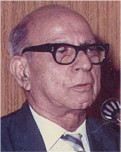
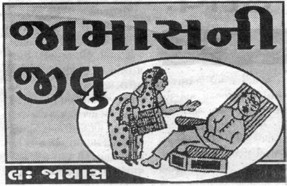
Humorist Mehta and his column logo (below)
His humorous weekly column "Jamasni Jiloo” portraying the trials and tribulations in the life of a middle class Parsi couple earned an entry in the Limca Book of National Records for being printed uninterruptedly in the Jam-e-Jamshed for 54 years. A freelance journalist and feature writer for over four decades, writing for publications like The Times of India, Mid-day, Blitz, Afternoon Despatch & Courier, The Bombay Samachar, earlier Mehta had worked on the editorial staff of both Jam-e-Jamshed and Kaiser-e-Hind. Equally popular was his column in Kaiser titled "Jara Tamara Kanma.”
His contributions to theater and journalism won him awards from many community institutions like the World Zoroastrian Organisation, F. K. S. Foundation, Parvez Katrak Foundation and other charitable organizations like the Lions Club of Babulnath. At one of the jubilee plays enacted by the Yazdi Karanjia troupe from Surat, Mehta was presented a sanman patra and a sandalwood casket engraved with his Jamé column logo of Jamasji reclining on his easy chair while his wife standing nearby is bent over with a newspaper in her hand. The performance of his plays raised funds for innumerable educational, religious and social welfare bodies.
As a 14-year-old student of the Proprietary High School in Bombay, Mehta wrote the script of his first play in his math book! It was enacted under a stairway of a neighboring building. Whilst at the Elphinstone College and till the end, his passion for scripting did not abate. During World War II he wrote special articles for the Information and Broadcasting Ministry, Government of India and readied broadcasts for the war front, notes his life profile. He scripted two documentaries for the Government: Face the Music (as a caution against panic) and Keep them Rolling (depicting the evolution of transportation in India). His script for a film projecting the common man’s concerns and thrift during the war period was selected for production by the government and even earned a prize. Later he took to writing stories and novels.
When a writer’s cramp incapacitated his right hand, he took to writing with his left hand, noted a tribute to him on the front page of the Jamé of December 11, recalling how he wrote a new play every Jamshedi Navroz and Pateti. Like all orthodox Parsis after every trip to the toilet he would invariably say his prayers and yet he was liberal in his own way, observes Chiniwala.
A keen Hollywood buff, he must have reviewed more than a thousand films and written about famous personalities like Walt Disney, Danny Kaye, William Holden and Charlie Chaplin. During his interview with Alfred Hitchcock questioning him why he made so many suspense movies, Hitchcock replied, "Life is a suspense.” Not aware of Charlie Chap-lin’s address in Switzerland, Mehta once mailed his article to "The Greatest Comedian in the World” and felt rewarded when Charlie sent him a rare prized personally autographed photograph of himself.
"The happiness he brought through his writing into the lives of people, especially the Parsis to whom he was a folk hero, will live on,” acknowledged his Bangalore based nephew Homi K. Mehta adding, "I considered him India’s answer to the American vaudeville…”
The popular playwright is survived by his wife Homai, daughter Rashna Chiniwala and sister Rani Cursetji.
◆ ◆ ◆
From the archive