
Business
Turnaround story
In a nine-year stint as managing director, Daraius Mehta carried Mangalore Chemicals and Fertilizers from virtual bankruptcy to profitability
When Daraius Mehta was appointed managing director (MD) in 1996 of Mangalore Chemicals and Fertilizers (MCF), the soil at the company was far from fertile. It had accumulated losses of around Rs 200 crore, manufacturing plants were in poor condition, two major strikes and continuous go-slows by strong labor unions hampered production, there was a severe cash crunch… The platter of problems had been aggravated by the populist shenanigans of politicians in power, the splutterings of India’s socialist economy through the 1970s and ’80s and the price control raj which was strangulating the fertilizer industry.
Yet within a year, this ‘sick’ fertilizer company, which had been taken over in 1990 by the Bangalore-based UB (United Breweries) Group headed by business baron Vijay Mallya from the Karnataka government, started posting profits under Mehta’s stewardship. Turnover registered a four-fold increase, from Rs 220 crore in 1996 to Rs 878 crore in 2004-05.
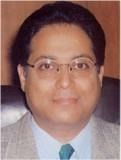
Mehta: changing mindsets
"It was one of the most exciting periods of my career. Difficult, yet exciting,” states Mehta, recalling the hard but heady days of turning around a company from virtually a point of no return to a point of many returns. "Carrying a company from near bankruptcy to profitability without financial assistance from the Group (UB Group of which he was one of the senior executives) or financial institutions means you are turning around every aspect – production, labor, finances, human resources… People had begun to think that losses were inevitable,” he explains. Daring to think differently, "it was a huge, huge effort to change people’s mindsets, to get them to look at growth, not losses,” he recalls.
So dramatic was the improvement that the Fertilizer Association of India presented the award for "Overall Improvement of a Company” to MCF for three consecutive years — ’96-’97, ’97-’98 and ’98-’99. The fertilizer ministry of the Government of India declared MCF the most efficient naphtha-based fertilizer plant in India among eight such plants. The prestigious Indian Institute of Management (IIM) at Ahmedabad deemed it worthy to write a case study on the turnaround in MCF, published in the Institute’s magazine in 2003.
"A fertilizer plant needs high quality power and adequate water,” says Mehta who is a qualified chartered accountant, born in the Punjab, educated in Delhi, a St Stephen’s College alumnus who did his articles for CA in Bombay, obtaining an all-India rank. Before joining the UB Group, Mehta had a six-year stint with Bombay’s venerable A. F. Ferguson and Company on the consulting side.
Originally a Tata company with Rallis as the promoter, the highly respected P. A. Narielwalla was MCF’s founder chairman. "The MCF project was conceived in the early 1970s. The Karnataka government had promised a good supply of power and water to the company, but there was a shortage of both from the very start of production in 1976,” Mehta relates. "If it had not been for Narielwalla, the project would never have started. Even today people who knew him remember what a great man he was. His picture still hangs in MCF’s boardroom.”
Within three years, Narielwalla was asked to resign from the chairmanship and the state government took over the management. Within 10 years the company was in deep financial distress and the state government decided to privatize, given the importance of fertilizer to the farmers and to the overall economy of the state (MCF is the only large scale fertilizer project in the state of Karnataka).
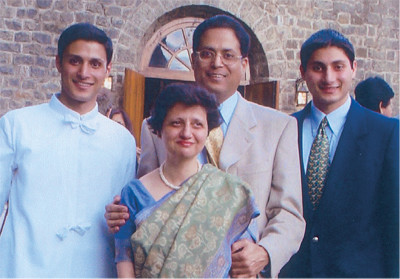
The Mehta family: (from left) Zubin, Piroja, Daraius and Karl
The UB Group was selected from amongst the many bidders and the management transferred in 1990. The fertilizer sector being one of the most heavily regulated areas of the economy, everything from input costs to pricing is controlled by the government, explains Mehta who was made the deputy managing director in 1994, the same year the company was declared "sick” by the Board of Industrial and Financial Reconstruction (BIFR). The MD was in poor health. "A 114-day strike had been called off at the intervention of the chief minister at the end of March of that year. The company was virtually bankrupt. Most of the officers had been asked to remain at home as salaries could not be paid,” Mehta traces the scenario. The MD passed away in October 1996 and Mehta, then 45, was appointed in his place.
In April this year, however, Mehta put in his papers and is now looking at other challenges and opportunities on the global canvas. "I have spent 50 percent of my working career with the UB group and I have worked closely with the chairman. A fertilizer company needs continuous infusion of funds to grow, to improve the plants. There arose a conflict between Group interest and company interest (the Rs 3,500 crore UB Group has diverse interests — brewing, distilling, fertilizers, life sciences, engineering, information technology and, more lately, aviation). Group interest seemed to take precedence. But I have no regrets. Few managers would have got the kind of opportunities for work and experience that I did in MCF,” Mehta states.
The company’s annual report for the year 2004-05 acknowledges: "The board of directors places on record its appreciation of the services of Mr Daraius P. Mehta as MD since 1996. Under his stewardship, the company was successfully turned around and achieved steady growth and profitability.”
"Even today Parsis have a certain respect in industry. Unfortunately, the younger generation are not what you might call ‘proud Parsis.’ We have lost our pride (in ourselves). We need to get that back if we are to shine. In corporate India there are but few Parsis in positions of stature, fewer in the government or armed forces… That is the tragedy of our community,” Mehta says. Differences of opinion within the community have also negatively impacted its growth, he believes.
Living in Bangalore with his family, Mehta’s wife Piroja, an IIM graduate, is a professor at the Xavier’s Institute of Management and Entrepreneurship, teaching management information systems and is in charge of placement. Son Karl is doing his MBBS in Bangalore after completing his BSc in biochemistry from the US. Zubin graduates next May in economics and finance from the US. "Both of them like it here (in India). Take the opportunity to study, then come back. Opportunities are huge now in India,” he asserts.
◆ ◆ ◆
From the archive