
Zoroastrians Abroad
“We are bigger than the Dadar community”
Ontario Zoroastrian Cultural Foundation President Ervad Kobad Zarolia argues for the provision of more community facilities in Ontario
"Four years ago we tried to convince people to have two locations under one umbrella. But people could not accept the idea. They collected proxies and voted us out.” Former president of the Zoroastrian Society of Ontario (ZSO) and currently founder president of the Ontario Zoroastrian Cultural Foundation (OZCF) Ervad Kobad Zarolia recounts the genesis of OZCF. The ZSO is based in eastern Toronto while the OZCF is planning a base westward so that the growing Zarathushti community in Mississauga, Brampton, Oakville and the surrounding area has a facility closer to home, obviating the two-hour drive each way to the Mehraban Guiv Darbe Mehr.
Just as Dadar has two agiaries — "With an estimated three to four Zoroastrian families moving in each month we are bigger than the Dadar community” — there should be "three places, four places” for the over 5,000 Zoroastrians in the Greater Toronto Area (GTA) to meet, to pray, to celebrate, he says. According to Zarolia the existing facility serves only 10 percent of the community noting that "the hall currently can’t take more than 200. Our philosophy was to leave the place as a center in the east and build another in the west end.”
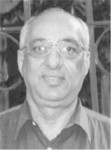
Zarolia: promoting growth
Zarolia questions the ZSO’s decision to build a new center costing C $ 2.5 million at the old location. Of its 1.8 acre plot, one acre is in the green belt, so it can’t be used, he says. For a 900 capacity auditorium (600 in banquet style seating) one needs at least 100 spots for parking. Currently ZSO has 35 which will increase to 50, he notes.
The controversy led to the birth of OZCF in January 2002. By September it had been registered as a charity by Revenue Canada. Its vigorous fund-raising drive netted C $ 630,000 (including pledges) by end 2002, according to Zarolia’s report dated February 13, 2003.
"This new center in western GTA will complement and enhance the existing facility and services that we value and continue to enjoy within our community; serve to accommodate the geographic diversity of the Zoroastrian population; strengthen the Zoroastrian community, promote growth and provide a network of social presence and awareness of our community and religion within Canada,” notes the report. Their plan is to buy between five-15 acres of land on which to build three institutions in easy stages: an agiary, a community hall and an old age home. Once the land is in hand, Zarolia hopes that donations from Indian charities will help them reach the target of an additional C $ 1.9 million.
Of the C $ 650,000 in the kitty so far, C $ 150,000 have come from abroad, he says. The rest has been collected locally. "If we don’t want to put our money out, how can we ask others to do so,” says Zarolia who now feels free to approach individuals and institutions and hoped that people like Scylla Vatcha of the Bai Maneckbai Jeejeebhoy Trust, Dinshaw Tamboly of the World Zoroastrian Organisation (WZO) and others would help their cause.
In the meanwhile Karachi hotelier and president of the Karachi Parsi Anjuman Trust Fund Byram Avari has permitted them to hold religious functions at his five-star hotel Toronto Airport Ramada Inn. The fund-raising activities began with an inaugural jashan on May 20, 2002 with 13 priests (including three youths) participating and 375 Zarathushtis in attendance when the 13 directors of OZCF sponsored the lunch and chasni; a lamb roast picnic in July with donated food items; the Khordadsaal jashan and dinner catered and contributed by some of the community ladies; a black tie gala dinner and dance in October attended by the consul general of India and the chief of police (on behalf of the mayor of Mississauga) entirely sponsored by a generous donor. Such volunteerism has enabled all monies raised to be channeled into fund collection.
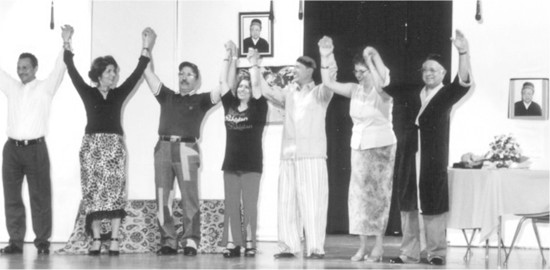
The cast of Temulji... Jal and Meher Panthaky, Noshir and Katy Mulla, Kerman Katrak, Khurshid Engineer and Sam Gazdar
An evening of favorite hits from past and present Hindi films titled Saaz Awaaz aur Goonghru in January 2003 had the audience clapping and toe tapping till 1.30 a.m., notes a report by OZCF volunteer Roshan Davar. At the Navroz jashan and dinner dance on March 22, 2003 the community felicitated nonagenarian Coomi Bhathena for her dedicated lifetime of volunteer service within and without the community, informs Davar’s report. Temulji noo Timetable, a hilarious natak in the tradition of the Parsi farce on May 24, 2003 had the community working flat out. "Jal Panthaky, the director of the natak, also designed and built the stage props. He wrote the lyrics to match the theme of the natak with the music from popular movie songs. With his keen sense of casting and directing, mixed with his great sense of humor, he did an excellent job of encouraging the cast and other participants to give their best,” writes Davar. Not only was there a "sold out” house of 738 which included other Gujarati speaking communities but a natty program-souvenir, replete with advertisements, bespeaking the all out community effort. "The entire cast of performers dedicated over 3,000 hours of voluntary time,” states Davar.
With 450 voting members (everybody over 18 years, as per Zarolia) the majority are Parsis though about 12 Iranian Zoroastrian families have made substantial donations. Prominent among them are Ardeshir and Gulchehr Dehmobed who lead the Iranian organization Kanoun — a subcommittee of the ZSO. Zarolia says he challenges people to donate $ 5,000 per year on an annual basis. "You get a good write-off in income tax,” he adds. He says that OZCF has received donations from Hindus and Muslims towards their building fund "because our forefathers (on the Indian subcontinent) earned their respect.”
OZCF has accepted both the Shehenshahi and the Fasli calendars so they have two sets of gahambars, muktads, Zarthost no diso, Zarolia informs us. He isn’t sure if the agiary they aim to build will have a consecrated fire though he is sanguine that the four grades of fires required could be found locally. However he points out that the agiaries of India don’t represent the agiaries of Iran and so the New World agiaries may well follow a different pattern.
A former president of the North American Mobed Council (NAMC), Zarolia says, "People think that Parsis are the only Zoroastrians. They’re wrong. If they change their attitude then (they will find a) completely different ball game.” According to the NAMC resolution, "Zoroastrian is the religion; Parsi is a race. We follow that. There are Iranian Zoroastrians, Russian Zoroastrians, Tajik Zoroastrians. We want to accept everybody.”
According to Zarolia, "most mobeds in Canada and the US feel we should start thinking independently from India... They have chosen what philosophy to follow. Family unification is the first step... We accept the children of (the intermarried) Zoroastrian husband or wife... There has been no occasion where the spouse has asked to be Zoroastrian.” However each mobed is free to do what his conscience dictates, he notes. "At NAMC we are a think tank. We discuss, we argue... The discussion on who is a Zoroastrian took two years!” According to the NAMC, a Zoroastrian is a person who follows the Zoroastrian religion and whose navjote has been performed, Zarolia informs us. "The resolution was passed with one abstention,” he adds. Though a conclusion is reached, "it’s up to everyone whether or not to follow. We have very conservative people as also very liberal. We learn from each other.”
When Zarolia spoke to Parsiana on April 7, 2003 the community ferment resulting from the high priests’ resolution was running high. The outspoken Zarolia noted that the stand of the "Indian priest hierarchy is not in line with Zoroastrian philosophy itself or with community thinking... Where’s the Vohumano and the choice?... Who appoints the vada dasturjis? Since when have Zarathushtis got the right to excommunicate? Are they talking about Parsis or Zoroastrians?... Unless you can enforce something, why speak? Why create this distance between mobeds and people?... One of the very good Zoroastrians we have is (American engineer Joseph) Peterson. He has done more for Zoroastrianism than 90 percent of our community, spent hours of time researching and putting (the material) on (his) website. (FEZANA assistant secretary) Farrokh Mistree is a good leader in the community. With the fatwa do we throw (the intermarried Mistree) out? Lose a good leader?”
Zarolia questions the increasing commercialization of prayers without personal commitment. He says our attitude is becoming like those who feed laddoos to chobas (overweight gourmand priests in certain Hindu temples in India): "laddoo khavravas tau dooaa laagsé (if I feed him sweetmeats, I’ll be blessed).” The priest should interact with behdins, teach the family to do satum no kardo every month. Make them take charge of the prayers, he believes. "The biggest difference between the Iranian mobeds and us is that our prayers have lots of repetition which no one questions because they don’t understand.”
Zarolia says he was profoundly impressed by a little book titled Let us pray to Ahura Mazda by the late Noshir Vazifdar, the lay priest of the Ootacamund Parsis. So Zarolia makes sure that he believes in what he prays. "We have a special ceremony for blessing a house,” he notes, distinguishing it from the ubiquitous jashan where with the difference of a sentence or two, the text recited is the same for housewarming, celebrating or remembering the dead. When summoned to perform a jashan Zarolia tells his host, "I’ll do a prayer for you, not the jashan.”
Citing another anomaly Zarolia questions the need for the recitation of the Patet at navjotes. "In Pakistan no one does Patet at a child’s navjote (ever since the late) Dastur Maneck Dhalla pointed out its irrelevance to the occasion,” he notes.
The Iranians are asking for specializing of the prayers for different needs, notes Zarolia, adding, "The high priests should be doing that (but) the change will come in North America!”
Zarolia emphasizes that mobedi is a service like medicine or dentistry or even plumbing. Hence a mobed should be considered as a professional and paid accordingly. "Only when Parsis look at mobeds as professionals will you get a good mobed. Open it (mobedi) up to those who want to serve. My brothers didn’t practice. There are hundreds who become navars (but) there’s no meaning at that age. A boy should be 18 to 20. Then he’d know what profession he has chosen — not been thrown into. A navar at the age of 12 or 13 is a farce. At less than 18 years it’s a waste of time, energy, money, emotions.”
To counter the demographic decline Zarolia says, "We must tell children to marry Zoroastrians so that the religion survives.” The North American way of life is (a family) of two children... If everyone had four children it is likely that the community would increase but our youths are not getting married.” Noting that getting their adult children married is considered the parents’ duty among Hindus, Zarolia accepts that Parsis think their duty is limited to providing for navjotes and education. But a lot of children don’t meet other Zoroastrians. "We must make the extra effort. Once over 30, it’s very difficult to find and accept someone else,” he concedes.
Zarolia says there are more girls than boys in the Toronto community and only two families with four children. Citing the impact of numbers, he tells us that thanks to Church support French families in Montreal had five to nine children. Hence the majority of French speakers there. Also, Muslim families with five, six or seven children are common. "We were six in my family (but) the cost of our education to our mom was zero because of the Petit schools. In Maharashtra we are lucky to have so many (community) institutions for our children if we choose to use them... It’s an attitude problem.”
Though Parsis are more worried about losing the culture than the religion, Zarolia points out that Parsi culture consists of its food habits and way of life. The language — Gujarati — is fading as 99 percent of children born there don’t speak it. For that matter neither do children born in Bombay, he notes. "We Parsis accept everybody else’s culture but don’t keep our own... We gave up on our children not speaking Gujarati very fast,” he admits. Hence he is very appreciative of the Iranian Zoroastrians’ preservation of their culture for their children. "All their functions are in Farsi. Most of their children speak Farsi, some even speak Dari, maintain family ties, come back after university.”
According to Zarolia, Iranian Zoroastrians in the West are worried that if they mix too much with Parsis they will become like the Parsis/Iranis of Bombay. Hence, though there is friendship and support, cultural reasons keep the two communities functioning at a distance.
As vice president of the World Zarathushti Chamber of Commerce, with its five chapters in the US and two in India, Zarolia is optimistic of success, despite the fact that the London chapter hasn’t been formed yet. "Our philosophy is that if we do business among ourselves we will increase our worth.” Also, there are very highly placed Zoroastrians in the corporate world who are willing to help Zarathushti businesses. He hopes that by the end of the current board’s two-year term there will be a new team ready to take over.
A strong votary of a world body of Zoroastrians, Zarolia says it is "ridiculous” that it has taken more than 20 years to form "a simple organization to serve the world-wide community... FEZANA is flourishing... Why not duplicate it in the world body?” he asks.
An insurance man who has been involved with various public activities, the Mississauga Hospital and the India-Canada Chamber of Commerce among them, Zarolia lives in Mississauga with his wife Nergish who works for the Government of Ontario. They have three children — Zubin, 28, a practising lawyer, Sanober, 26, who is learning fashion designing and Persis, 22, who works for Citibank.
Unafraid to voice opinions disconcerting to the status-quoists, Zarolia had defied the implicit Bombay Parsi Punchayet ban on "controversial subjects” as far back as the Fourth World Zoroastrian Congress in Bombay in January 1985 by airing the issues which faced the North American priesthood viz Who could be a Zoroastrian? Who could have their navjotes performed? Why is the spring gahambar celebrated in the fall? What is the Zoroastrian stand on abortion? While the old guard in Bombay continues to dither, the NAMC and various North American associations have addressed these problems and more pragmatism is in store.
Zarolia is convinced that "Zoroastrianism will have to change. The (concept) of priests praying for you, must go. Take the onus for learning, for action,” he advised. "When you hear good music, don’t you feel good? Prayers are like that. They are good for the soul, for the psyche and, if you understand them, they’re good intellectually!”
◆ ◆ ◆
From the archive