
In Memoriam
The consummate consultant
Died: Dr Minu Nariman Dastur, 87, doyen of consultancy engineering in India and the founder chairman and managing director of M. N. Dastur and Company Private Limited, following cardiac arrest on January 5, 2004 in Calcutta.
"Dastur was a visionary and the southern world’s leading philosopher in industrial engineering. He was not merely the doyen of metallurgy and steel engineering but also a pioneer of consultancy in India,” noted a tribute by Sailendra Nath Ghosh, former director of the Bureau of Petroleum and Chemical Studies, in Mainstream, March 6, 2004. Remarking that Dastur was one of the five stalwarts in India on whose initiatives, progress, hurdles and disappointments he had kept a close watch since 1961, Ghosh added, "His sustaining power lay in his sturdy self-confidence and his know-how to develop large greenfield plants depending wholly on his own capability (without needing any subcontractor to do any segment of engineering) and competitiveness... While many consultants avoid the onerous task of doing detailed investigations themselves or try to make some extra profits by tying up with some...agencies, Dasturco (as Dastur’s company came to be known) has been steadfastly independent, never giving specifications to suit any vested interests. These gave the clients the assurance that they would never be cheated. The guarantor banks — including the World Bank, Asian Development Bank, KFW, Exim Bank, IDBI, ICICI — always felt relieved if they heard that Dasturco was the consultant.”
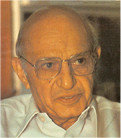
Dastur: leading philosopher in indus-trial engineering
Instrumental in the formation of the Indian Institute of Metals, Dastur helped the country achieve self reliance in steel plant engineering and steel development. "Dastur’s philosophy was to utilize domestic skill and expertise and elevate them to international standards when the common trend was to use imported technology,” mentioned a write-up in The Telegraph of January 6, 2004.
"In those heydays of planned economy, Dastur was the first Indian retainer consultant of the Indian government to chart out a long-term perspective plan for steel development,” stated a write-up in The Economic Times of January 6, 2004. "Dasturco was the principal consultant for building the country’s first shore-based steel plant — Vizag Steel Plant. Its regular list of clients includes Tata Steel, Steel Authority of India Limited, Ispat Industries, Essar Steel and Jindal Vijaynagar.” Every plant that he created is known to have borne the stamp of environmental concern. In fact, Dasturco had a special department of horticulture and landscaping deployed for the task.
A metallurgist of unparalleled repute he was elected president of the Institute of Metallurgists more than once, presided over innumerable conferences and won accolades overseas as an honorary member of the American Association of Metallurgical Engineers — an honor conferred only on a few non-Americans. "We are recognized the world over but not adequately in our own country,” Dastur had once conveyed to K. P. Mahalingam, former director, Technical Services, Tata Steel. When the Bokaro steel plant was conceived in the late 1950s, the government opted to assign the design, layout, execution and commissioning to Russians instead of Dastur who in anticipation of winning this contract had rallied round him a band of 1,200 competent engineers. Rather than dispense with their services he and his loyal band opted to settle for a cut in their emoluments, sanguine that the financial crisis would be over once the next major project came their way. From a modest room in Calcutta’s central business center, the firm grew to occupy more than five floors of the same colossal building in a few years, related Mahalingam in The Hindu of January 12, 2004. The first contract that Dastur and Company won was to construct on a turnkey basis a ferromanganese plant for Tata Steel at Joda in Orissa.
Dasturco, as a two-man team, was launched in India in 1955 on a suggestion from then Prime Minister Jawaharlal Nehru that he set up a consultancy firm in India. A year earlier Dastur had come visiting India as a member of the US Technical Cooperation Team to inspect the Bhadravati Steel Plant at Mysore which needed modernization. When Nehru learnt that an Indian steel expert was a part of the team he convinced him to return to India. But when Nehru’s advisors kept pointing out that Dasturco had no experience unlike the foreign companies, the frank and fearless Dastur is known to have written to the Prime Minister, "Sir the company we have launched may have no experience but each member of our team has rich experience in steel making. Moreover, Sir, you had no earlier experience as a prime minister but today you are regarded as one of the world’s best prime ministers.” Convinced of Dastur’s capability Nehru asked him to draw up India’s perspective plan for steel and gave Dasturco’s Delhi unit a room in Udyog Bhavan, reminisced Ghosh.
It was not only his motherland to whose growth he contributed. As stated Ghosh, "If Libya — which originally invited Dastur to do a feasibility report for only a half-a-million tonne was later persuaded to build a 1.26 million capacity and is now working on a three-million tonne plant — has all throughout relied exclusively on Dastur, it is because they felt that this man was incapable of cheating anybody in any manner...In Venezuela too the Dastur approach produced its own chemistry in winning the nation’s confidence. This country, which had earlier given jobs to several European and American contractors, later called Dasturco to oversee the work of those contractors and safeguard Venezuelan national interests.” They were also the consultants to develop the steel industry in various countries in Africa.
Gaining in reputation not only in India but globally, the firm — with the family holding more than 80 percent of the shares — set up subsidiaries in Germany, the USA and Tokyo. With 20-30 percent of its income from foreign projects, the company rose to rank among the largest consultancy firms in the world in steel plant engineering. "Team work and fair play — that has been the secret of our success,” Dastur had conveyed in an interview with Parsiana (see "M. N. Dastur: A man of steel,” Parsiana, January 1989). "Dastur’s eagerness and capacity to groom his colleagues for greater responsibilities was phenomenal...He held the firm opinion that Indian intellect was capable of meeting the highest challenges in any field and therefore never appointed any other than Indian engineers in Dasturco,” wrote Ghosh. To offer better educational opportunities to Indians, he helped the late Dr Dara Antia build up the Institute of Metals. With his generous aid the Shibpur Engineering College recently started its Dr M. N. Dastur School of Material Science and Engineering.
Dastur had earned his double graduation in mechanical and electrical engineering from the Benaras Hindu University after his schooling in Jamshedpur. Following a seven-year stint with TISCO (Tata Iron and Steel Company Limited) where his father too had served for a long time, he proceeded to the USA and won a doctorate from the Massachusetts Institute of Technology. For the next seven years he was in USA working for reputed steel engineering firms like H. A. Brassert and Company and Ramseyer and Miller until his return to India to chart the progress for India’s steel development. "I had enough faith in the future of India and the country’s development so I decided to come back,” Dastur had earlier stated.
An egalitarian entrepreneur, on train or plane journeys, Dastur and all his companions always traveled in the same class. He always stood in a queue for an entry into the elevator, never expecting any privileged treatment. He would attend every marriage in every employee’s family unless he was out of station when he ensured that a gift along with a personal letter reached the family. When medical benefits were introduced in Dasturco, the employees at the lowest levels were the first to be covered and gradually the benefits extended to the higher echelons. The company’s annual picnics were gala events and occasions for merriment and bonhomie attended by the extended Dasturco family which included the employees and their relatives.
Equally committed was Dastur to promoting sports. He was a Ranji Trophy cricket player for Bihar in the 1930s and later became the president of the Sporting Union, being a lover of hockey, football, tennis, golf and bridge too.
Although he did not consider himself a reformist he felt that a person who wants to follow the Zoroastrian faith should be permitted to do so. Preferring to assist with education rather than extend doles, the self-made Dastur had mentioned in the course of the Parsiana interview, "Our community seems to be losing ground in the country...we have false notions of our superiority. We are handicapped because of our small numbers...Our younger generation does not show the determination to make good, to really work hard...even if it may mean giving up immediate returns. They expect things to come their way.”
The progressive thinker is survived by his wife Dr Mehroo, daughter Jeroo and sons Nariman and Rustam.
◆ ◆ ◆
From the archive