
Food
Continental cuisine — II
It was the Romans who created the omelet and the cheesecake and were the first in Europe to learn the art of ice cream making
The flavors and specialities of Continental cuisine were described in the first instalment of "Continental cuisine,” (Parsiana, August 2003). The creators of many renowned dishes also earned a mention therein. Each region of Europe has come to be identified with its own specialities as is explained in the present instalment.
Italy
The mother cuisine of Europe, Italian cuisine, gave the world the minestrone of which there are many versions, including the ones made by our Indian cooks. They have also given us Parma ham (which is traditionally eaten with fresh figs or melon as an hors d’oeuvre), the veal of Lombardy, beef of Tuscany and the kid of Rome. The variety of antipasto (hors d’oeuvres) artistically arranged, are famous as well as vitelotte tonnato (cold veal with a tuna fish sauce) and ossi bucchi (shin bone, cut into two-inch pieces served for its marrow). Other dishes are pollo al latte (chicken cooked in milk) and fritto misto (vegetables, fruit or fish dipped in batter and deep fried till crisp).
The Italian risottos are well-known and the most famous is the Milanese one — excellent if properly made. I sometimes think that the simplest dishes are the most difficult to make. The Milanese risotto is made with a special Italian brand of rice, but you can use the golden sela basmati, which is just as good according to the Italians who come to our restaurant. It is cooked slowly in chicken broth and has saffron (all risottos have saffron), butter, grated Parmesan cheese or beef marrow, and white wine or Marsala.
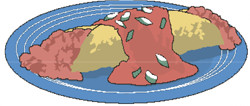
There are of course the pizzas of all kinds, of which the Napoletana is the most popular.
Last but not the least, they have the pastas. There is a theory that pasta was introduced from China into Iran and then to Italy, via the silk and spice route. They then made their own different specialities. It is not true that Marco Polo brought it directly to Italy from China, as pasta was in existence in Italy long before Marco Polo returned from his historic journey. They have about 40 varieties of pasta in Italy. In the north the pasta is usually flat and cooked in butter, while the south has the tubular variety, which they cook in olive oil.
Of their desserts, zabaglione (a combination of marsala and egg yolks which is used to coat a hot pudding, but can also be served by itself) is famous, and it must be eaten as soon as it is made. Their cassatas are also well known. Italy gave Europe the ice cream, but it came to Italy from China, Iran and Arabia via the spice and silk routes.
A unified Italy was formed in the 19th century, but each province retains its own traditions of cooking and most local produce remains within the provinces.
Artichoke, broccoli, asparagus, endive, romain lettuce and the small peas known as the French petit pois, snow peas or snap peas were all first grown in Italy. Spinach, peaches and melons however came from Iran. Coffee came from Arabia and tomatoes, capsicum, potatoes, corn, haricot beans and turkey came from the New World.
A lot is written about the decadence and feasts held during the declining years of the Roman Empire. Peacocks and flamingos cooked and served with their plumage carefully replaced, wolves, hedgehogs, puppies, door mice, elephant’s trunks, thrush’s tongues, cockscombs and wild boars stuffed with live thrushes were all considered delicacies.
Sophisticated Oriental food was brought to Italy by the Roman armies from Asia. It was the Romans who created the omelet and the cheesecake, and it was they who learnt the art of ice cream making first in Europe.
With the start of the renaissance and the rebirth of European civilization, came the birth of culinary art. In 1475 Platin wrote a cookery book based on older cookery books, and suggested marinating meat in lemon or orange juice and using less spices. He also advised serving lighter fruity starters — hence the classical Parma ham served with fresh figs or melons — and fewer dishes.
While the great homes served roasted and grilled meats with pasta, the poor, who could not afford meat in large quantities, created sauces with meat or fish to stretch them, so that we now have delicious pasta sauces with shell fish, chicken, meat or vegetables. (I have just come across a delicious sauce made with Gorgonzola, butter and cream. It is quite out of this world for those who like blue cheese.) A meal in an average home in those days would start with a salad followed by a main course of fish, poultry or meat stew and end with cheese followed by a dessert. Pasta was commercially made and sold in Naples, but it was always made at home in Florence.
It was in Florence that Italian cooking, as in other arts, reached its zenith. All the great Italian houses had excellent tables, but the most exquisite was that of the house of the Medici, Lorenzo the Magnificent. As Monsieur George Blonde, the French historian said, "Outside Italy, art was in the middle ages.” Italy had no competition from the rest of Europe, and no wonder then that led by Florence, it passed the torch to France and thence to the rest of Europe.
Slowly the prestige of French cuisine amongst the aristocracy began to surpass Italian cuisine, and now the country that taught France how to cook was beginning to take lessons from its pupil. But there is a wonderful tradition that was built in Italy and still remains today to the joy of her people. And they are just as meticulous as the French and our own Bengalis when it comes to emphasizing details.
Germany
German cuisine relies heavily on pork as the main meat, where it is eaten as chops and roasts, roasted knuckles and of course sausages.
Sausages are served boiled in thick vegetable soups, or grilled or fried and topped with plenty of mustard. They are often accompanied by sauerkraut (cabbage, fermented with salt in its own juices and seasoned with a number of spices with caraway being the most predominant). Special blood and liver sausages are eaten cold on bread, or more traditionally, eaten hot.
German food is heartier than Italian or French food. They serve fewer dishes than the French and Italians. Vegetables, meat and potatoes are not served separately but normally come on one big platter, often with a soup in advance, and a salad on a small plate with the main course.
More famous than German food is German beer. Germany is so associated with beer that it is often forgotten that she also produces fine wines.
Austria
Austria has one of the most refined cuisines, with many popular dishes — Wiener schnitzel being one of them. Viennese bread rolls are known throughout the gourmet world for their lightness. A roll which is two or three hours old in Vienna is considered stale! Gougelhof (sweet, rich yeast cakes), linzertorte (a pastry named after the town of Linz, made with ground almonds, flour, butter, egg yolks, lemon and cinnamon, filled with raspberry or strawberry jam), sachertorte (a divine chocolate cake covered with raspberry jam and a thin layer of fondant icing) and black cherry conserve are specialities of this country.
Viennese coffee restaurants were the ‘in thing’ in my mother’s days and I am sure they would be just as popular today if one had the leisure to spend the morning drinking coffee with whipped cream on top and nibbling at one of their famous gateaux or biscuits, perhaps listening to Strauss.
Switzerland
Famous for its beef, cheese and cheese fondue, their confectionary and pastries rank amongst the best in the world and some of the best hotel management schools are in this country.
Hungary
Here we have dishes cooked with paprika, introduced to Europe by the Turks. Goulashes (stews cooked with meat, capsicum and paprika) of different kinds are cooked all over Hungary and Hungarian goulash is a very well known dish.
England
I can’t remember who said that England has three sauces and 30 religions, while France has 30 sauces and three religions. But England does not require so many sauces as their products are of a very high quality. This country has given the world the famous roast beef with all its trimmings, and their mixed grills are superb. Simsons of Piccadilly serve the best roasts I have ever tasted.
The famous vanilla sauce or crème anglaise, to which even the French bow, is excellent. Their cheeses are world-famous and they make excellent sausages. Everyone has heard of the Irish and Scottish smoked salmon, not to mention Scotch whiskey. Their beers and lagers too are good.
England has woken up to good food and soggy vegetables are a thing of the past. Excellent, wholesome food is served not only in hotels and homes but also in the pubs. They even serve curry! The popularity of Indian cuisine in England has grown to such an extent since our Independence, that curry and chicken tikka can be called a part of British cuisine.
Russia
Caviar is one of Russia’s national dishes, although there is a belief that the Iranian caviar from the other side of the Caspian Sea is superior. There are three varieties of caviar, with the small greyish one considered the best. The traditional way to serve it is with blinis (small pancakes cooked in butter), and knocked down with a gulp of vodka.
The beetroot soup borsch, with its variations is their traditional soup and can be a meal in itself.
Chicken Kiev, a difficult dish to make is prepared with flattened chicken breasts filled with savory butter, folded over, rolled in flour, dipped in egg and then breadcrumbs, refrigerated for an hour and deep fried. It is served on a bed of mashed potatoes, surrounded with crisp fried potato juliennes.
Steak tartare is a well-known hors d’oeuvre, made with minced best quality raw undercut, with a raw egg yolk in the center and surrounded with chopped onions, gherkins, capers and parsley.
Koulibiaca is another speciality of Russia. It is made of a bread dough, stuffed with a filling of fish, chicken or egg. It is served hot with a clear con-sommé or as part of the hors d’oeuvre or cold at a buffet.
Their hors d’oeuvres, called zakuski, have many variations and they are traditionally to be eaten immediately after drinking a glass of vodka. They are so delicious that one could come to a standstill before the main meal.
The Asian influence in the southern part of this large country is very apparent with its kababs, shashliks, pilavs and dolmas (wine leaves stuffed with rice, also a traditional dish in Greece). Tea is made in a samovar and can be quite different from the regular tea we drink. It is served with mare’s milk, butter and sometimes with jam instead of sugar.
Greece
Greece is better known for its ancient civilization and philosophy than for its food. Yet it has given us the famous feta cheese made from goat’s milk, phyllo pastry (I have a faint suspicion that it is borrowed from Iran, and I hope no Greek reads this article), and their lemon and tomato sauces.
The variety of olives available in Greece is unbelievable. The Greek salad of feta cheese, ripe tomatoes, cucumbers, olives and capsicum, is most refreshing and is served in all Greek restaurants.
Greeks are famous for their incredible crystallized fruits which are called spoon sweets. According to tradition, when a guest enters a home, a bowl of spoon sweets is offered with a spoon and a glass of water. The guest picks up a sweet with the spoon, eats it, drinks the water and places the spoon in the glass.
Taramasalata, a pâté made from the roe of grey mullet is one of their best mezethes or hors d’oeuvres. Amongst the soups avgolemone, made with egg, lemon and chicken stock is the best known. There are different types of dolmas, which are actually found all over the Middle East, and kababs, especially souvlakia, served hot at every street corner. Moussaka, a baked dish made with layered mince, aubergines, rich tomato and béchamel sauces and cheese, is another delicious dish, coming out piping hot from small bakeries on the streets of Athens. Imam-baildi, a dish cooked with aubergines, is famous the world over, but when I produced it as a vegetarian course at Basil and Thyme, I met my Waterloo. Not a single plate was ordered and I was told that the guests have not come to the restaurant to eat baingan (Indian word for brinjal)! That’s Delhi for you!
Every country has its own special greens growing wild. In Greece it is oregano and thyme. There are many others, like wild mustard and dandelion growing in the rock formations near the Acropolis. The flavor of the oregano and thyme from this country is the best in the world.
I once had a squid and octopus stew in Micanos, an island off the coast. It was delicious cooked in their local wine. The roasts are usually covered with mountain herbs, lemon juice and olive oil, basted with red wine and have slivers of garlic inserted into the meat. There are innumerable casseroles and pies, and a spinach and feta pie baked in phyllo pastry is very popular.
Bakalava is their most famous sweet and has a Middle Eastern influence, so also their halvas. The Easter cakes and biscuits and Easter and Christmas breads are typically Greek.
Ouzo, an aniseed-flavored spirit, is the national drink of Greece. Our first breakfast in Athens consisted of olives, hot crusty bread, feta cheese and ouzo. Not knowing that it had to be diluted we drank it neat and were extremely happy all day.
Spain
The Spanish omelet is classically cooked in olive oil and made only with onions and potatoes, with previously fried chorico or any other sausage added optionally. We in India add tomatoes, coriander, green peas and carrots and make a hash of it!
There is their wonderful paëlla (pronounced ‘paiya’) which gets its name from the iron frying pan with two handles in which the rice is cooked and served. It is a meal in itself, made with saffron rice, capsicum and chicken, prawns or mixed seafood, and cooked like a pulao.
The two soups that are famous world wide are gazpacho, a cold tomato, bread and garlic soup and calderiala, more a seafood stew (rather like the bouillabaisse of Marseilles).
The delightful drink, sangria, is made with chilled red wine and fruit and is most refreshing on a summer day.
Basque country is famous for its fish, especially salt cod, roasted fresh sardines and tuna. We sometimes get tuna in our fish markets, and it is delicious just fried in butter with a little oil to bring out the delicate flavor.
Portugal
The Portuguese love for garlic is seen in their soups. Sopa àlentejana (coriander and garlic soup with poached eggs) is the best known of them all. Some of the soups are meals in themselves, cooked with chicken and chickpeas and served with a poached egg on top.
They also salt cod and have some fine lamb, beef and vegetable stews.
Their desserts and sweets are okay; they make a caramel custard with port which they serve decorated with a flower. Figs and almonds are used quite a lot in their sweets. And of course no one can make a port like the one from Op-orto.
Belgium
Buttermilk soup, eel and fish matelote (delicious cooked with red or white wine), carbonade of beef cooked in beer and pears stewed in coffee syrup are some of the dishes the Belgians are famous for.
Scandinavian countries
Whenever I think of Scandinavian cuisine, I think of the smorgasbord. It could be served as an hors d’oeuvre or as a buffet, with a variety of different dishes — smoked, dried or fresh fish, pickled herring and vegetables, cold meats and poultry and lots of salads. The famous hot dish is Janson’s temptation which is a baked dish made with layers of potatoes, onions and anchovy fillets, dribbled with butter, milk and cream, and sprinkled over with breadcrumbs.
The speciality of this region is gravlax — fresh salmon pickled with dill, rock salt and pepper and sliced paper thin.
I conclude by quoting Owen Meredith:
"We may live without poetry, music
and art;
We may live without conscience and
live without heart,
We may live without friends, we may
live without books,
But civilized man cannot live without
cooks.”
Menu to serve 6-8
The non-vegetarians could try
Shrimp and Potato Soup
Roast Chicken with Pear and Ginger Sauce
Roast Potatoes, Cordon Bleu
Sea Sole in Champagne
The vegetarians could try
Chilled Avocado Soup
Creamed Camembert
Tomato and Basil Salad
Potato and Celery Salad
Minted Green Peas with Corn Kernels
Bean Sprout, Cabbage and Pimento Salad
Desserts for all
Chocolate and Almond Gateau
Lime Mousse with Plum Sauce
SHRIMP AND POTATO SOUP
Shrimps (150 g — with shells)
Butter (1 tbsp — cut into small pieces)
Potatoes (3 medium — peeled and quartered)
Leeks (2 — white part only, sliced)
Salt (1 tsp)
Black pepper (½ tsp — freshly ground)
Stock
Water (4 cups)
Onion (½ medium — sliced)
Carrot (½ medium — sliced)
Bay leaf (1)
Celery leaves (2-3)
Black peppercorns (4)
Liaison
Egg yolks (2 — lightly beaten)
Milk (1 cup)
Garnish
Croutons ( 5 slices, white bread — fried)
Peel and prepare shrimps. Cut into 3-4 pieces. Rinse out shells thoroughly and reserve.
Combine ingredients for stock in a pan and add reserved shrimp shells. Place pan over high heat and bring to boil. Skim, lower heat and simmer for about 15 minutes.
Heat butter in a pan and sauté potatoes and leeks till soft. Strain in stock and add salt and pepper. Simmer over medium heat for about 20 minutes, stirring all the while. Cool, purée and return to pan.
Reheat soup, add shrimps, simmer for 5 minutes and remove pan from heat.
Mix egg yolks and milk till well blended. Stir into soup and gently reheat without allowing it to boil.
Serve in warm soup bowls with the croutons handed around separately.
Note: Do not overcook shrimps, as they will get hard.
ROAST CHICKEN WITH PEAR AND GINGER SAUCE
Oven temperature: 180°C (350°F)
Equipment: Roasting pan (2 medium-sized or 1 large)
Chicken (2 — with skin, 1 kg each)
Butter (2 tbsp)
Marjoram (2 fresh sprigs or 1 dry tsp)
Salt and pepper (to taste)
Stock
Chicken necks and giblets (2 each)
Carrot (a small piece)
Celery (a small stalk)
Onion (½)
Salt and pepper (to taste)
Pear and ginger sauce
Pears (1½ kg — peeled, cored, quartered and thickly sliced)
Ginger (1/3 cup + 1 tbsp — grated)
Sugar (1/3 cup)
Salt (1 tsp)
Black pepper (1 tsp — freshly ground)
Red wine (2 tbsp)
Make a light stock with the necks and giblets (without the liver) of the chicken, carrot, celery, onion, salt, pepper and 1 cup water.
Put a little butter inside chicken cavities with marjoram and truss chicken. Combine remaining butter with salt and pepper and rub all over chicken.
Add stock with necks, giblets and vegetables into roasting pan and place chicken, breast side up in the pan.
Roast in the preheated oven for 1 — 1¼ hours, basting every 15 minutes.
After 30 minutes of roasting, turn chicken on their sides, with 2 wooden spoons, taking care not to pierce the skin. After 15 minutes turn chicken on the other side and after another 15 minutes, place them on their breasts.
Add liver and continue to roast for a further 15 minutes. Add a little more stock or water, if the liquid dries up. Sprinkle the chicken with salt during the last 15 minutes.
To test if done, pierce the thigh with a thin skewer. If the liquid that comes out is pinkish, cook for a few minutes longer. If it is clear, it is ready.
Pear and ginger sauce
Mix together pears, ginger and sugar. Place in a lightly buttered roasting pan, cover with foil and place in the preheated oven for 20-25 minutes, till pears are soft. Remove from oven, cool and purée mixture. Strain in jus from the roasting pan, mix well and heat through.
Joint chicken and serve with the sauce handed around separately.
ROAST POTATOES, CORDON BLEU
Potatoes (12-14 — medium)
Salt (1 tsp)
Peel potatoes and place in a pan with cold water and salt over moderate heat. Bring water to boil and remove from heat. Drain potatoes and dry on kitchen paper.
Scratch potatoes with a fork (this gives the potatoes a light feathery texture).
40-45 minutes before the chicken is cooked, add the potatoes to the roasting pan and cook till soft, turning them over after about 20 minutes, and basting them along with the chicken.
Test if done by piercing them with a skewer.
Note: If I am not making a roast, I sprinkle the scratched potatoes with salt and pepper and fry them till crisp and golden brown on the outside. This needs constant attention, as they have to be turned around frequently with the help of 2 forks. Do not cover the potatoes after they have been cooked in this way, as they will lose their crispness. Keep them warm in a moderate oven till ready to serve.
SEA SOLE IN CHAMPAGNE
White fish (6 slip soles or 6 large fillets of sole)
Salt (1-2 tsp)
White pepper powder (1 tsp)
Lime (1 — juiced)
Butter (30 g)
Parsley (¼ cup — chopped)
Spring onions (¼ cup — chopped, with a little of the greens)
Champagne (2 cups — enough to cover fish)
Cream (½ cup — mixed with a pinch of sodium bicarbonate)
Wash fish, pat dry, rub with salt, pepper and lime juice and keep in the refrigerator for 20 minutes.
Butter a frying pan large enough to hold the fish in one layer. Place fish in pan, sprinkle with parsley and spring onions, cover with champagne and simmer over medium heat for 10-12 minutes till fish is cooked. Remove fish from pan and keep warm on a platter.
Return pan to heat, bring to boil and reduce sauce to half its original quantity.
Stir in cream, spoon over fish and serve.
CHILLED AVOCADO SOUP
Avocados (4 large, ripe)
Limes (2 — juiced)
Garlic (4 cloves — chopped)
Onion (2 tbsp — chopped)
Milk (3 cups — chilled)
Cream (½ cup — chilled mixed with a pinch of sodium bicarbonate)
Salt (1 tsp)
White pepper (½ tsp — powdered)
Garnish
Parsley (1 tbsp — chopped)
Peel and chop avocados and immediately mix in lime juice, to prevent discoloring.
Blend avocados, garlic and onion to a smooth purée.
Stir in milk.
Whisk in cream, season with salt and pepper.
Pour into compote glasses, garnish with parsley and serve.
CREAMED CAMEMBERT
Equipment: 6” round flan tin
Camembert (1 ripe with most of the rind scrapped off)
Butter (90 g — lightly creamed)
Breadcrumbs (60 — fresh)
White wine (2-3 tbsp)
Salt (¼ tsp)
Black pepper (a pinch)
Garnish
Black olives (6 — halved and seeded)
Almonds (50 g — blanched, peeled, lightly browned and finely chopped)
To serve
Melba toast
Push cheese through a fine sieve. Add butter and breadcrumbs, and mix well. Beat in wine gradually and mix well. Wet flan ring and place it on a plate. Spoon cheese mixture into it, press down lightly and smoothen top. Chill and remove ring.
Sprinkle almonds on top and press into sides.
Garnish with olives, chill until required, and serve with Melba toast.
TOMATO AND BASIL SALAD
Tomatoes (12 medium — blanched, seeded and cut into 8 pieces each)
Fresh basil (1/3 cup — coarsely chopped, preferably cinnamon basil, but any other type like sweet or lemon basil will do)
Black pepper (½ tsp — coarsely ground)
Coarse sea salt (¼ tsp)
Dressing
Olive oil (¼ cup)
Red wine vinegar (2 tbsp)
Salt (¼ tsp)
Garlic (2 cloves — crushed)
Castor sugar (1 tsp)
Prepare dressing by whisking all ingredients together. Mix ingredients for salad by tossing with 2 forks. Pour over dressing and toss well. Chill and serve.
POTATO AND CELERY SALAD
Potatoes (12 medium)
Celery (3 x 6” stalks — peeled and finely diced)
Mayonnaise (2 tbsp)
Walnuts (2 tbsp — coarsely chopped)
Dressing
Olive oil (1/3 cup)
Lime juice (1 tbsp)
Black pepper (2 tsp — coarsely ground)
Coarse sea salt (1 tsp)
Boil potatoes till three-fourths done. Peel and cube into 8 pieces each as soon as you can handle them. Heat oil in a pan and stir in lime juice. Pour over hot potatoes and toss with salt and pepper.
Cool potatoes, chill and mix in celery, mayonnaise and walnuts.
Chill again and serve.
MINTED GREEN PEAS WITH CORN KERNELS
Green peas (2 cups — shelled)
Corn kernels (1 cup — fresh or canned)
Butter (1 tbsp)
Salt (½ tsp)
Black pepper (½ tsp — freshly ground)
Parsley (1 tbsp — chopped)
Place four cups water in a pan, bring to boil and add green peas and corn. Bring back to boil and continue to boil uncovered, till cooked.
Drain and refresh in cold water immediately.
Melt butter in a pan, add green peas, corn, salt and pepper and toss to mix. Sprinkle with parsley and serve hot.
BEAN SPROUT, CABBAGE AND PIMENTO SALAD
Bean sprouts (300 g — fresh)
Cabbage (300 g — shredded)
Pimentos or pickled red peppers (200 g — finely sliced)
French dressing mixed with a little of the pickling liquid from the pimentos (¼ cup)
Mix bean sprouts and cabbage in a large bowl. Pour in ice-cold water with a few ice cubes and leave for 20-30 minutes. Drain and dry lightly. Add pimentos and stir in dressing. Chill and serve.
CHOCOLATE AND ALMOND GATEAU
Oven temperature: 180°C (35O°F)
Equipment: 8-9” cake tin, greased and lined
Dark chocolate (200 g)
Castor sugar (200 g)
Eggs (3 — separated)
Flour (200 g — sifted with a pinch of salt)
Kirsch or vodka (2 tbsp)
Almonds (50 g — blanched, peeled and coarsely chopped)
Break chocolate into small pieces, add 4 tbsp water and melt over hot water kept over low heat.
Place butter in a bowl and beat till soft. Add sugar and continue to beat till light and fluffy.
Lightly beat egg yolks and add a little at a time to the sugar and butter mixture, beating between each addition.
Pour in melted chocolate and mix well.
Fold in flour, kirsch or vodka and almonds.
Beat egg whites to the soft-peak stage and gently fold into batter.
Spoon batter into cake tin, place tin in a bain marie (with water reaching halfway up the cake tin) and bake for 25-30 minutes.
Cool, turn out and serve with whipped cream flavored with kirsch or vodka.
LIME MOUSSE WITH PLUM SAUCE
Eggs (4 yolks)
Castor sugar (4 tbsp)
Limes (3 — juiced)
Lime (1 — grated zest)
Gelatine powder (1 tbsp — dissolved in 3 tbsp hot water)
Cream (500 g)
Plum sauce
Plums (1 kg — puréed and strained)
Cream (150 g — mixed with a pinch of sodium bicarbonate)
Sugar (to taste)
Salt (a pinch)
Place egg yolks in a bowl and place bowl over a pan of hot water. Beat yolks till thick. Add sugar and continue to beat till well amalgamated and thick.
Stir in lime juice, zest and dissolved gelatine, and cool to room temperature.
Whip cream till soft peaks are formed and fold into egg and sugar mixture. Semi-set over ice.
Spoon mousse into 6-8 wet timbales and put in the refrigerator to set.
Combine all ingredients for plum sauce. Taste to adjust sugar and lime juice and chill.
Unmold mousse onto cold dessert plates, pour sauce over each and serve. Bon appetit!

Bhicoo J. Manekshaw, a graduate of the prestigious Cordon Bleu School of Cookery, London and author of Traditional Recipes of India and Parsi Food and Customs, has been associated with many haute cuisine organizations in the country.
◆ ◆ ◆
From the archive