
In Memoriam
The grande dame of gourmets
Tall and imposing, she was always immaculately dressed in a sari. Equally particular about her culinary art she minced no words if someone made a faux pas when writing about food. She berated Parsiana for using photographs of food that were not professionally taken or did not show the dishes to advantage. And when in its October 21, 2011 issue the magazine carried a photograph of the lunch table laid out at the Zoroastrian Centre in London in honor of his Royal Highness the Duke of Edinburgh, pat came a letter from her pointing out the failings in the table settings!
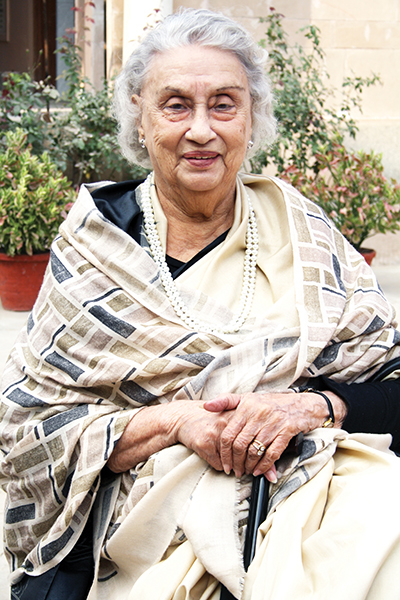
Bhicoo Manekshaw: combining art, invention and science
Internationally recognized chef, renowned author, restaurateur and a onetime trustee of the Delhi Parsi Anjuman, 90-year-old Bhicoo Jemi Manekshaw who passed away in Delhi on April 17, 2013 was easily the foremost authority on Parsi, Indian and Continental cuisine. She catered for prime ministers and presidents. But at the same time she was a warm, effusive and large-hearted person who willingly and happily shared her knowledge of the intricacies of preparing food.
She refused payment from Parsiana for the recipe columns she so willingly provided the publication. Despite limitations of age and health, at the age of 87 she consented to review a cookbook for Parsiana after initially declining to do so. And when we asked her for a few more paragraphs on some aspect of the tome, she willingly provided the material. Ever the chef, Manekshaw had also expressed her eagerness to try out a recipe from that book. "Have the humility to learn from anyone,” she would constantly impress on her colleagues and students whilst recalling recipes she had learnt from a kallaiwala who comes around tinning copper pans.
"Cooking is a combination of art, invention and science. It demands hard work, a sharp and intelligent mind and most of all, common sense — very rare!” wrote Manekshaw in A Feast of Love that initiates a novice from the basic techniques of Continental cuisine to the creation of a haute cuisine meal. "The most important ingredient in cooking is love…It is in fact the most important ingredient for any dish. Start then by choosing the right materials. Go to the market yourself; ingredients of the best quality are half the battle won. Then with love and care nurse your meal right from its birth; hover over it in its infancy; keep tasting and correcting it so it doesn’t go wrong; guide it by applying the correct heat and seasoning to bring out the best flavor; stir it encouragingly when needed; and watch over the whole until it blossoms into a delicious meal…” she notes in her Introduction to A Feast of Love.
Aimed at gourmets she candidly declared, "This book is not about quick 20-minute cooking; nor is it a book of easy, thrifty recipes.” Noted Economic Times food columnist Vikram Doctor wrote, "Cookbooks these days are obsessed with health, to the point where the food seems more medicine than something to enjoy. So after all those one-teaspoon oil only books I have to say there’s real pleasure in reading of the cups of cream that Manekshaw regularly throws into her dishes or her passionate defence of chicken skin…”
Widow of Air Vice Marshal Jemi Manekshaw, she would always tell her husband who was a doctor that he "saves lives, but I sustain life.” When accompanying him on different postings in India, her culinary interests had first led her to author Traditional Recipes of India. This was followed by Parsi Food and Customs which became a reference work for several Parsis in and outside India performing ceremonies associated with weddings and navjotes and in its second edition it was titled The Essential Parsi Cookbook. She even convinced Penguin Books to bring out a series of books on traditional customs and food from all parts of India and was appointed the Series Editor for nine such compilations. Her ultimate publication was Secrets from the Kitchen — Fifty Years of Culinary Experience at the India International Centre (IIC) that she compiled with chef Vijay Thukral of the IIC.
She enjoyed a long career as catering consultant when she worked with the Taj Mahal Hotel in Bombay, the West End Hotel in Bangalore, Raj Bhavan in Bangalore... At Chef Air and Air India she was responsible for the catering on all VIP flights, for dignitaries attending sessions of the Non-Aligned Movement and Commonwealth Heads of Government Meeting, as also the VIP and VVIP lounges at the Asian Games in Delhi. Known to interact with several officials, the possibility of her specially created lobster soufflé collapsing had compelled Manekshaw to address Indira Gandhi: "Madam Prime Minister, a hot soufflé will not wait even for a prime minister!”
Until two years ago Manekshaw supervised the cuisine at the popular Basil & Thyme restaurant in New Delhi started by her son-in-law Sunil Chandra in 1992. On its opening night the electricity went off upsetting her plan to bake a beer cake. Not one to get easily ruffled, with her innovative skills she spontaneously improvised a beer soufflé instead which earned many compliments, one from a foreigner who said she had never found a beer soufflé anywhere in the world!
"My love affair with food started at the age of five, on my maternal grandmother’s lap, cleaning dal, rice, etc and being allowed to make the dough for roti. I grew up eating delicious Parsi and Continental food from an early age which developed my palate and my appetite for excellence in food,” recalls the epicure who had completed her Senior Cambridge from Bombay’s Queen Mary School. Bhicoo (née Mehta) had no interest in pursuing a degree in science or languages, convinced that domestic science would be more helpful. "I realize what a great deal I owe to the Cordon Bleu School of Cookery, London,” Manekshaw had related. Privileged to attend their Advance Certificate Course in 1963, when accompanying her husband on his London posting, she expressed her joy at being selected, "the first Indian to do the course and the 11th in a class of 10; 11th as a special favor after demonstrating papeta ma murghi and and kera per eeda!” Fifteen years later she brushed up her skills with an Intensive Refresher Course. Thereafter she was responsible for the recipes on Indian cuisine in the Cordon Bleu Cookery Courses and gave several demonstrations there, notes her life profile.
Her cookery classes started with a trip to the market to teach students how to shop. Equally at ease with ministers and vendors, her elder daughter Sherna Wadia refers to an incident last year when she went to the market after a spell of confinement in the house due to a fractured vertebra. "When she stopped by the vegetable vendor he walked into an adjoining shop, brought a chair out onto the pavement and beckoned Bhicoo to sit down. He then said, ‘I have not seen you for so long. Let me look at you for five minutes and then I will sell you the vegetables,’” reminisces Wadia.
Her introductory sessions at cookery workshops invariably reiterated that there could be no shortcuts in making basics like stock, so essential for soups and sauces. When one girl said she could not be bothered and would use water instead, Manekshaw returned her fees and told her there was no place for her in that class. The girl though stayed back to become one of Manekshaw’s best students; a tribute to the chef and her imparting skills.
Besides Parsiana, her articles have appeared in India magazine, Discover India, The Times of India, Hindustan Times. She had played a key role in compiling and contributing recipes for the Time and Talents Club cookbook and the Delhi Commonwealth Women’s Association cookbook. At Indira Gandhi’s request she contributed several recipes for the cookbook published by the Royal Prince Alfred Hospital King George V Appeals Committee, Australia. Known to have an enviable collection of cookbooks she confessed, "I can spend hours poring over my cookery books. It’s unfortunate I can’t take them with me to the next world.”
Her daily regimen included a game of Sudoku and reading three newspapers. Not one to enjoy walks, she soaked in the serenity of the mornings and evenings watching her feathered friends darting in and around the huge mango tree in her garden and listening to bird songs. To prevent herself from putting on weight she would always get up from the table thinking "I could eat a little more.”
Known to be forthright with progressive views, in an article in Parsiana ("A festive feast,” August 21, 2009) she had written, "We Parsis are supposed to be an enlightened community yet there are times when we behave in a peculiar manner!” In connection with the "classical cuisine of the Parsis” Manekshaw had commented in Parsiana (August 21, 2008), "Its greatness lies in the subtle blend of flavors, herbs and spices from around the world. No single flavor predominates and it has just the right mix of spices and chillies to suit every palate. The dishes are light, not too oily or spicy and unique in the art of combining vegetables with meats in the same dish.” In another interview she had maintained, "The community is dying as are our customs. The cuisine, however will stay even after we are gone.”
The respected connoisseur is survived by her daughters Sherna Keki Wadia and Erna Sunil Chandra.
◆ ◆ ◆
From the archive