
Food
Continental cuisine
The author narrates the history and idiosyncrasies of European cuisine
The origin of Continental or European cuisine dates back to prehistoric times. Italian cuisine, known as the mother cuisine of Europe, was influenced by the Greeks and Moors. They in turn were influenced by the great civilizations of Mesopotamia, Egypt, Assyria and later by those of Iran, India and China with which they were linked through the silk and spice routes. The cuisine and culture that influenced the Greeks most was that of Iran, after Alexander, the ‘ahriman,’ conquered it.
Now, the Mecca of Continental cuisine is France, though the Italians may not agree on this issue.
Haute cuisine was created by Marie Antonin Carjme who dominated the 19th century cuisine of France with his extremely elaborate menus.
Carjme was famous for his creations in sugar confectionery and elaborately decorated main dishes, and is especially noted for his pihces monties, the pre-runner of the modern wedding cake. These were extremely elaborate structures, made of edible materials, which looked like architectural works of art.
It was Auguste Escoffier who introduced the practice of serving salad and cheese after the main course, and before the dessert. He reorganized the kitchens of the great hotels of Europe to make them more efficient. He shortened menus and reduced fat and starch in the food.
He became famous in the gay Edwardian period and has created many great dishes. Tournedos Rossini was created by him in honor of the composer. It’s one of the richest tournedos you could have — grilled steaks arranged on fried croutons, over which is placed a slice of pâté de foie gras, lightly sautéed in butter, and a layer of finely sliced truffles cooked in Madeira spooned over this. It is finally topped with a well reduced demi glaze. Wow! What a dish!
Escoffier also created Pêche Melba, a vanilla ice cream with fresh peaches, topped with a purée of fresh raspberries and a garnish of green almonds (classically its always green almonds, not the dried ones), and the famous Melba toast in honor of the opera singer Nellie Melba.
The start of Nouvelle cuisine has introduced small portions (sometimes not larger than a bite) and the use of exotic ingredients together, making a sacrilege of the ingredients and a mess of the dish. Take for example the delicately flavored avocado, which is mixed with the strongly flavored caviar. It completely destroys the fine flavor of the avocado and is a waste of caviar. Or the fabulous smoked salmon. Why mix it with caviar? Lashings of caviar with a few drops of lime juice served on hot buttered toast, or smoked salmon sprinkled with a few capers and lime juice served with wafer-thin lime slices and rolls of brown bread and butter are the best ways to enjoy their flavors. Why mix two distinct and excellent flavors?
New fads about food have gone completely out of hand. A friend sent me a magazine from the US called Cooking Light. I was horrified at the lists of ingredients — no-fat milk powder, ultra-lean ground meat, non-fat sour cream, salt-free stock, reduced fat, reduced sodium, condensed cream of mushroom soup, reduced-calorie margarine, reduced-fat Cheddar cheese and loads of other low cholesterol ingredients. Eating this type of salt-free, fat-free, low calorie food will create malnutrition. And what about reconstructed egg white and meat, pouch food meant for astronauts, that are reconstructed with boiling water, or milk that has been chemically treated to last forever? Aren’t we heading for a weird life-style?
I do not recommend that food should be dripping with fat, nor that one should have a heavy meal everyday, but a well-balanced meal with a good main course served with salads and fruits should be the rule of the day. Our body needs salt, fat and sugar, and all these should be taken judiciously, unless under doctor’s orders.
In European cuisine stocks and sauces play an important role.
Stocks
There are three types of basic stocks made from meat and poultry, fish and vegetables. All these have white and brown stocks.
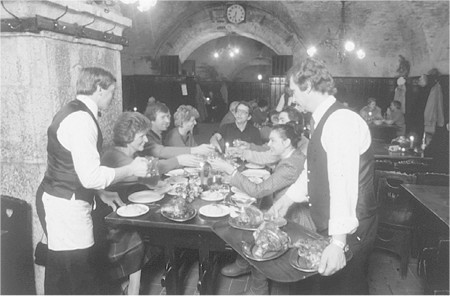
European delights
Sauces
There are two mother sauces — brown or demi-glaze and white or bichamel, dedicated by a court chef to Marquis Louis de Bichamel who was the Lord Steward of the royal household of Louis XIV. From these two sauces many other sauces are made with the addition of various flavorings and ingredients. Then there are the butter-based sauces like the hollandaise with its variations, the cold sauces like mayonnaise with its variations such as sauce tartare and thousand island dressing. There are also the cold choufroid sauces set with jellied stock, and lastly the sweet sauces, the most popular of which is crème anglaise, with its variations.
Andre Simon, an authority on choosing and serving wines, wrote in his foreword to William Heptinstall’s book Hors d’œuvres and the Cold Table that "in gastronomy as in sport, a good start may win the race.” He is so right. The hors d’oeuvre comes first in a meal and may make or mar it. For when you come to the table and an hors d’oeuvre is presented to you, you will know after seeing its presentation and tasting it, whether the meal that is to follow will be good or not.
Strictly speaking hors d’oeuvres is no more a part of a meal than the foreword is a part of a story in a book. It is outside (hors) the meal (d’oeuvre), which is why it should be light and dainty. You can serve a canapé with different garnishes, a bouchie (patties of puff pastry baked blind and filled with a variety of mixtures) or barquette (oval tartlets filled with a mixture). Leftovers like smoked salmon, chicken, fish, caviar, etc can be converted into any of these or into individual hot or cold mousses. These are usually served at lunch. If they are served at dinner, then soup is omitted. Henri-Paul Pellaprat, a Cordon Blue of yesteryears, says that it is gastronomically incorrect to serve both for dinner. Le Cordon Bleu in French stands for a first rate cook.
Soups
The most sophisticated soup of the western world, especially of France is the consommé, from which we have many derivations. The vichyssoise which was created by Louis Diart, was inspired by his mother (behind every great cook is a woman), who made a leek and potato soup in her home. Her son turned it into the world famous chilled soup. The French onion soup was created and served by the early morning workers of the market, Le Halles in Paris, which alas is no more. The bouillabaisse was first made by the fisher folk of Marseilles. Actually it should be served as a stew, and the genuine one can’t be made away from the shores of the Mediterranean Sea, as some of the fish, like rasasse, which are considered essential for the dish can only be found in the Mediterranean.
Bread
Of all the breads, to my way of thinking the breakfast croissant reigns supreme. The classical French breakfast in fact consists of hot croissants with butter and coffee. There is also the buttery brioche and barquette. Other delightful continental breads are rye, pumpernickel, grain bread and sour dough of Germany; pita of Greece; and focaccia and ciabatte of Italy.
Fish
A la meunière, to my mind, is one of the perfect ways of cooking certain fish like sea sole and pomfret. It is quite difficult to get it perfect. The fish has to be fried in clarified butter. Care has to be taken that it does not stick or burn or break while turning it, and it should be placed on a warm platter. Then you start over again with fresh butter, this time not clarified, heated in a fresh pan to exactly the point when it turns hazelnut brown, no more and no less. It is poured over the fish with a dusting of finely chopped parsley and a squeeze of lime on top, to come to the table with the butter still foaming. A dish fit for the gods, but you need civilized guests who come on time and are ready to wait for the dish!
Amongst shellfish my favorite is the oyster. The classical way is to have it raw, in its shell, with a sprinkling of lemon or lime juice and a dash of Tabasco sauce, served with thin rolls of buttered brown bread. There are many other ways of eating oysters. I have nostalgic memories of my young days at my home in Bombay, when the kaloowalli would come every Saturday with her basket of fresh oysters in their shells, and shuck them open (the culinary term used to open oysters). Our cook John would crumb-fry them and serve them with buttered brown bread rolls.
When served raw, they should be shucked open just before serving. It is better to serve them in the hollow half of the shell so that their natural liquor is retained. The shells are placed on a bed of crushed ice and the dish is served. Some serve oysters with grated horseradish or a cocktail sauce, but then the natural, delicate flavor is lost.
Lobsters, crabs, prawns, mussels, clams and scallops are the other great favorites and are cooked in all manner of ways. Lobster thermedors and mules meunières are two of the more popular shellfish dishes.
An example of excellent regional cooking of France is the matelote, made with a mixture of freshwater fish, cooked in red or white wine and served with hot crusty bread, a crisp salad and the same wine which was used to cook it.
The French also serve frogs’ legs in butter, as a delicacy. They taste like tender chicken and are quite delicious.
Poultry and meat
In the category of poultry, the chicken reigns supreme in popularity. And a good roast chicken is the ultimate. The best way to roast a chicken is the French way, with butter, salt, pepper and a little stock made from the neck and giblets. Another way is to brush the chicken with olive oil and lime juice, sprinkle with dried herbs, roast for a while and then baste with white wine. Delicious, crisp and very unusual, especially if a few black olives are added towards the end, as garnish.
Chicken Marengo was created after the famous battle of Marengo was won by Napoleon. He was happy and hungry, and asked his chef Dunand to produce a good meal. The chef scoured the devastated village, found a chicken, some eggs, mushrooms, tomatoes, garlic, crayfish, wine, herbs and truffles and Chicken Marengo was created.
Coq au vin is cooked in pork or bacon fat with mushrooms, baby onions, brandy and red wine, and thickened with kneaded butter. Beef bourguignonne is cooked in the same manner and both are classic dishes of the western world.
There are many ways to cook lamb — noisettes, chops, roasts, stews, etc. A roasted leg of lamb, with slivers of garlic pierced into the flesh, rubbed all over with butter, herbs, salt and pepper, and basted with wine is a delight to serve.
Chops grilled over charcoal, served with sautéed vegetables or a ratatouille is a simple but elegant meal. Navarin of mutton, or a lamb stew, made with the neck of lamb, onions, carrots, turnips, garlic and tomato purée, and served with a purée of potatoes is another typical, simple dish from the West.
Steaks are cooked in several ways and most fall in the category of haute cuisine.
Soufflé
One of the greatest creations to come out of a French kitchen is the soufflé. I wonder who created it. It can be hot or cold, sweet or savory, and it is not difficult to make. There is however an art, or should I say a knack, to making it. The perfect hot soufflé should be made in a regular soufflé dish and should rise about an inch above the rim. The crust should be golden and slightly soft at the center. After it is cooked it should never be placed in a draft or shaken about as it will sink. Nor should it be kept waiting. I was once preparing a hot lobster soufflé for a dinner at the India International Centre, where the late Indira Gandhi was a guest. She was always punctual, but that day she got delayed, and came into the kitchen to apologise. I was so frustrated that I told her a soufflé won’t wait even for a prime minister!
Only plan a hot soufflé for a small sit-down meal when your guests are the type who come on time. (Not like the ones who consider it fashionable and a status symbol to come an hour late. It is the height of ill manners, and it’s just as ill mannered of the hostess to keep her other guests waiting for an unpunctual guest.)
It is a fallacy that a hot soufflé should go into a preheated oven the moment it is made.
The secret of making a cold soufflé is to place the pan with the mixture in an ice bath after the gelatine has been added, and turning it with a metal spoon until it is slightly semi-set. Then fold in the whipped cream, beat the egg whites and gently fold in. Spoon into a soufflé dish or coupe glasses and set. Decorate and serve. This way the egg whites will not rise to the top, and the texture will be beautifully homogenized.
Vegetables
Vegetarianism is very much the in thing these days, all over the world. A simple way to serve green or very young vegetables, is to blanch them and toss them in melted butter, with salt, pepper and a squeeze of lime, and serve them al dente. They can also be roasted, grilled, baked, made into a mousse, hot or cold soufflé and exotic salads. Dry beans are frequently used and made into delicious meals. One of the more famous dishes is cassoulet — dry beans cooked with herbs and sausage, pork, lamb or preserved goose. There are also the famous Boston baked beans from the US.
Salads
There are innumerable ways of serving a salad, with any combination of fruit and vegetables with different dressing. The most familiar dressing and most often used, is the French or vinaigrette dressing, but there is also mayonnaise with its variations.
Lettuce should be torn by hand and never cut with a knife. Prepare all vegetables for the salad and soak them in ice-cold water. Just before serving, dry them with a kitchen towel, toss in the dressing and serve.
Non-vegetarian ingredients like eggs, poultry, fish, shellfish, beef, sausages, etc, can also be added.
Pastry
Of all the pastries, short crust pastry is the most popular. There are also the choux paste which is used for sweet and savory dishes, flaky and puff pastry. The latter is considered the finest of all pastries and its origin is the Middle East, actually Iran. (We Parsis brought it to India in the form of the delectable, light, malai na khaja, filled with thickened cream and dipped in sugar syrup.)
The French created the magnificent mille-feuilles from the same pastry. They also created pâté frolle (with the addition of green almonds), pâté brisé (a sweet short crust pastry), pâté sucré (a very light, sweet pastry, very difficult to make), and many others.
There is also the strudel pastry, which can be used for sweet and savory fillings and the wonderful stollen of Germany.
Cheese
The connoisseurs of European cuisine serve cheese before the dessert, while the English serve it after the dessert. The cheese of Europe are called "the food of the mountains or the souls of the soil.”
The best known varieties are the French Roquefort, Brie, Camembert, Gruyère and Emmenthal; the English Stilton, Cheddar, Wensleydale and Cheshire; the Dutch Edam; the Italian Parmesan, Gorgonzola, ricotta (something like our paneer), mozzarella and bel a paise (a soft cheese); and the Greek feta. There are over 300 varieties of cheese in Europe. Most of them don’t leave the villages in which they are made as they don’t travel well. Some start maturing from inside outwards and others from the outside inwards. Like wines they are matured in caves and need a cool temperature. They should never be frozen, and go well with wine, but need to be properly matched.
Desserts
The French, Italian and Swiss and perhaps the Germans as well, are famous for their creations of desserts. The ice creams, pastries, meringues, vacherins (meringue crowns, mounted on top of each other and filled with an assortment of ice creams or Chantilly cream), light gateaux, croquembouche (made of choux paste, meringue, almond paste and various fruits particularly oranges), babas and savarins (cakes made with yeast and soaked in liqueur-flavored syrups), the rich fruit puddings, fruit poached in wine, brandied fruits and sweets made with nuts are but a few of the great desserts of Europe. The ultimate is marrons glacis (preserved chestnuts which are then glazed — a long and intricate process).
Wines
The incomparable richness of French cuisine is a result of the marriage of the wine and food that France produces. Italian and German wines, and recently Australian, Californian and South African wines are also very good. Good wines, well chosen, can create a symphony for a great meal, with a liqueur like apricot, cherry, orange, peach, or the king of liqueurs, cognac as the finale.
Incidentally, one thing to remember is that a chef will always use a good wine, not a cheap one, for cooking.
The white and red wines and the rosé are popular and well known, but the sparkling wines, of which champagne is the best known are also excellent. I once had a sparkling wine called zitza, which was made by the monks of the mountain village of Metsovon in Greece. It was served with a smoked cheese and rose-flavored grapes. I have yet to taste a cheese or wine as superb as these. We declined to have the sheep’s head which was also served — eyes, teeth and all! I know that sheep’s head is delicious when cut up into little pieces and the eyes are a delicacy in Arabia, but what about the teeth!
Menu to serve 8
Chilled Melon with Port
Sole Meuniere with Grapes
Chimay Chicken Breasts
Mixed Vegetables
Tossed Iceberg Lettuce
Assorted Cheese
Italian Ice Cream with Fruit Salad
Coffee
CHILLED MELON WITH PORT
Green melons (2 ripe — peeled, seeded and cut into ¼” cubes)
Castor sugar (3 tbsp)
Port (1 cup)
Mint (8 sprigs)
Place melon in a bowl, sprinkle with sugar and port and chill for 2 hours.
Spoon into 8 coupe glasses and garnish with a sprig of mint.
Variation: If you don’t want to use port, prepare a dressing of balsamic vinegar, olive oil, salt and coarsely ground fresh pepper and use it in its place.
SOLE MEUNIERE WITH GRAPES
Sea sole (8 fillets — 150-175 g each)
Salt (to taste)
Pepper (freshly ground — to taste)
Lime juice (1 tbsp + extra for seasoning fish)
Seasoned flour (for dusting)
Butter (200 g + 100 g)
Oil (2-3 tbsp)
Green grapes (500 g — seedless)
Chopped parsley (for garnish)
Season fish with salt, pepper and lime juice. Heat 200 g butter with oil in a non-stick frying pan. Dip fish in seasoned flour and fry in hot butter and oil till golden brown on one side. Flip over and fry the other side. Place on a hot platter.
Wipe pan clean or use a fresh pan and melt 100 g butter with 1 tbsp lime juice till butter is lightly foaming. Quickly spoon over fish, surround with grapes, garnish with parsley and serve immediately.
Note: The classical method uses clarified butter without oil to fry the fish.
CHIMAY CHICKEN BREASTS
Chicken breasts (8 medium-sized)
Salt and freshly ground pepper (to taste)
Button mushrooms (500 g — trimmed and kept whole)
Juice of ½ a lime
Asparagus tips (400 g)
Butter (250 g + 2 tbsp)
Oil (2-3 tbsp)
Seasoned flour
Thickened gravy (425 ml, made with a strong chicken stock, 1 tbsp butter and 1 tbsp cornflour)
Season chicken breasts with salt and pepper. Blanch mushrooms in boiling salt water with lime juice for 1-2 minutes. Remove from heat and plunge into ice-cold water till cold, or place in a strainer under running cold water till cold. Drain and set aside.
Blanch asparagus in boiling salt water for 2 minutes, drain and plunge into ice-cold water till cold. Drain and set aside.
Heat 250 g butter with oil in a large non-stick pan. Dip chicken in seasoned flour and fry till cooked. Place on a hot platter and keep hot.
Clean pan with paper tissue and melt 2 tbsp butter. Add mushrooms and toss for 1-2 minutes. Remove from pan and keep hot.
Add asparagus and toss gently till heated through.
Garnish chicken with mushrooms and asparagus, surround with thickened gravy and serve immediately.
MIXED VEGETABLES
Baby potatoes (200 g — scrubbed)
Baby Brussels sprouts (100 g)
Snow peas (50 g — trimmed)
Baby carrots (200 g — trimmed)
Salt and freshly ground black pepper (to taste)
Butter (100 g)
Oil (1 tbsp)
Boil potatoes till tender and peel. Blanch remaining vegetables separately and plunge into cold water.
Sprinkle all vegetables with salt and pepper.
Heat butter and oil in a large frying pan or kadhai. Add vegetables and toss till heated through. Serve immediately.
TOSSED ICEBERG LETTUCE
Iceberg lettuce (1)
Vinaigrette dressing
Wash lettuce, tear leaves with your hands and soak in ice-cold water for 30 minutes. Drain, dry and toss in dressing.
Serve in half plates or lettuce bowls.
ASSORTED CHEESE
Salt biscuits or Melba toast
Green or black grapes
Arrange all ingredients on a platter and pass it around.
Note: Never serve butter with cheese when it is served after lunch or dinner.
ITALIAN ICE CREAM WITH FRUIT SALAD
Ice cream
Sugar (300 g)
Milk (150 ml)
Egg yolks (10 — well beaten)
Cream (1 ltr)
Vanilla essence (2 drops)
Fruit salad
Black grapes (500 g — seedless)
Fresh strawberries (600 g — cleaned)
Apples (2 — peeled and cubed)
Chikoos (4 — peeled and cubed)
Juice of 1 lime
Sugar (to taste)
Hot strawberry sauce
Strawberry jam (500 g — sieved)
Cornflour (1 tbsp)
Kirsch (2 tbsp)
Ice cream
Dissolve sugar in milk and bring to scalding point. Remove from heat and slowly pour in egg yolks, whisking all the time.
Allow to get completely cold and stir in vanilla essence.
Whisk cream till semi-stiff and fold into custard.
Freeze till set.
Fruit salad
Mix all ingredients together and chill for 1-2 hours.
Hot strawberry sauce
Put jam in a stainless steel pan. Mix cornflour with 2 tbsp water and stir into jam.
Place pan on low heat and cook till jam thickens slightly. Add kirsch and serve hot with ice cream and fruit salad.
Note: The vanilla in the ice cream is just to remove the taste of the eggs. The ice cream should not have a vanilla flavor, so don’t use too much.
COFFEE
Experiment and make a blend of different coffee beans of your choice, roast and grind them. Don’t roast too much at a time, as the beans lose their aroma after a while.
Coffee can be made by steeping, percolating or filtering. The last method is considered to be the best, and that is how the South Indians make their coffee.
Serve your after-dinner coffee hot with warm milk. Connoisseurs do not serve cream with their coffee, but the choice is yours.
Bon appetit!

Bhicoo J. Manekshaw, a graduate of the prestigious Cordon Bleu School of Cookery, London and author of Traditional Recipes of India and Parsi Food and Customs, has been associated with many haute cuisine organizations in the country.
◆ ◆ ◆
From the archive