
Comment
'We remain the same'
The Parsis on either side of the border share a similar outlook
In all the books written by Arab historians in the 10th century there are references to the religious people of Iran who give great respect to fire and who reside in Hindustan, Sind, Khorasan and even parts of China. In 1184 there was a Zoroastrian priest from a city called Oocha on the banks of the river Indus who went to Seistan (now in Pakistan) to teach Zoroastrian rituals. However, there are no historical records of Parsi settlements in Sind until the early 19th century.
In 1820-1825, the well-fed British Army had subjugated most of the princely states in India but Baluchistan and the North West Frontier Province were proving difficult to control. Hence, army expeditions were mounted there and since an army marches on its stomach, Parsis proved to be excellent food and provision suppliers (also called Commissariats) to the British.
In 1839 when the British army invaded Kabul and established British rule in that region, Jassawalla Company had its branches as food and provision suppliers in Sukkar, Jalabad, Kabul, Karachi, Firozpur and Hyderabad (Sind). This merchant family chain of provision shops sent its Parsi employees to manage their business in all these places.
Along with the British, many Parsis went to Pakistan including the families of Readymoney, Pandey, Marker, Bhedwar and Rajkotwalla. Some of these Parsis were professionals in the service of the British like doctors, engineers, moneylenders, administrators and traders.
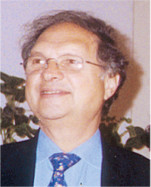
Byram Avari: steering Karachi Anjuman
Navroji Fardoonji was among the earliest Parsis who went to Kabul with the British envoy in 1837. When the British made their headquarters in Hyderabad (Sind), Parsi merchants settled there and when their headquarters shifted to Karachi, Parsis settled there in large numbers too.
There still stands a house built in 1844 by Hormusji Dadabhoy Ghadialy who also built Karachi’s first dakhma in 1848. Parsis were the makers of modern Karachi. The first American consul in Karachi was Dossabhoy Meherwanji Wadia (in 1842) who helped establish the agiary in the Ghadikhatta locality in Karachi. Cawasji Pestonji Lodhawalla was honored in 1882 by the Sultan of Muscat and in 1884, Cawasji Jehangirji Jussawalla was honored by the Nawab of Bahawalpur in his great "Durbar.”
One of the most famous Parsis was the Merchant Prince Hormusji Jamshedji Rustomji who came to Karachi as a seven-year-old child and stayed on to build a large business house, doing trade with Europe. A member of the Karachi Municipality, trustee of the Karachi Court and a Freemason, he was greatly respected by the British.
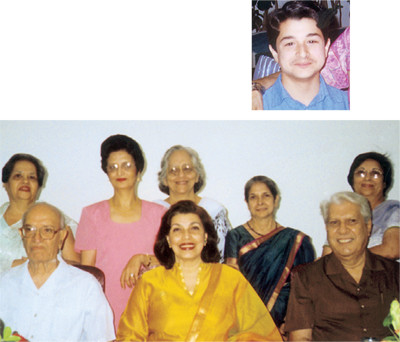
Top: Young mobed Bhada. Alongside: Lilaowala (seated, center) with Lahore Parsi Anjuman members (standing, L to R) Thrity Hormusji, Katy King, Mohta Engineer, Perin Boga and Amy King. (Seated) Sidhwa and Dr Dara Hormusji
Hormusji Sohrabji Kothari introduced date palms and the pleasures of toddy drinking to the people of Karachi. In 1852 Hormusji Pestonji Shroff became the very first stevedore, supplying provisions to ships in the Karachi harbor. Another great stevedore businessman was Jivanji P. Dubash. Manekji Framji Colabawalla had the contract for railway catering and went on to become so rich and famous that he was called "The Parsi Baron of Malir.”
These days, the governments of India and Pakistan are encouraging people-to-people contact as also an exchange of Parliamentary delegations. In such a scenario when I received an invitation from the Dr Dastur Dhalla Memorial Institute to give a series of religious lectures to Parsis and miscellaneous lectures to cosmopolitan audiences, I welcomed the opportunity.
Parsis contributed a lot to education. We visited the Bai Virbaiji Sopariwala School and the Khansaheb Hormusji Mama School. Apart from schools, we visited the hospitals, homes, charitable dispensaries, libraries, reading rooms, clubs and the huge, sprawling, beautiful Parsi colonies in Karachi.
In 1980, there were about 6,000 Parsis in Pakistan with most of them in Karachi. Today, there are only about 2,000, of whom 1,900 are in Karachi. As elsewhere, the younger generation has migrated to Australia, New Zealand, North America and other places. Apart from that, there are more deaths than births — in fact during the last three years, an average of 48 bodies were consigned to the dakhma.
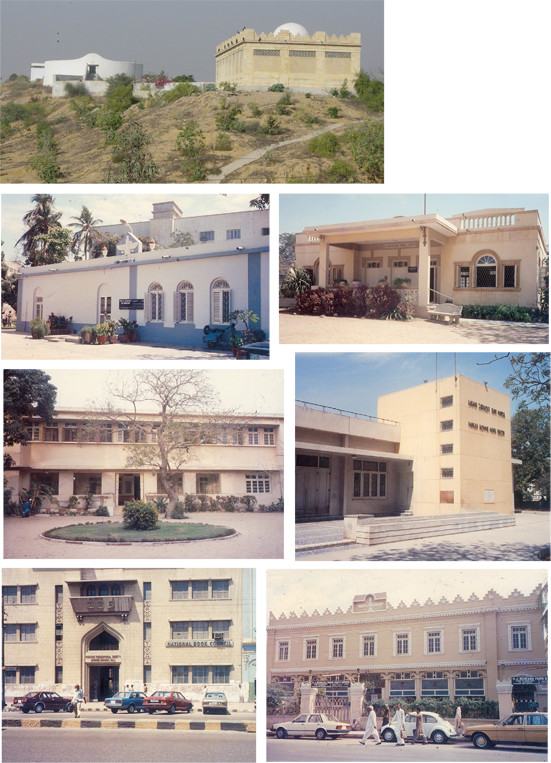
Prominent Parsi landmarks in Karachi (clockwise, from top left): dakhma and sagri, Bhedwar Reading Room and Library, premises of the KZBM, M. J. Behrana Agiary, Jamshed Memorial Hall premises, Parsi General Hospital and D. M. Wadia Dar-e-Meher
The Katrak Parsi Colony has 66 bungalows and 20 flats. The Noshirwan Mama Colony is part of the Katrak Colony but managed separately by the Karachi Parsi Anjuman. The Cyrus Minwala Colony and the Dinshaw B. Avari Colony were built on surplus lands a little away from the Karachi dakhma. We also visited the Rustom and the Sopariwala chawls and they are so pretty and so spacious that to call them chawls is a complete misnomer.
The apex body of Karachi Parsis is the Karachi Parsi Anjuman Trust Funds of which Byram D. Avari is the chairman and Dinoo M. Mistry, the vice chairperson. Other trustees are Dhun Ghadially, Rusi Sethna and Ervad Godrej Sidhwa (honorary secretary) — all eminent people in Karachi society today. We heard of the firsthand stories of two Parsi "saints” of Karachi and their remarkable love and compassion for not just the Parsis but every human being who came to them — the late Dastur Dr Dhalla and the late Jamshed Mehta (with whom I have a spiritual link ever since I joined the Jamshed Mehta Theosophical Lodge in Bombay in 1985).
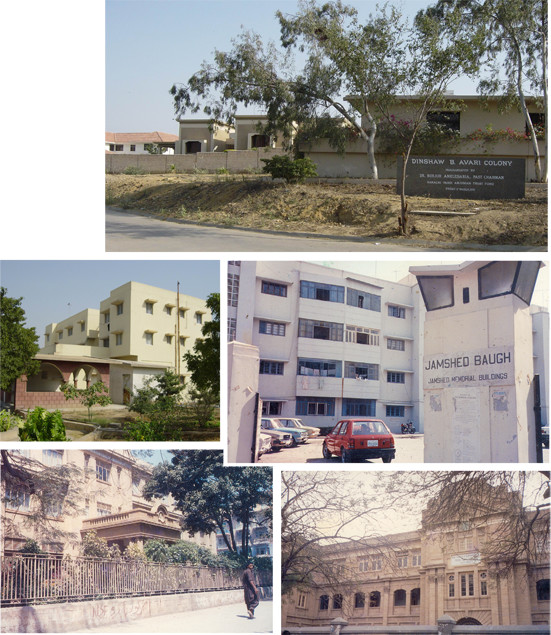
Top and middle row: Community housing in Karachi and Jamshed Baugh Bottom: Khansaheb Hormusji Mama School (left) and Bai Virbaiji Sopariwala Boys’ School
The Avari family is well-known throughout Pakistan. Byram D. Avari has a chain of hotels in Pakistan, Dubai and Canada and owns a brewery. He and his wife Goshpi have twice won gold medals for Pakistan in yachting during the Asian Games in 1988 and 1992 and the Pakistani Government had issued a commemorative postage stamp in December 1992 to honor them.
We tasted the Muree-Beer from the Bhandara Distillery at Muree. Its owner Minoo Bhandara is the elected member of Parliament representing minorities.
We met Arde-shir Cowasjee whose free and fearless columns we read in The Asian Age. He is a widely read political analyst. His sister-in-law Toxy Cowasjee is a well-known social worker and former president of the Karachi Zarthosti Banu Mandal. Toxy had played an important part at the Seventh World Zoroastrian Congress in Houston in 2000.
We also met the youngest mobed of Karachi Ervad Mehernosh Minoo Bhada who is 14 years old.
We were taken to Lahore by Sidhwa. There are only 57 Parsis in Lahore and we met almost all of them. The Lahore Parsi Anjuman hosted a dinner for us which gave us a chance to interact with everyone. Lahore has less Parsis than South Africa which has about 75.
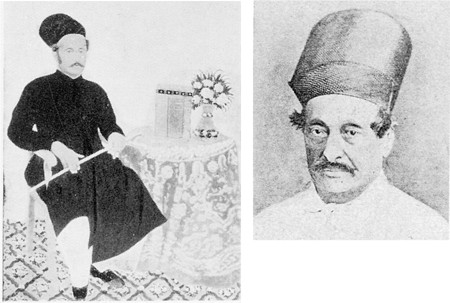
Eminent Parsis of Pakistan: Dossabhoy Wadia (left) and Naoroji Fardoonji
In Quetta, Rawalpindi, Multan and Peshawar, just one or two families remain. Among the most well-known Parsis today is Jamshed Marker who retired as Pakistan’s Ambassador to the United Nations where he made his ‘mark’ (pun intended) as an astute diplomat. His 102-year-old mother lives in Quetta.
Parsis are happy in Pakistan in spite of the political scenario there. Even as the war cries go on, or peace talks are attempted, the man in Bombay listens to Nusrat Fateh Ali Khan while the Karachi housewife hums an A. R. Rehman tune. It is this dichotomy that makes Indo-Pak relationships so complicated.
However, there’s absolutely no dichotomy between the Parsis of India and Pakistan. We remain the same on either side of the Wagah border and meet each other with unabashed joy.
Ruby Phiroze Lilaowala is a freelance writer/columnist. She was a special correspondent for The Gulf Times and was a censorship officer for the government of Qatar. After graduation she studied law, and lectures in India and abroad on religion, theosophy and other subjects.
◆ ◆ ◆
From the archive