
Comment
Zoroastrian literature: the lost and found
Of the 21 Nasks only the Vendidad is completely preserved while fragments exist of the rest
The Roman scholar Pliny reports, on the authority of Hermippos, the ancient Grecian philosopher, that Zoroaster composed two millions of verses. Pliny has stated that Hermippos had made very laborious investigations into all the Zoroastrian books and to have stated the contents of each book separately.
An Arab historian Abu Jafir Attavari assures us that Zoroaster’s writings comprised 12,000 Cowskins (parchments). Dr Martin Haug, the eminent internationally reputed scholar, opines that the books ascribed to Zoroaster by his followers were very considerable. The loss of most of our sacred books were due to the successive invasions of Iran by Chenghis Khan, Hulaku Khan, Alexander the Great and Taimur. Though many believe that Alexander the Great had ordered that all the books found in the archives or state treasury at Persepolis be destroyed, except books on medicine and astronomy, Haug opines that to burn books, in order to uproot a religion, resembles rather Mohammedan fanaticism than Grecian policy.
The great Danish oriental scholar, Westergaard, professor at the University of Copenhagen, had toured India and Iran to search for all Zoroastrian scriptures. Haug states that "the pieces extant now, and collected for the first time in Westergaard’s valuable edition, comprise the following books: Yasna (Izeshne), Visporatu (Visparad), Vendidad, the 24 sections called Yashts, including fragments of the Hadokht (No 22) in West edition and Vistasp Nasks (No 24); to these are added some small prayers of different kinds, called Afrigan (three), Nyayish (six), Gah (five), with some miscellaneous fragments (nine) and the Shiroza (30 days) or calendar.”
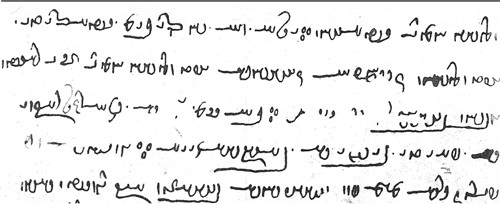
Sample of Avestan font (Yasna 10)
Courtesy: Joseph Peterson, www.avesta.org
It is thus clear that Westergaard was not successful, in his India and Iran tours, to unearth any other books on Zoroastrian scriptures. Haug states, "Masudi, the celebrated Arabian historian and traveler (950 AD) has preserved to us the following notice of the sacred books of the Parsis. The first book, made by Zardusht was Avesta. The Persians, not being able to understand it, Zardusht made a commentary, which they called Zend, further he made a commentary to this commentary, and called it Pazend. After Zardusht’s death, the Persians made a commentary of the commentary; and an explanation of all the books just mentioned and called it Yazdah.” In a footnote Haug states, "He understands by it (the word Yazdah) those pieces which are called yashts and undoubtedly are the latest productions in Zend Avesta.”
The 21 lost Nasks
According to Haug, "the whole scripture consisted of 21 parts, called Nasks, each consisting of Avesta and Zend i.e. an original text and a commentary on it. The number ‘21’ was to correspond to the 21 words, of which the most sacred prayer of the Zoroastrians Yatha Ahu Vairyo (commonly called Honovar) was composed. The division is artificial, and apparently, made for the purpose of bringing the whole of the once very extensive scripture into accordance with the number of the words of that most sacred prayer; each section of it to be headed by one of those holy words to which a supernatural power is ascribed. That such a division into 21 sections really existed cannot be doubted; for the names of the several sections together with the number of chapters they comprise, and a short statement of the chief contents are still extant. I will enumerate them according to the reports of them to be found in the two Rivayats.”
¤ Setudtar or setud — yashts (Zend ctaota, ctaiti: praise, worship) comprised 33 chapters, containing the praise and worship of the yazatas or angels.
¤ Setudgar, 22 chapters, containing prayers and instructions to men about good actions, chiefly those called jadungoi i.e. to induce another to assist a fellowman.
¤ Vahishta mathra, 22 chapters, treating of abstinence, piety, religion, qualities of Zoroaster, etc.
¤ Bagha, 21 chapters, containing an explanation of the religious duties, the orders and commandments of God and obedience of men, how to guard against hell and to reach heaven.
¤ Dam dat, 22 chapters, contents; knowledge of this and that world (the future life), qualities of their inhabitants; the revelations of God concerning heaven, earth, water, trees, fire, men and beasts; resurrection of the dead and the passing of the bridge Chinvat (the way to heaven).
¤ Nadur, 35 chapters, containing astronomy, geography, astrology, translated into Arabic under the name Yuntal; and known to the Persians by the name fawamaz jan.
¤ Pacham, 22 chapters, treating of what food is allowed or prohibited, of the reward to be obtained in the other world for keeping the six Gahambars and the Fravardagan.
¤ Ratushtai, 50 chapters (at the time of Alexander the Great only 13 were extant), treated of the different ratus or heads in the creation, such as kings, high priests, ministers and gave statements as to what fishes are Ormuzd’s and what Ahriman’s; there was besides a geographical section in it.
¤ Burush, 60 chapters (13 of which only were extant at the time of Alexander); contains the code of law for the kings, governors, etc; workmanship of various kinds; the sin of lying.
¤ Koshusarub, 60 chapters (at Alexander’s time 15 only were extant), treated of metaphysics, natural philosophy, divinity, etc.
¤ Vishtasp Nask, 60 chapters (at Alexander’s time only 10), on the reign of King Gustasp and his conversion to the religion and its propagation by him through the world.
¤ Chidrusht, 23 chapters, was divided into six parts; first on the nature of the divine being, the Zarathushtrian faith, the duties enjoined by it; second, on obedience due to the king; third on the reward for good actions in the other world, and how to be saved from hell, fourth on the structure of the world, agriculture, botany, etc, fifth on the four classes of which a nation consists, viz rulers, warriors, agriculturists, traders and workmen, (the contents of the sixth division are left out).
¤ Safand, 60 chapters, on the miracles of Zoroaster, the Gahambar, etc.
¤ Jarasht, 22 chapters, on the human life from the birth to its end and up to the day of resurrection; on the causes of man’s birth, why some are born in wealth, others in poverty.
¤ Baghan Yesh, 17 chapters containing the praise of high angels like men.
¤ Nayarum, 54 chapters, code of law, stating what is allowed and what prohibited.
¤ Husparum, 64 chapters, on medicine, astronomy, midwifery, etc.
¤ Damasarub, 65 chapters, on the marriage between the nearest relatives (called qaetvo-datha); zoology and treatment of animals.
¤ Huskarum, 52 chapters, treating of the civil and criminal law; of the boundaries of the country, of the resurrection.
¤ Vendidad, 22 chapters, on the removal of uncleanliness of every description from which great defects arise in the world.
¤ Hadokht, 30 chapters, on the creation, its wonders, structure, etc.
Haug adds that of these 21 sections, only one, the Vendidad is completely preserved; of some of the others, as the Vishtasp Nask, Bagh, fragments only are extant; the far larger number of these ancient sacred books having been lost forever.
Haug clarifies that in the excellent library of his friend Nushirwanji Jamaspjee, High Priest of Parsis at Poona, there are two collections, one called Barzu Qivam eddin (collected about 250 years ago), the other going by the name Shapoor Baroochee (about 125 years ago). From these two collections my remarks on the Nasks are taken.
Dr Martin Haug
Haug stayed in India — mostly at Poona for a number of years. Late of the Universities of Tubingen, Gottingen and Bonn, he was the superintendent of Sanskrit Studies and professor of Sanskrit in the Poona College. He was the honorary member of the Bombay Branch of the Royal Asiatic Society and had many other attainments to his credit. He had a great advantage over other distinguished oriental scholars as he knew Sanskrit well and was familiar with Zoroastrians — particularly the leading dasturs and priests. This article is mainly based on his magnum opus Essays on The Sacred Language, Writings and Religion of the Parsis.
Monotheistic theology
Haug proceeds to point out "the new thoughts, theological and philosophical, which Zarathushtra introduced into the world, and in consequence of which he may be said to have become the founder of a new religion and exercised a lasting influence on the history of the human mind. His real doctrines, untouched by the speculations of later ages, can be learnt only from the old Yasna, chiefly from the Gathas. The leading idea of his theology was monotheism, i.e. that there are not many gods, but only one... His moral philosophy was moving in the triad of thought, word and deed. The few ideas, which may be discovered in his sayings, show that he was a great and deep thinker, who stood far above his contemporaries, and even the most enlightened men of many subsequent centuries.”
Zarathushtra’s conception of Ahura Mazda — the Supreme Being is "He is the light and the source of light; he is the wisdom and intellect. He is in possession of all good things, spiritual and worldly, such as the good mind (Vohu mano), immortality (ameretat), wholesomeness (haurvatat), the best truth (asha vahista), devotion and piety (armaiti), and abundance of every earthly good (kshathra vairya). All these gifts he grants to the righteous pious man, who is pure in thoughts, words and deeds.”
Let all of us be pure and righteous. Let our lives be pursued in the holy triad of good thoughts, good words and good deeds. Nemo Zarathushtra Spitamah Ashaono Fravashe — Let us bow in prayers to the holy Farohar of Zarathushtra Spitama.
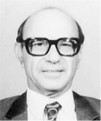
Capt Hormazdiar Desai retired from the Indian Administrative Service as joint secretary, finance, Maharashtra state. Thereafter he served many charitable causes, working as honorary secretary of the National Association for the Blind and as founder member of the National Society for Equal Opportunities for the Handicapped. He was joint honorary secretary and trustee of the K. R. Cama Oriental Institute and has been associated with religious institutions like the Anjuman Atash Behram and Sorabji Ranji Agiary as governing council member/trustee.
◆ ◆ ◆
From the archive