
Zoroastrians Abroad
Culinary Creations
"The extended family that I grew up with in India did not hire cooks. My mother and her two sisters-in-law took turns at various daily preparations in the kitchen. Their kitchen doubled as my playroom when I was a toddler. I pattered around rolling the dough for rotli, peeling onion or garlic or removing peas from the pod. Cooking comes naturally to me,” writes Dr Mehroo Patel who has dedicated her book Parsee and Persian Culinary Creations to her parents Dinamai and Kavasji Kanga.
This is her second culinary publication. The first, Parsee Culinary Artist — the American Way was published in 1988, born of her involvement in the Ethnic Festivals of Oak Park, Chicago, Illinois where she has "juggled” her life between her clinical practice, the demands of a growing family and dedication to her ethnic and local communities. Thus, the recipes are shortcuts to home cooked meals, eliminating the time-consuming, labor intensive aspects of traditional cookery.
In the process some of the traditional use of oils and fats has also been pruned and as a bonus, each recipe bears a nutritional analysis thanks to her husband Minu Patel who "decided to add a scientific spin” to the compilation. A "Focus on Nutrition” by Karmeen Kulkarni, diabetes coordinator at St Mark’s Hospital, Utah puts the exercise in perspective.
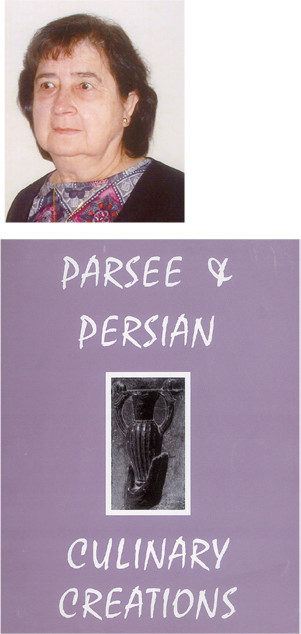
Patel: cooking comes naturally
The 105 loose-leaf spiral-bound book is divided into breakfast specials, main meals and side selections, desserts, snacks, preserves and pickles and Persian favorites. Not all the recipes are Patel’s own; each contribution is recognized. Many of Patel’s own entries are adapted from other published work like 101 Parsis Recipes by Jeroo Mehta and the debt is acknowledged.
Three poems by Zarina Mullan Plath add a tangy flavor to the assortment of community staples — masoor, yogurt curry, patra ni machi, etc. Kamalrukh Katrak’s artistic styling of the cover and the section separators complement this easy to read, easy to follow, ready anytime cookery edition. But one must bear in mind that the recipes presuppose ready access to western staples like Cool Whip and Graham Crackers and "artificial liquid smoke!”
Like the North American continent where the two main strains of Zarathushtra’s followers have met — "disparate peoples bringing with them their unique customs and traditions, language and literature, food, music and arts,” as writes FEZANA Journal’s editor-in-chief Roshan Rivetna in her Foreword to the book — the combination of recipes provides familiar and exotic items to both groups, so that there’s something new for each to learn.
◆ ◆ ◆
From the archive