
In Memoriam
Judicious dignity
Died: Justice (Retd) Dinshaw Nusserwanji Mehta, 74, former judge of the Bombay High Court and trustee of the K. R. Cama Oriental Institute, on July 6, 2003 in Bombay following myocardial infarction.
Eulogizing Meh-ta’s "illustrious career” Chief Justice of the Bombay High Court C. K. Thakker commended his "many landmark judgments” in the course of the High Court reference made to "an eminent jurist” on July 23, 2003.
"It was an outstanding experience to appear in his court. He conducted himself with tremendous but quiet dignity. He treated all members of the Bar uniformly and with unfailing politeness,” recalled advocate general of Maharashtra Goolam Vahanvati at the High Court reference. "All lawyers and litigants who came out of Justice Mehta’s court left with a feeling that they had been treated courteously and fairly... (He) had impeccable manners and a sterling character...a dry sense of humor and understatement was typical of him,” attested Vahanvati.
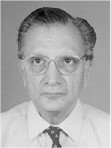
Mehta: fair hearing
"Throughout his life, Justice Mehta was a very humble man. He was very courageous. Whatsoever may be the assignment, he never refused to take up the challenge. He would take up an assignment whether it was high profile or not; or whether it was fraught with danger or not,” declared P. K. Dhakephalkar, president of the Advocates’ Association of Western India, revealing that when Mehta tried the famous A. R. Antulay case in the Bombay High Court he refused any personal protection offered by the authorities. At the trial of the former chief minister of Maharashtra who was accused of corruption, Mehta framed 21 charges against Antulay and discharged him for the remaining 22. Mehta’s order was carried in appeal to the Supreme Court which consistently maintained that Mehta had dealt with the case absolutely fairly and impartially, declared Vahanvati.
"Very few people know that he was appointed as a one-man commission to probe the Khalistan issue in Punjab when the situation there had reached a crisis of grave magnitude,” revealed Dhakephalkar who remembered him as being "soft-spoken yet firm.” A month before his retirement in 1990, Mehta informed a very senior counsel in no uncertain terms that the "court would not be dictated to by any counsel, howsoever senior he may be,” added Dhakephalkar. Simultaneously, "the confidence he developed in the minds of juniors...was phenomenal and (if) many of us could look beyond our capacities it is simply because of Mehta,” conveyed Rajiv Patil, vice chairman of the Bar Council of Maharashtra and Goa. Patil remembered Mehta’s advice to his juniors: be honest with your case, present it without fear or favor, and rest...
Mehta’s own legal career had commenced after his early education at Poona’s Sardar Dastur Boys’ School, graduation in Arts from the Wadia College and in law from the Law College. After enrolling as an advocate of the Bombay High Court in 1952 he commenced practice in the High Court and the City Civil and Sessions Court. In 1964 he was appointed as a special public prosecutor in the Court of Sessions at Bombay. "His stint as a prosecutor was very exacting. His reputation was that of a fair and fearless prosecutor,” president of the Bombay Bar Association Rafiq Dada shared his reminiscences. Thereafter Mehta was appointed judge of the Bombay City Civil and Sessions Court for 10 years after which he was elevated to the Bench of the High Court in 1978, superceding three other senior colleagues, a step unprecedented in the history of the Bombay City Civil and Sessions Court, wrote Capt Hormazdiar Desai in his tribute to Mehta.
After his retirement as High Court judge Mehta was appointed chairman of the legal advisory committee of the Shivaji University, Kolhapur and subsequently the governor of Maharashtra appointed him chancellor’s nominee on the management council of that University. He was also selected by the Government of Maharashtra to chair the review committee of the Terrorists and Disruptive Activities Act (TADA) and a year later was appointed as a member of the review committee constituted under the Narcotic Drugs and Psychotropic Substances Act, writes Desai who was instrumental in inducting Mehta as a trustee and a governing body member of the K. R. Cama Oriental Institute. "His balanced judgment was always valued and appreciated,” noted a condolence letter from the president of the Institute Muncherji Cama. Presiding over several lectures and functions organized by the Institute, "His speeches were sprinkled with appropriate anecdotes, wit and humor and were greatly appreciated by the discerning audience. Every one connected with the Institute will greatly miss him,” added Cama.
Among the corporate bodies to have gained from Mehta’s expertise were the Tata Iron and Steel Company Limited where he had served as chairman of the second and third social audit committee, and BSES Limited where he was chairman of the Consumer Disputes Appellate Committee.
Yet another community organization where Mehta had served as trustee was the Framjee Cawasjee Institute which conducts a reading room and offers scholarships to students. Primarily broadminded "he always maintained that the community should move with the times instead of being dogmatic and getting bogged down by outdated rituals,” mentions his wife Najoo. And with his legal acumen he realized that judgments which served a purpose in the prevailing milieu cannot be held sacrosanct for time immemorial. He respected his religion but derived greater joy in worshipping his work and being of help to his fellowmen.
His elevation to the Bench had no effect on his laid-back yet warm appreciation of people’s need for legal help or advice. Nor did it dampen his penchant for tongue-in-cheek humor and array for naughty jokes, recalls a childhood friend Arnavaz Mama.
In response to the felicitation accorded to him by the Bombay Bar Association when he was appointed judge of the Bombay City Civil and Sessions Court, Mehta had concluded his speech: "At the end of my sojourn on the Bench, I shall be satisfied if it be said of me that ‘he did his duty according to his lights.’ Then let the critics say ‘That may be so, but those lights were rather dim.’ I shall not mind.
"I shall be satisfied it were said of me that ‘he stuck to the letter and word of the record and did not stray into the realm of imagination.’ Then let the critics say ‘That was because he had no imagination at all.’ I shall not mind.
"I shall be satisfied it were said of me ‘although by no means brilliant, at least he was honest.’ Then let the critics say ‘That was because he lacked the courage of the corrupt.’ I shall not mind.”
On behalf of the legal fraternity Dhakephalkar summed up: "At the end of his career the critics said that the lights were shining bright...that he was pragmatic and had a great (expertise) to read between the lines... that he was honest to the core and had courage to refute all allurements in life.”
The respected jurist is survived by his wife Najoo, son Cyrus and brother Phiroze.
◆ ◆ ◆
From the archive