
Scholarship
Bombay’s Age of Enlightenment
With quiet determination these scholars sought the light from the original scriptures
Two institutions and one individual directed the course of study of ancient Iranian languages in Bombay in the mid 19th century. The Mulla Feroze Madressa, established in 1854, inculcated the study of Avestan as it had been traditionally done — via the translation in Pahlavi and modern Persian — with perfunctory regard to the rules of grammar and philology. In contrast, the private class established by Kharshedji Rustomji Cama in 1861 sought to create an understanding of these obsolete tongues through the scientific application of the rules of comparative philology, highlighting the similarities between Sanskrit and Avestan, which he had learned over four years of study under eminent orientalists in Europe. The Sir Jamsetji Jejeebhoy Zarthosti Madressa, which began functioning in 1863, provided an amalgam of both systems of learning.
Among Cama’s first batch of students were several young Parsi priests, notably Ervad Tehmurasp Dinshawji Anklesaria, Ervad Edulji Kersasji Antia, Ervad Sheriarji Dadabhai Bharucha, Ervad Kavasji Edulji Kanga and Ervad Khurshedji Minocherji Kateli, who not only produced outstanding publications for the benefit of lay Zoroastrians but went on to be instructors at the above named institutions and at the University of Bombay. The imprint of the first four among them still endures.
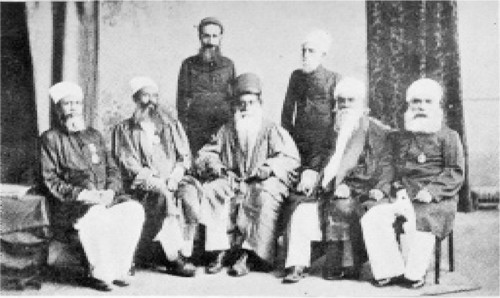
Born in Bharuch in 1840 where he had his early education, Anklesaria had completed his priestly course of navar and maratab at Surat by the age of nine. Losing his father at an early age, the clever and determined boy was spotted studying Persian from a Moslem maulvi on the street in Deesa (where he lived as his uncle’s ward) by the Hindu reformist Karsandas Moolji. Witnessing his zeal for learning Moolji is said to have prevailed upon the uncle to send the lad to Bombay’s Sir J. J. Parsee Benevolent Institution where he passed his matriculation at the age of 18.
His interest in Zoroastrianism spurred him on to study Avestan and Pahlavi, joining Cama’s first batch of students and was among the first 13 scholars to enter Sir J. J. Madressa in 1863 where he mastered both Persian and Sanskrit, winning substantial prize money as well as scholarships at the Madressa’s prize distribution function in 1866.
Transliterating Dadistan-i-Denik in Gujarati together with an explanation of the text with fellow Cama student Bharucha in 1870 won him a prize of Rs 1,000 from the Zarathushti religious organization, the Rahnumae Mazdayasnan Sabha, which had been established by Dadabhai Naoroji, among others. By 1871 he was appointed professor of Sanskrit at the J. J. Madressa. He published the 225-year-old Shiavaxnamu, a versified account of Parsi history by Rustom Hormuzdiar of Surat, together with additional notes which was very well received by the public. He then ventured into a Gujarati translation of Dastur Tirandaz Ardeshir’s Persian version of the Khordeh Avesta which he compared with European translations to establish its authenticity. The Gujarati transliteration and translation of the Avan Yasht followed in 1874. Earning the Dowager Lady Avabai Sanskrit Fellowship established by Sorabji Shapurji Bengali — a sum of Rs 75 per month — for the years 1874-79, he became professor of Avestan and Pahlavi at the Mulla Feroze Madressa.
From 1875 until his death in 1903 Anklesaria was a member of the Rahnumae Mazdayasnan Sabha and honorary secretary of many of its programs, including that of the Zarthosti Religious Research Society (1878-86), promoting lively debates on religion and religious books. In 1876 he had bought the Fort Printing Press and later acquired the Gujarati journal Fursad (Leisure) from Darabji Jamshedji Naigamwala and Company which he published until 1890. Its 37th edition, published in 1882, argued that Zoroastrianism accepts converts, a subject to which he returned in 1903.
The Avestan rendition of Fravashi, Afrigan and Afrins based on Prof N. L. Westergaard’s work was published in 1883. The same year saw the Khordeh Avesta in Pahlavi. The Gujarati translation of Yazashne Ba Nirang and the Vendidad followed in 1888. In 1890 he published the second edition of Cama’s Zarthostnama.
He was a member of the Jubilee Pahalvi Text Fund launched in 1887 and worked hard to acquire old Pahlavi texts for it. His personal collection of old books and manuscripts on Zoroastrian history and scriptures constituted a substantial library of rare works accessed by European scholars who quoted therefrom, acknowledging the debt by the notation "T.D.” While his correspondence with European savants like E. W. West, Karl Geldner, James Darmesteter and others is documented, there is no reference to his private life except that he had a family of nine sons ere he died at the age of 63.
Antia had his initial education in Navsari where he was born in 1842, being among the first batch of students when the Cowasji Jehangir Madressa was established there in 1856. Graduating as a fully qualified athornan knowing Avestan, Pahlavi, Persian, Sanskrit and English, he bagged several prizes including the F. S. Parukh Gold Medal and was made a Fellow of the Madressa.
Appointed professor at the Sir J. J. Madressa in 1876 and named treasurer of the Zarathushti Religious Research Society in 1878, he maintained both positions until his death at the age of 70.
His publication Dharm Shikshak for Zarathushti children ran into 15 editions vouching for the book’s usefulness. Another publication was Kar Name Ardeshir Babakan, a Pahlavi text with Gujarati and English translations. In 1901 he published the Vendidad and several other books financed by the Sir J. J. Translation Fund.
Named examiner and supervisor of Zoroastrian study classes run by the Bombay Parsi Punchayet (BPP), Sir J. J. Parsee Benevolent Institution and the Jeejeebhoy Dadabhai Religious Fund in Bombay and the mofussil, he was a member of innumerable institutions and societies including the committee chaired by Kaikhushroo Nowrojee Kabrajee to synthesize the Parsi religious year with the natural year. Among his students were priests as well as lay scholars of Avestan including Sir Jivanji Jamshedji Modi and Dastur Darab Peshotan Sanjana. In 1880 he became teacher and thereafter supervisor of religion at Sir J. J. Boys’ School as also at the Nusserwanji Petit Parsi Orphanage. Wherever he traveled to examine his students, he took the opportunity to give public lectures on different aspects of the religion.
His priestly training of navar and maratab complete by the age of 12, Bharucha had learnt Persian before he left his native Bharuch to join Cama in Bombay in 1861. Here he learnt Avesta, Pahlavi, English, French, German and Sanskrit for four years before joining the J. J. Madressa as a student and then as teacher, fellow and gold medallist. After matriculation he joined the Elphinstone Institution but failed to graduate due to ill health and a polio-afflicted right arm. Nonetheless from 1890 onwards he was a Bombay University examiner for Avestan up to the MA level.
In the forefront of the research movement, Bharucha had to weather many a storm due to his brave efforts to purge Zoroastrian rituals of alien intrusions and unnecessary expense. In the vanguard of the Fasli Sal Mandal which was established in 1906, Bharucha became its president during the last six years of his life. In 1908 he was an expert witness in the Parsi Punchayet Case at the Bombay High Court, testifying that conversion is permitted in the Zarathushti faith.
Bharucha’s first publication was a brief Avestan grammar based on Sanskrit (1863). A translation of Pand Nameh Adarbad Mahraspand from Pahlavi followed in 1869. Thereafter came the Gujarati translation of Dadistan-i-Denik with Anklesaria in 1870; Lessons in Avesta in three volumes meant as texts for beginners in Pahlavi and Pazend (1908-9); Rististan, a Gujarati treatise on death; the Avesta-English Dictionary (1910); a Pahlavi-Pazand-English Glossary and English-Pahlavi-Pazand Dictionary (1912); collected Sanskrit writings in six parts (1906 onward, the last two being published after his death) and Desatir, a paper prepared for the Tenth International Congress of Orientalists (1894).
A reserved but humble man who quietly pursued his study without fuss, Navsari born Kanga was a scholar of Avestan, Pahlavi, Persian, Sanskrit, English and French. Starting with a junior scholarship from the Elphinstone Institution in 1860, he worked for some time in a government department. After studying the religion under Dastur Eruchji Sorabji Meherjirana and Cama he joined the staff of the Mulla Feroze Madressa in 1863, being promoted to principal the following year — a post he served with utter devotion until death in 1904, training many generations of scholars. Joining the Zoroastrian Religious Research Society which was established in 1864, Kanga was appointed its honorary treasurer until 1878.
Entering and winning competitions, Kanga completed his Gujarati translation of the Khordeh-Avesta with meanings in 1880, of the Gathas with meanings in 1895; of the Yashts in 1901; the Vendidad with a translation and dictionary in 1873; and translated the Yasna and Visperad in 1886. But his magnum opus was A Complete Dictionary of the Avesta Language in 1900 which comprises English and Gujarati meanings of Avestan words together with Pahlavi, Sanskrit, Persian and Latin equivalents where practicable. The 100-year-old work continues to be a great work of reference. A Practical Grammar of the Avesta Language compared with Sanskrit followed in 1891 and the English-Avesta Dictionary in 1909. He had also translated Anquetil Du Perron’s Zend Avesta into English in 1876.
Kanga believed in the motto, "Patience and perseverance overcome mountains.” In 1900 the past and present students demonstrated their appreciation of their shy preceptor by establishing a scholarship in his name at the Mulla Feroze Madressa. His own last will and testament bequeathed Rs 1,000 to the Mulla Feroze Madressa and Rs 1,500 to the BPP to be used for the Parsi Fever Hospital. On his uthamna Cama donated Rs 1,000 to the Mulla Feroze Madressa in his memory.
On the first month after his death Dastur Kaikhusroo JamAspji, in a letter published in the Press, urged all mobeds to include Kanga’s name in the recital of public Zarathushti religious ceremonies — a rare honor.
These names sound an echo of recognition in the proverbially short public memory even a century after their main work was accomplished.
(Reprinted with permission from the K. R. Cama Oriental Institute’s Congress Souvenir 2000)
◆ ◆ ◆
From the archive