
Zoroastrians Abroad
Story of a settlement
From Patel’s account it emerges that in Mombasa as in other Zoroastrian settlements, the Anjuman came into being with the establishment of a means for disposal of the dead. The first recorded death in l896 prompted the charitable Dhunbai Botliwala, wife of landowner Rustomji D. Talati, to donate a piece of land for use as a cemetery. The trust deed records Rustomji D. Talati, merchant Rustomji N. Talati, surveyor Khurshedji Nusservanji, advocate Byramji Khajuri, Pestonji Mehta and Burjorji Kharas as trustees of the Mombasa Parsi Anjuman. In those early days meetings were held in the homes of prominent Parsis and expenses met by voluntary contributions, notes Patel’s compilation. The constitution of the Anjuman was initially adopted in l9l0, though a revised edition was registered under the Land Perpetual Succession Act only in l945. The constitution conferred voting rights on women who had already assumed responsibility for religious ceremonies, social gatherings and domestic activities, he writes. Many Parsi men however maintained their wives and children in India, taking vacations to see them every few years and returned there on retirement.
Patel’s chronicle notes that in l897 Cowasji Dinshaw of Aden bought a piece of land in the vicinity of the cemetery and donated it to the Anjuman as a source of income. Thereafter Sorabji Merwanji Mistry (later known as M. Sorabji) bought land opposite the cemetery and along with contractor Jehangir Bhedwar built a building on it and donated it to the Anjuman. Edalji Sopariwala dug a well there in memory of his deceased wife and infant sons and all religious rites like weddings, navjotes, gahambars, jashans and funeral rites were performed by mobeds from India. Because of its surrounding garden, the whole area came to be known as Parsi Shamba.
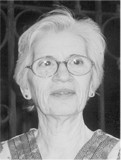
Manek Patel returned to India on Noshir’s retirement
Incidentally both plots were purchased from Rustomji D. Talati, a leading merchant who was said to have arrived from Zanzibar in 1875. Rustomji and his wife Dhunbai died in Mombasa and are buried in the Anjuman cemetery. Though the fate of their sons Dhanjisha and Ardesher is not recorded, their daughters Soonamai and Shirinbai were married in Mombasa and spent their lives there with grandchildren of both alive and living in that city to date.
Patel traces the contribution of approximately l50 individuals, some being two and three generations of a single family. Parsiana selects a few highlights:
• Rustomji N. Talati was a merchant, auctioneer and contractor from Zanzibar who built the Zanzibar Fire Temple (a dadgah) in l903. He set up a large ice plant in Mombasa but the enterprise was swamped by government and other competition. He closed his business and was feted by the Mombasa Parsis ere his return to Zanzibar in 1910.
• An avocate from India, Kawasji Dalal arrived in 1897. According to the East African Protectorate Law Register, he was a dominant member of the bar from his arrival to the end of World War I. He played a leading role in the establishment and opening of the law court building in l902 and was politically active, representing Indian interest as member of the Kenya Legislative Council in l920. He was also the Anjuman’s president and one of its six trustees. Dalal returned to India on retirement.
• M. Sorabji came to Mombasa via Zanzibar. A leading building contractor, he built the English Cathedral together with prominent fellow contractor Bhedwar. The government treasury, bungalows, National Bank of India building, the old court house, the old customs house, the old railway station were constructed by him as were other business and residential premises in the old port, writes Patel. He was also a stevedore and clearing, forwarding and purchasing agent for upcountry traders.
• According to local legend Bhedwar was the contractor who built the old fort where dhows (sailing ships from India, Arabia, Persia and the Middle East) arrived and anchored as did small steamships. "On top of the main gate of the old port one can see the bust of a person with a black cap on the head which the Parsis usually wore, which is assumed to be that of contractor Bhedwar,” writes Patel.
• When the seat of government was transferred from Mombasa to Nairobi, Bomanji Mistry as head clerk of the government treasury was instrumental in transferring its records and cash. For his loyal service the British Government conferred on him the MBE (Member of the British Empire). President and trustee of the Anjuman for several years, during his tenure a building was constructed on the plot donated by Cowasji Dinshaw. Originally conceived for residential purposes, the building on completion was leased to the government for running a school for Indian children, known as the Government Indian Elementary School, which eased the Anjuman’s financial position. After his death in Mombasa in l937 the Anjuman established the Bomanji Mistry Education Fund in his memory.
• Commerciate, head cashier in the National Bank of India Limited, was a leading cricketer who was so popular with European cricketers and their fans that they made him an honorary member of the European Sports Club — its only non-European member. He encouraged Parsi youths to play cricket by gifting gold souvenirs to whoever scored a century or took the maximum wickets in a match. Savak Vatcha who came and joined the Standard Bank of South Africa Limited was a live wire of the Parsi Dramatic Group.
• President of the Anjuman from 1939 to l965 and a trustee, Edalji Bajina was head clerk of Kenya Landing and Shipping Company with 1,500 persons working under him. He used his position to call several Parsis from India, providing them employment. At that time two aged volunteer mobeds were on the road to retirement. To replace them Bajina called two navar-maratabs from India and employed them in Kenya Landing. Under his chairmanship the Anjuman erected two buildings of six flats each to house community members at a modest rent.
• 1965 onwards women members of the managing committee became a regular feature though it was only in l980 that the Anjuman got its first lady secretary in Najoo Avari, a teacher by profession. In 1984 Dr Homai Engineer became its first chairperson.
• Ardeshir Patel, amateur astrologer and astronomer, carpenter and builder claimed to have learnt all the professions in Bombay’s Petit Boys Orphanage. To his alma mater he donated his valuable carpentry tools. After retiring from the African Mercantile Company Ardeshir had joined the British Army as a stenographer and was sent to Abyssinia but returned to Mombasa when the war ended. Looked after by the Anjuman after his wife and son died, Ardeshir became the first Parsi centenarian in Mombasa — an event celebrated with a grand reception by the Anjuman. He was congratulated by Queen Elizabeth of Great Britain and presented a bottle of Scotch through the British Consul in Mombasa, writes Dara Patel.
• Bajina’s son Homi, who retired as manager of Barclays Bank and later as manager of Biashara Bank of Kenya Limited, was chairman and trustee of the Anjuman between l975 and l989 during which time the Parsi Shamba property was sold and the proceeds used in the erection of the Sukesh Prayer Hall and another block of six flats on the plot donated by Cowasji Dinshaw. Three flats were also added above the rest house to accommodate single old people who had no means of income. Homi’s banking and monetary expertise greatly helped the Anjuman, writes Patel. It was also recognized by his induction on the Income Tax Panel Committee. It was Homi Bajina who urged Patel to proceed with and complete his documentation. To the latter’s sorrow, Bajina died in Bombay, in 2002 before Patel’s work was completed.
◆ ◆ ◆
From the archive