
Scholarship
Orientalist par excellence
Poet and priest, scholar and teacher, Dastur Mulla Feroze led by example
In a prestigious madressa in Isfahan, a youth of barely 12 years was studying Persian and Arabic. One day, a small group of Sayeds visited the Madressa for inspection. They were horrified, and even lost their tempers, on seeing a Guber (i.e. an infidel, a Zoroastrian youth) sitting ahead of the Muslim students. At the instance of the Sayeds, the boy was asked by the teacher to sit last. The teacher then gently suggested that the group should test his students. They did so and were amazed to see that the Zoroastrian youth was the best in all subjects — particularly in religious matters. Not only that, but in the discussions that followed, the youth even surpassed the Sayeds. There and then, the scholarly Sayeds very generously named the youth "Feroze (victorious)!” The name "Feroze” stuck to him for the rest of his life.
Peshotan — his given first name — was born at Broach on July 6, 1758. His father Kaus Bin Rustom Jalal was a descendant of the well-known Kamdin family of Broach. Dastur Kamdin (1579 AD) was himself a direct descendant of the illustrious Mobed Shapur Mobed Sheriyar and Mobed Hormazdyar Ervad Ramyar — reverentially remembered while paying homage to the fravashis of our outstanding departed leaders in the course of the uthamna prayers.
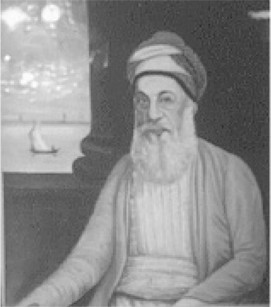
Mulla Feroze: thirst for knowledge
The "Kabisa” controversy
In the year 1721, an Irani mobed named Jamasp Velayati arrived in Surat. He informed the then Zoroastrian elders that there was a difference of one month in the Iranian and Parsi calendars in calculating the roz and mahs. Not wishing to get involved in the Kabisa (calendar) controversy, Velayati concentrated on training three outstanding athornans — Dastur Darab Kumana Dadadaru, Dastur Jamasp Asana of Navsari and a descendant of Dastur Kamdin of Broach in Avesta, Zand and Pahlavi. Again in 1736, one Behdin Jamshed from Iran — an eminent astronomer — arrived in Surat. He reiterated what Velayati had said earlier — further supporting it on the basis of his expertise in astronomy. The first Kadmi sect, which started in Surat in 1745, designated Dastur Kaus Munajjam (astrologer) as the first Kadmi Dastur of Surat.
At about this time, a leading businessman, leader and akabar of Surat, Dhunjisha Manjisha, a shipping magnate who had extensive trade with China, became a leader of the Kadmis in Surat. In 1780, he came to Bombay and started the Kadmi sect there. Manjisha had sponsored Kaus Bin Rustom to undertake a trip to Iran to consult the learned dasturs of Iran about Kabisa. He also sent some 79 questions pertaining to the Zoroastrian religion, seeking clarifications from the learned dasturs, scholars and elders of Iran. It was thus that Kaus Bin Rustom, with his young son Peshotan then barely 10 years old, set out via Muscat for Bunder Abbas in Iran. They were accompanied by another leading athornan, Ervad Hormazdyar Chandaru Bharucha.
Training in Iran
Soon after their arrival in Yazd — some three and half months after leaving Surat — Kaus Bin Rustom placed young Peshotan under a reputed mobed to learn Zand, Avesta, Pahlavi and all matters religious in depth. He also handed over to the Yazd Zoroastrian Anjuman the two letters and the questionnaire from Manjisha. For some four years, Peshotan studied the scriptures and the ritual ceremonies under the guidance of the head dastur of Yazd, Dastur Marzban and successfully completed his navar initiation in 1771.
During this period, Kaus Bin Rustom studied astronomy and astrology in Kerman. On his return, following the then prevailing practice, he prepared a tacquim (panchang). On going to Isfahan, Kaus Bin Rustom consulted learned Islamic ulemas (scholars) regarding the Kabisa problem and obtained from them, in writing, clarifications clearly explaining the one month’s difference in the calendars. The father and son were in Isfahan for some three years and then went to Shiraz. Mulla Kaus was very well received in the court of the then governor of Shiraz Karim Khan. From Shiraz, they went to Bushire and thence to Baghdad where Peshotan studied the Turkish language.
Honorary degree of Mulla
The caliph of Baghdad — some say the governor of Baghdad — used to confer on learned Muslim ulemas and religious leaders well versed in religion and the holy Koran, the honorary title of ‘Mulla.’ Having convinced himself of the outstanding brilliant careers of young Peshotan and his revered father, the caliph conferred on them the honorific "Mulla” — a rare honor never before given to non-Muslims. The said caliph also bestowed a special honor of allowing the father and the son to wrap a red shawl on their pugrees. Ever since, the name "Mulla Feroze” continued to be associated with young Peshotan and his descendants had the rare privilege of putting on the pugree with a red shawl wrapped round it, then a mark of great respect and distinction. After some 12 years in Iran, both returned to Surat.
First Kadmi Atash Behram in Bombay
From Surat, Mulla Kaus went to Bombay and reported to his mentor Manjisha who was very pleased with the progress of the investigations. He introduced him to Dadybhai Nosherwanji — a wealthy and illustrious businessman of Bombay — known as Motta Dadyseth. Mulla Kaus fully convinced him that the Iranian view in the Kabisa controversy was correct. After being so convinced, Dadyseth felt that facilities should exist for those who would like to follow the Kadmi calendar for performing various religious ceremonies and rituals. He opined that an atash behram for Kadmis in Bombay was a must and he sought the assistance of the experienced Mulla Kaus to develop the idea.
Mulla Kaus took up this challenge in right earnest and enthusiastically had the foundation stone of the atash behram laid following all the ancient Kadmi rituals and traditions, and undertook the most difficult and onerous task of preparing the various essential fires. Thus the Dadyseth Atash Behram was consecrated on September 29, 1783. Mulla Kaus was appointed the first dastur of the Atash Behram, as also the first dastur of the entire Kadmi Anjuman of Bombay. This was the very first of the present four atash behrams in Bombay. The Iranshah at Udvada was the first in India, having been consecrated in 1742. Thereafter, the Navsari Atash Behram was consecrated in 1765 by Khurshedji Tehmurji Desai. (The author of this article is the seventh direct lineal descendant of the revered Khurshedji.)
The Dadyseth Agiary in the Fort area was started in 1803. Dastur Mulla Kaus Rustom Jalal relinquished the post of Dastur in 1794 and migrated to Hyderabad Deccan. He was held in high esteem and respect in the court of the then Nizam of Hyderabad.
Mulla Feroze Kitab Khana
Mulla Feroze’s first love was books. His thirst for acquiring more and more knowledge was insatiable. He believed in in-depth study of any subject in which he was deeply involved. In Iran, as well as in India, he used to pick up rare books on subjects which interested him. He had built up a very large and valuable collection of books on various subjects such as religion, astronomy, history, literature, culture, etc. The compiler of the Catalogue Raisonne of the Arabic, Hindostani, Persian and Turkish manuscripts in the Mulla Feroze Library, Prof Edward Rehatsek, Fellow of the University of Bombay and examiner in Arabic, Persian, French and Latin, states in the preface, that "On his death, this large collection of valuable manuscripts was left in the charge of the elders of the Kadmi Zoroastrians to be taken care of by them and rendered available for perusal to the learned of all castes and creeds.”
Rustom Burjorji Paymaster, who has written an excellent life sketch of Mulla Feroze in Gujarati, opines that this was the first free library in India — perhaps in the world — which was available to scholars belonging to any community, caste or creed. Rehatsek states that the Library possessed 1,896 works in 1,729 volumes. These included manuscripts and rare and valuable books in English, French, German, Latin, Greek, Persian, Arabic, Avestan, Pahlavi, Turkish, Hindi, Punjabi, Gujarati and Sanskrit. This treasure house of knowledge is, since 1916, located in the K. R. Cama Oriental Institute (KRCOI). Some of the manuscripts are original and some in the beautiful Persian handwriting of Mulla Feroze himself. Nationally and internationally reputed scholars avail of this Library. In his last will and testament made in his own handwriting, Mulla Feroze stated, "None of my heirs and successors would have any claim whatsoever on this Kitab Khana. The Kitab Khana be made a public library for the use of scholars of all communities.” This speaks volumes for the broad and catholic approach of Mulla Feroze. Rehatsek writes, "It (the Library) will continue to exist as the first and the only gratuitous Library in Bombay where students of oriental languages will find a quiet retreat for pursuing their investigations.” In his Gujarati book, Paymaster lists some 21 books written by Mulla Feroze in his own beautiful handwriting. Most of them can be perused in the Library at the KRCOI.
Mulla Feroze Madressa
On August 27, 1854, the Mulla Feroze Madressa was established to teach Persian, Avesta and Pahlavi to both boys and girls. Amongst its distinguished pupils was one who later became Shams-ul-Ulema Dr Sir Jivanji Jamshedji Modi. The Madressa had, as its principals, such distinguished scholars as Dastur Ardeshir Rustomji Mulla Feroze, Ervad Kavasji Edulji Kanga, Behramgore Tehmurasp Anklesaria, and teachers of the eminence of Ervad Bomanji Nusserwanji Dhabhar and Sohrab Jamshedji Balsara. Kharshedji R. Cama had helped develop this Madressa with liberal donations and for some years the Madressa was located at the KRCOI. The Madressa is now merged with the Sir J. J. Madressa at Princess Street and managed by the Parsi Punchayet of Bombay.
George Namah
The handwritten magnum opus of Mulla Feroze — the George Namah in three large volumes, compiled in Persian verse at the instance of the then governor of Bombay Presidency Jonathan Duncan, is available in the Kitab Khana. It contains 40,000 couplets in Farsi. The eminent scholar R. P. Karkaria, in a letter to The Times of India of June 3, 1901 describes the George Namah as "the Persian epic of British rule in India” and refers to Mulla Feroze as "the great Parsi poet and theologian.” He further adds, "The George Namah comes up in the opinion of competent critics — including a Muslim ulema — almost to the level of the great epic of Firdausi, the Shahnameh” which contains 60,000 couplets. Mulla Rustomji Bin Kaikobad, the nephew and executor of the last will and testament of Mulla Feroze, respectfully dedicated the George Namah to "Her Most Gracious Majesty Queen Victoria.” Karkaria adds, "It is the very first book that has been dedicated in this country to her late Majesty.” Karkaria further opines, "This great work is a grand epic of the British conquest and rule in India, glorifying in choice classical Persian the rise and progress of English dominion in the East.” The George Namah contains the history of the British since their arrival in India up to 1830. The Bombay Gazette records, "By it (George Namah), the name of Mulla Feroze is enrolled amongst the select number of Persian poets, and his fame will be rendered immortal by being associated with the memory of British glory.”
Apart from the George Namah he wrote the Pand Nameh-e-Mulla Feroze, Deen-e-Khered-e-Mauzume — giving the 79 questions and their answers obtained from Iran at the instance of his mentor Manjisha; a brief autobiography, Kuliyat-e-Farsi, Dabestan giving the condition of the Iranian Zoroastrians and their religious practices translated in English by David Shea and Anthony Troyer and published in Paris in 1843; Kisseh-e-Dasturan-va-Mobedan and many other books.
Dastur Mulla Feroze Bin Mulla Kaus
Like his revered father, he too was appointed the Head Priest of the Dadyseth Atash Behram as also the entire Kadmi anjuman in Bombay. He held these prestigious posts with great distinction from 1794 to 1830. He taught Farsi to high ranking British officers including Duncan. In addition to his major involvement in scholarly studies, he engaged in trade and business with Iran, China, Bushire and Baghdad. This he did through his trusted agents. Sir John Malcolm, author of the world renowned History of Persia said of him, "He is a man of considerable learning; and he is not only a good scholar in Pahlavi and Persian but also in Arabic. His proficiency in the latter language has obtained him the title of Mulla.”
Mulla Feroze was very much interested in the education of children and greatly assisted the Mandali, set up in Bombay in 1819, for promoting the education of poor children.
Following a brief illness of about a week this eminent orientalist breathed his last on October 8, 1830 at the age of 73. The very next day, Judge James Sutherland wrote the following condolence letter to his friend Dadabhai Pestonji Wadia: "I am much grieved to hear of the death of the learned and venerable Mulla Feroze, and many will be sorry on the occasion, for he was held most deservedly in high estimation by the literary community. To the Parsis, of whom he was so bright an ornament, his loss must be severe, for I fear he has left darkness behind as he had not his equal as an oriental scholar, and there is no one so well qualified to throw light on any difficulties on your ancient religion and literature as he was.
"For my own part, I never met a more gentlemanly person, possessed of so much amiable feelings as he had, among any of the natives of India.”
According to Dossabhai Karaka, Mulla Feroze "had acquired a great reputation as a scholar besides being distinguished for his piety and irreproachable character.”
Fardunji Marazbanji, the then erudite editor of Mumbai Samachar, called Mulla Feroze "an eminent Pandit and a well known Acharya of the Persian language,” and ranked him as "one of the greatest scholars of the world.” The Mumbai-no-Bahar wrote that the Duncan loved Mulla Feroze as his own brother and by his guidance successfully completed all useful projects concerning the common man.
Praising "the great Persian epic, George Namah” in a poem printed in the Bombay Chronicle of October 8, 1930, Mulla Feroze’s biographer Paymaster concluded:
"Thy name no less as Persian poet famed/Than as a high souled eremite, who lived/A life of noble true simplicity,/Pursuing knowledge, with a passion deep,/Neglecting ease and comfort, food and sleep.”
As an akabar of the Parsi Punchayet and leader of the Kadmis; as a civic worker of repute especially during the water famine and the vaccination controversy: and as an educationist, especially for the poor, he had few equals. This many splendored personality needs to be better known to scholars of national and international repute as not many of them are well versed in Persian. His Farsi poems and other books need to be translated into English or French for the benefit of foreign scholars and posterity. In India, we still have many reputed scholars and professors of Persian teaching at well-known universities. To them, I would humbly appeal to study the catalog of the Mulla Feroze Kitab Khana, translate the manuscripts of Mulla Feroze, with commentaries, where necessary. This would be a splendid way of perpetuating the memory of this great poet and scholar.
◆ ◆ ◆
From the archive