
Politics and Policy
Sheltering the community
The Bombay Parsi Punchayet’s housing policy is always under public scrutiny
How many flats are locked up in Bombay Parsi Punchayet (BPP) colonies? Why is some people’s money called a deposit, earning them only the right to occupancy as licensees while other people’s money is termed a donation and earns them the status of a tenant? Why are some tenancies converted into leave and license agreements even for bonafide inheritors?
These are the type of questions the Alert Zoroastrians Association (AZA) says it has been asking the BPP. No satisfactory answers have been forthcoming, allege AZA representatives Kersi Randeria and Percy Patel.
The plain speaking, volatile duo put their business interests and family affairs on hold to speak to Parsiana about their community concerns and the alleged skeletons in the BPP closet on March 28, 2003. The BPP’s responses, sought by Parsiana prior to publishing this article, feature in brackets after each AZA charge.
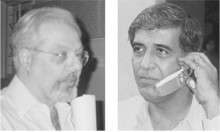
Patel (left) and Randeria: "Any public trust deed is a public document”
A letter in the Jam-e-Jamshed (April 27, 2003) pertained to the grant of a second flat in Ness Baug, on tenancy. It alleged that many special conditions were granted including an alleged right to resell the premises without paying the Punchayet its 40 percent share as landlord. [The tenant was the highest bidder for the flat whose availability was known to the community by word of mouth, say BPP CEO Behram Dastur and assistant CEO Mehelli Colah. There was a tie between him and another, which was settled between them. The tenant paid a whopping Rs 75 lakhs for the flat — of which the Punchayet got 40 percent as non-refundable money. So the Punchayet granted him the right to resell the flat within the community without paying the landlord’s share for a period of five years. (This is a practice followed by many landlords in Bombay largely due to the general slackness in the real estate market — Editor) "In light of the demographic situation, who knows whether prices will rise or fall for these community flats in the years ahead?” reasons Dastur.] Another letter(July 2003) dealt with the collusion between a litigating member of the community and a sitting trustee in 1998.
The AZA has consciously decided to be the thorn in the BPP’s housing flank until the trust, they say, displays more transparency, replaces ad hocism with tenable policies. Though the body is yet to be registered, its object is to enforce the rights of the poor and needy of the community, says Patel. With youth no longer getting jobs and facing a "frightening prospect of community beggary (when) our community had been a leader in looking after its own,” he is appalled that commercial premises/shops that fall vacant in BPP properties are given to non-Parsis at high rent and/or deposits. "Why can’t they give it to Parsi boys on five-year terms?” he questions. (There is no covenant that binds the Punchayet to sell shops to Parsis, note Dastur and Colah. Traditionally the shops have been allotted to the highest bidder.) Patel views the "selling (of) tenancy rights (as) an encouragement to ghettoization” because it encourages better-off Parsis to sell thier cosmopolitan accommodation at a profit and relocate in cheaper Punchayet properties.
There is a "lack of transparency, honesty among the trustees. The BPP has to show openly what it is doing, come up with policies to put the community’s socioeconomic affairs on track. If youth is given a chance, three out of five will come back (to return the favor),” says Patel. He criticizes the Punchayet for its alleged lack of cogent planning. "They don’t know who the youth are!” he says, citing the example of the ceremonial launch of the Bombay chapter of the World Zarathushti Chamber of Commerce in January this year, where speaker after speaker remarked on the absence of the youth in the audience. (The absence of youth was due to some miscommunication between the trustees and the BPP administration as to who was to be invited to the meet — Editor.)
Decrying the alleged "double standards (which) have been the rule of the (BPP’s) game,” Patel cites the example of the Punchayet’s fight against the A. H. Wadia Baug flat owners who want to adopt the model byelaws in their cooperative society which would enable the flats to be sold in the open market. (BPP says the case is sub judice. The land belongs to the Punchayet and a caveat has been filed in the cooperative societies court to prevent the flat owners from by-passing the Punchayet and adopting model byelaws, say Dastur and Colah.) "The covenants (governing the donated properties) are for ‘poor and deserving Parsis.’ You choose the part about ‘Parsis’ and not the part about the ‘poor and deserving,’” alleges Patel. "The role of the trustees is to carry forward the wishes of the benefactors... The community and BPP trustees 10 to 15 years hence may pay the price for such flaunting of the donors’ directives,” he adds. That the well endowed M. B. Jeejeebhoy Trust handsomely finances the projects of the Poona Parsi Panchayat but not the BPP, speaks for itself, he claims.
"The trustees must use their authority to further the cause of the trust, not to demolish the cause of the trust,” states Randeria, citing the closure of the BPP’s waiting list for housing for (two) years. "If they do not allow you to apply, you are losing points for periodicity,” he notes. When the AZA threatened to go to court if the waiting list was not reopened, "they said we already have 1,200 on the waiting list. What shall we do with more?” recounts Randeria. (The waiting list for housing was reopened on January 2, 2003 after being frozen for two years, says Dastur.) And yet, according to the BPP only 100 of those on the waiting list had a monthly income under Rs 3,000 and 400 had a monthly income under Rs 10,000, he notes. Empathizing with the plight of such low income families Randeria wonders, "What must the man be earning? Where must he be living? What education must he be giving his children? Must he be using the bus or walking? Has the Punchayet ever asked?”
To circumvent some of the indentures of the properties vested with the BPP has required the payment of bribes to get the necessary sanctions, allege the AZA representatives. ("There is no question of bribing. We explained our stand to the charity commissioner,” says Dastur. Colah adds that five buildings of ownership flats were constructed at Panthaky Baug in 1970-71.) More bribes allegedly have to be paid when urban land ceiling (ULC) exemptions, obtained earlier, are not renewed, invoking seven digit penalties. (The BPP executives disclaim knowledge about such an occurrence.) "The trustees are bound by the Bombay Public Trust Act to function as trustees, bound to find the money. So they sell the property meant for the poor to the rich,” alleges Randeria.
The AZA attributes a cynical quid pro quo policy to the trustees. In the absence of a well formulated housing policy, "the prestige of trustees (rests) on the favors they can dispense. These brownie points are converted into letters of support, votes and business opportunities,” claims Randeria. He alleges a caterer was "rewarded for providing free food at Dinshaw Mehta’s election with a mobile canteen at Godrej Baug. (The caterer got the right to run the canteen at Godrej Baug because he was the highest bidder, says Dastur. The executives explained that when bids were invited recently for running a canteen at Khareghat Colony via an advertisement in the Jamé, the same caterer was one of the bidders. He would not have got the Khareghat Colony canteen however because of the BPP’s conscious policy to spread such entrepreneurial opportunity among the community.) "See the favors which association members of various baugs are getting,” he says citing the case of a family in Rustom Baug which has four BPP units to its name — two residential and two commercial. (Dastur, in turn, cites the case of a family of four brothers occupying four different flats in Cusrow Baug — a development dating back 15 to 20 years.)
Randeria, alleges there were "genuine massive irregularities on the day of voting” (trustee Dinshaw Mehta’s reelection on June 2, 2001 at Khareghat Colony) leaving challenger Maneck Engineer’s supporters with "disgust at the end of the day.” Randeria referred to the free food provided by Mehta to voters, to the placing of the booths with Mehta’s being cheek by jowl with the Punchayet’s, the apparent partiality towards Mehta’s supporters on the part of the establishment (see "The Mehta-Maneck match,” Parsiana, June 2001) in justification of his statement.
Some months later, when 10 to 12 of them met, they recalled how people they had met in the course of the election campaign had talked about housing. "So we shot off a letter to the BPP in October (2001) asking very general questions like what is the Punchayet’s housing policy? What are the guidelines governing the quantum of security deposits?”
In response, the trustees invited Randeria, Patel and Zeree Jehangirji to a meet at the Willingdon Club where one of the trustees allegedly sought to denigrate the community as "ungrateful,” another swore his truthfulness on a collection of photos of spiritual gurus... But the AZA’s queries — like why did deposits at Godrej Baug range from five lakh rupees to 30 lakh rupees? — remained unanswered, say these critics. "The trustees asked (us) for facts and figures. We promised one a week!” laughs Randeria.
"We ensure that what we are talking about has substance (so that there’s) no opportunity for someone to slap us with a defamation suit,” says Patel. "We never pay anything for the information we get. (But) our plans also leak out to them,” adds Randeria.
A topic that sizzled was the sale of ownership flats in two buildings at Panthaky Baug. Randeria says the AZA sought to buy a copy of its trust deed from the Punchayet but their request was negatived on the plea that the trust deed was a private document. Instead they were given a copy of the 1884 deed of indenture of the BPP, a massive document devoid of information about properties donated later. "Any public trust deed is a public document. We obtained it on payment from the Registrar of Documents at the office of the Collector of Bombay,” he notes.
They claim that the Ruchi Construction Company that has been constructing at Panthaky Baug has built on BPP property with BPP funds and then sold the constructed buildings to the BPP at the rate of Rs 200 per sq foot. Despite the AZA criticism there has been no change of builder at Panthaky Baug, they say. At the same time P. D. Jilla’s case against the BPP is hanging fire in the court and the Punchayet faced a stiff penalty for non renewal of the exemption under the ULC, the AZA martialled charges against the community’s apex body. (Jilla’s appeal was dismissed by the High Court a fortnight ago, Dastur informed us.)
When the trustees challenged the AZA, describing them as a cluster of disgruntled elements without a mandate, the 6-month-old AZA openly invited community members with complaints about the Punchayet’s housing allotments through the columns of Jam-e-Jamshed. Between 10 a.m. and 6 p.m. on June 30, 2002, 100 people came to Parklane, a small hotel near Dadar station, "to express their solidarity.” Randeria related that one old man with a 50-year-old application stated that the BPP’s then housing executive (since removed) reportedly told him, "It’s time to die! Why do you need a house?” "People remarked that if the BPP heard them for only half the time the AZA representatives had spent with them, (they would have been satisfied),” added Patel.
"Last January, 22 AZA members entered the BPP office to discuss Panthaky Baug. We told them that the Panthaky Baug issue must be resolved in the boardroom, in the court or in the streets. We asked that the original incumbent be removed from the housing portfolio. The BPP agreed to give one building of 52 flats and approximately 30 flats in the second building of 56 flats for the poor. The 24-28 flats which had already been booked earlier would be delivered as ownership flats. A third building of 80 flats would also be reserved for the poor plus 140 flats at Nirlon. The trustees would aim for donations up to six crores (the cash equivalent of the flats) to enable them to give to the poor,” Randeria related the agreement reached with the Punchayet.
"Within one month they started changing their mind. We sent them the draft minutes of the meeting. They sent back a reworked draft with the key points omitted,” Randeria claimed angrily. In the meantime two Parsi trusts proffered financial help — one to sponsor a whole building, the other to sponsor 12 flats with a donation of Rs 1.l5 crore. "This was in answer to our public appeal made in December 2002, before the meeting with the BPP.” These trusts made no conditions, asked for no nomination rights, emphasized Randeria. (The current position regarding the two buildings constructed at Panthaky Baug is that the BPP has received the occupation certificate for building B only. Hence all who have booked flats in building A have the option to transfer to B which will become wholly ownership, explains Dastur. Flats in building A will subsequently be allotted on leave and licence. In this connection "not a penny has been received from any trust so far,” he adds.)
The AZA campaign on behalf of the community registered a victory of sorts when a BPP scheme to demolish seven buildings in Bharucha Baug to make way for a 14-storey commercial-educational-residential complex was abandoned when incoming trustee Maneck Engineer, an established civil engineer, declared the buildings sound.
The AZA has no membership card or fees. "People offer us money but we do not collect funds. We spend from our own pocket,” says Patel. "When people ask how do we become members of the AZA, we say ‘dil se’ (from the heart). We have representatives in almost all colonies - people who are active, come for a specific program like the signature campaign against the selling of Panthaky Baug flats. Over 1,200 signatures were collected in less than two weeks — with names and addresses — and it was not even a concerted effort,” Randeria underscores the community’s positive response to what they are doing.
The AZA wants to have a representative or two on the BPP’s Housing Advisory Committee (HAC) because they have been entrusted by many community members with their papers vis-à-vis BPP housing. Also, they estimate that between 300 and 400 flats will be created by the Punchayet in the next few years. Their aim, they say, is "to prevent some of them from disappearing by manipulation!” (AZA representation on the HAC is under active consideration, says Dastur.) But the activists believe the Punchayet is looking for a pliant representative while the AZA would prefer to second a tough negotiator.
The AZA views the legal delay in the revised scheme for trusteeship elections with a touch of cynicism. The matter is yet to come up for hearing in the High Court even though the term of the present Anjuman Committee (AC) which elects trustees, expired in January 2000. The matter, they say, has been conveniently stalled "because new electors would have broken (the trustees’) vote bank!” In the event all seven trustees have been elected/reelected by a moribund AC. ("We are eager, we are following up the matter” in the High Court, says Dastur.) Patel and Randeria are also rueful that the S. B. Bharucha Baug, which is the most pro AZA, has only three voters on the AC and two of them have migrated.
Patel owns a travel agency and a fast food shop — Exquisite Delylits — which capitalizes on his wife Tina’s cooking abilities. They have two college going children Natasha and Areez. The equally youthful Randeria is a construction contractor who learnt his trade under Maneck Engineer and also owns the Ahura Mazda Manufacturing Company Private Limited. Deadly protective of his family’s privacy, Randeria reveals no personal details saying, "I’m publicity shy!”
The AZA representatives admit that their "initial anger was sharper. But in the attempt to make the trustees see the light we must not harm the community... The day the BPP goes back to being the trustees of the community, the AZA will go back into the woodwork...”
◆ ◆ ◆
From the archive