
Sports
Sports
Hataria’s formula
Lifting the JK Tyre National Racing Championship in the Formula Maruti class in India in December 2001, budding Formula 1 aspirant Sarosh Hataria’s calendar of events for 2002 is fast and furious — the Philippines, Malaysia, Thailand, Korea, China and Macao through the months April-November 2002. "Hopefully, if I can win the Formula Asia Championship this year, I intend to make my way through the British F-3 (Formula-3) series and Formula Nippon to Formula 1, the pinnacle of world racing which has been my dream since I was 12 years old,” says an e-mail from the 22-year-old who believes he is the first Parsi Zoroastrian to win any Formula event.
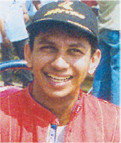
Hataria: Formula 1 ambitions
Noting that it will cost him about US $ 150,000 to participate in the remaining 14 races (seven rounds) of the Formula Asia championship, Hataria bemoans the fact that motor racing in India is virtually devoid of financial support. "Our country does not have enough infrastructure to encourage sportspersons,” he declares, adding that motor sport particularly is still lacking in sponsors despite its high profile exposure in the print medium and high viewer rating on television.
Hataria took to the track in July 2000, entering in the only Formula event in India — the JK National Racing Championship at the Irungattukottai track near Sriperumbudur, outside Madras (the only one of its kind in India). With the financial and moral support of his parents Peerooze and Uma and grandparents Soli and Dhinoo Hataria, he finished his very first year of racing in overall second place! "So I decided to give myself one more year of racing the Formula Marutis (Formula Indian single-seaters with Maruti 800 engines, better known as FISSMEs, explains Auto Motor and Sport, January 2002).” "Lap after lap, race after race, the challenge of pure precision driving saw me making mistakes and learning, honing my skills to perfection,” describes the college student who is doing his final year of BA (History) at the Loyola College in Madras and who trains with Akbar Ebrahim of the Advanced Driving Academy.
With a series of good drives in the earlier rounds, Sarosh revved up at the final round on December 9, 2001 at the top of the pack, with a total of 63 points, an 11-point lead over his nearest rival, J. D. Madan at 52 points, and Gaurav Dalal at 49 points. "Every single driver was trying his utmost and since tyres, engines and gearboxes are controlled, it was really down to the driver’s skill,” observes Auto Motor and Sport. "Sarosh, who had been a model of consistency coupled with good pace and even better race craft all year long, was determined to carry off the title,” reports Overdrive (January 2002). In the 10-lap race, Sarosh took an early start, but Dalal "soon made up for this by hounding Sarosh for the next three laps before finally going through on lap four at the hairpin bend, one of the few overtaking points on the track. He led there onwards, probably aided by the fact that Sarosh was not going to try anything brave and spoil his title hopes,” describes Autocar India (January 2002). Just four-tenths of a second separated them at the chequered flag. Piling on the pressure was Rayomand Banajee in fourth position. "The 15-lap event saw Sarosh once again making a brilliant start only to be reeled in by Gaurav. The duo passed and repassed each other before Sarosh got hit from behind, enabling Madan and Gurunath Meiyappan to pass him,” notes Overdrive. Jostling with Dalal for the lead, Madan in the heat of battle inadvertently flicked the engine kill switch and his engine cut out momentarily. Meiyappan and Sarosh were past him in a flash, eventually taking second and third place behind the winner Dalal. "Only after it was all over did one come to know that Sarosh had put the pain of a hairline fracture in his foot behind him all weekend long and raced nevertheless — exactly the stuff champions are made of,” opines editor Adil Jal Darukhanawala in Overdrive.
"The Championship means so much to me as I want to step up the motor sport ladder and emulate the likes of Narain Karthikeyan,” Sarosh is reported to have told Darukhanawala after the podium ceremony.
Aware that turning his dream into a reality is going to be a long road uphill, "I am quite unafraid of this and ready to travel it and hopefully achieve success in the next three to four years, with His blessings, and if I am able to summon the financial support I require,” says Sarosh in his e-mail to Parsiana.
Sarosh can be contacted at 20, Pettukola Apartments, 190-B Poona-mallee High Road, Madras 600010. Telefax: 044-8234311, tel: 8264362, 98410-70770 or on e-mail: sarosh_hataria@hotmail.com or hataria@vsnl.com. All sponsorships big or small can be sent by cheque or demand draft in favor of "Sarosh Hataria A/c Racing for India.”
On the merit list
Her series of sterling achievements in the field of women’s cricket were honored with the award of Padma Shri, presented to Diana Edulji by President K. R. Narayanan at Rashtrapati Bhavan in New Delhi on March 23, 2002. The award had been announced earlier as part of the Republic Day honors list on January 26, which coincidentally happens to be Edulji’s birthday! "It’s a great feeling to be recognized. I was overjoyed to be the first woman cricketer to get this award,” remarks Edulji, laughingly adding that in her observation the Padma Shris are usually given to individuals on the wrong side of 50 and she was still four years away from that landmark! "This is the right time,” she declares, her satisfaction a refreshing change from attitudes in recent times, when awards to sportspersons have been engulfed in a quagmire of controversy, with some of the recipients themselves refusing to accept the awards!
Holding the world record for her 119 wickets in 34 Tests in women’s cricket, Edulji sees this as her most significant accomplishment, which she achieved against New Zealand in Cuttack. Batting right-handed and bowling left arm spin, the all-rounder comments: "Oh, I definitely enjoy bowling better!” A member of the first women’s Indian Test team, Edulji took the first wicket and the first catch for India as well and was in the first Indian women’s team to tour abroad.
The stalwart’s classy career has spanned donning India colors from 1975-95 without a break and playing on the domestic field from 1973-2000. She made history two years ago by being the first woman cricketer to be on the BCCI (Board of Control for Cricket in India) selection panel, being a member of the Railways’ selection committee for the men’s Ranji Trophy team. For the first time ever, Indian Railways were crowned Ranji Trophy champions this year. Edulji is also a national selector for the women’s cricket team.
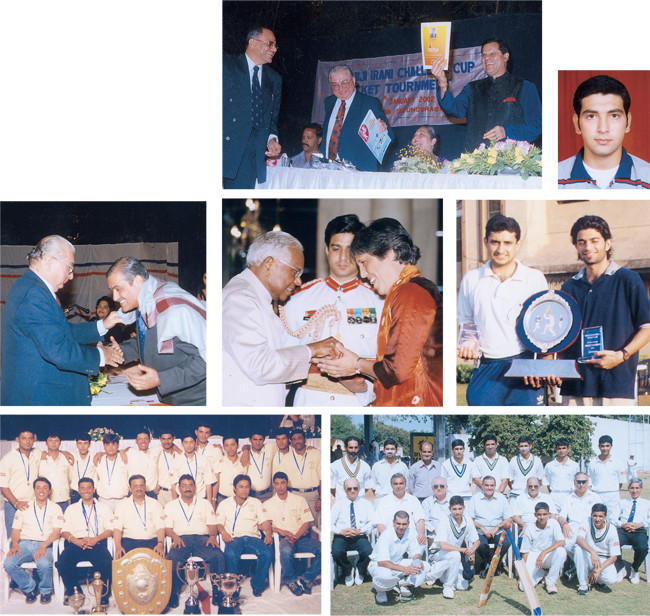
Top row: Reddy releasing the souvenir as Antia (forefront), Nalladaru (standing, center), Yadav (seated, left) and others look on; Shahen Patel; second row (from left): Nalladaru and Contractor, Narayanan and Edulji, Kotwal and Mistry; third row: Surat’s winning team, runners-up Secunderabad with invitees and officials
Sports officer with Western Railway, which she joined way back in 1976, Edulji terms her job a time-consuming one. She is also the coach of the Indian Railways’ women’s cricket team which won the national title in 2001, Edulji’s very first year as coach! As a player, she led the Railways’ women’s XI from 1985-2000, winning on numerous occasions.
First appointed Indian captain in 1978 (she was captain on and off upto ’93), Edulji’s sporting encounters have spanned Tests and one-dayers and three Women’s World Cups (1978, ’82 and ’93 — the first and the third as skipper), playing against Australia, England, West Indies, New Zealand, Holland, Denmark and Ireland, both at home and abroad. She is also the only woman cricketer in the world to have been awarded a benefit match in 1997, states her bio data.
Commentating for Doordarshan in the last one-dayer in Poona in November 2001 in the India-England (women’s) series, Diana’s co-commentator was her eldest sister Behroze — a rare occasion, she believes, when sisters have been commentators together! Behroze also played for the Indian team between 1976-’81, bowling left arm medium pace — sisters on the team being a rarity as well! Starting with commentating in the 1997 World Cup in India, Diana adds that her busy schedule does not permit her to take to the microphone on a more regular basis.
Diana’s long innings has won her a slew of awards — the Arjuna Award (1983) from the Government of India, the Shiv Chhatrapati Award (1978) and the Maharashtra Gaurav Puraskar (1991) from the Government of Maharashtra. On her visit to Delhi, the Delhi Parsi Anjuman felicitated her on March 21, along with two other Zoroastrians — Attorney General Soli Sorabjee (Padma Vibhushan) and Air Vice Marshal Fali Major (Ati Vishisht Seva Medal) — who are among this year’s Republic Day awardees.
Cricket in the community
Wielding the willow and spinning the ball spiritedly, the sportsmen of Surat won the XVI Jiji Irani Challenge Cup 2002, their third successive victory at the annual cricket tournament played between the Zoroastrian Clubs of Calcutta, Jamshedpur, Nagpur, Surat and Secunderabad/Hyderabad from January 11-15, 2002, according to Kerfegar Antia, honorary secretary of the Zoroastrian Club of Secunderabad which hosted the event this year.
Surat registered a nine-run win over Secunderabad in the final league match at the Gymkhana grounds in Hyderabad, reports The Times of India, Hyderabad. A 114-run first wicket partnership between Homy Dumasia (55) and Rustom Sethna (59) enabled Surat to post a total of 204 in the allotted 30 overs, with Zarayus Sethna and Eric Dittia contributing 37 and 22 respectively. For Secunderabad, Manek Hormusjee took three for 35, while captain Minoo Siganporia, Shahen Patel (who has represented Hyderabad in inter-state tournaments in the under-19 and under-22 category) and Kushal Jilla (vice captain of the under-14 team) bagged two wickets each.
Chasing 204, the hosts made 195 in the allotted overs, despite a valiant 71 by Varzavand Debara and 24 not out by Noshir Mehta, who played for India A and for Hyderabad in the Ranji Trophy for 10 years up to 1977, reports The Hindu of January 17. Sethna has been selected for the Gujarat Ranji Trophy team, adds the paper.
For the first time in the Jiji Irani tournament only Zoroastrian umpires officiated, with Dara Dotiwala, Jehangir Umrigar, Keki Doodhwala and Adil Palia standing in at the matches. The tournament this year was dedicated to the memory of two eminent Zoroastrian cricketers of Hyderabad — batsman Eddie Aibara (who played for that city in the Ranji Trophy for over two decades and who coached numerous budding cricketers including Mohammed Azharuddin) and spin bowler Soli Mehta (who captained the Hyderabad team in the 1940s and was the secretary of the Hyderabad Cricket Association for 11 years), according to Press reports. "The Parsi community has produced several prominent cricket personalities over the years,” noted Petarasp A. Nalladaru, president of the Zoroastrian Club of Secunderabad.
The Jiji Irani Challenge Cup was introduced in 1975 in memory of Jijibhoy Dhunjibhoy Irani, fondly known as Jiji, who had represented the Parsis in quadrangular matches and who was instrumental in starting the Gazdar League in Nagpur in 1938, now in its 65th year. Irani had also played against the legendary Douglas Jardine and his team, notes Antia. While the first Jiji Irani tournament was between Nagpur and Jamshedpur, the twin cities of Hyderabad/Secunderabad joined four years later, followed by Calcutta in 1985 and Surat in 1991. The tournament is hosted each year in rotation by these five centers.
With around 80 players, officials and guests expected to participate, the entire Parsi Dharamshala in Secun-derabad had been booked for a week, writes Antia. The prize distribution on January 15, held on the premises of the Club and presided over by Nalladaru, witnessed a turnout of over 600 Zoroastrians: Shivlal Yadav, former Test cricketer and currently national selector and secretary of the Hyderabad Cricket Association was the chief guest, while Nari Contractor, India’s captain whose career was brought to a premature end in the early 1960s by a near-fatal head injury in the West Indies, was the guest of honor along with former Member of Parliament Dr T. Subbiram Reddy who had earlier inaugurated the tournament. While eulogizing the Parsi community for its achievements, Reddy offered one of his theaters free of cost to the Zoroastrian Club for a fund-raising premiere show, and was ready to shoulder the burden of entertainment tax as well!
Thanking K. V. Krishna Murthy, chairman and managing director of the Bank of India for his support, Antia also commended Minoo Siganporia, the Club’s vice president, Pestonji Baria, treasurer, and committee members Nazneen Baria, Khorshed Mehta, Shapoor Bhathena, Zarir Vasaigara, Rohinton Debara, Dhunji Mistry, Dinshaw Parakh and Bomi Patell, for their organizational skills. While the dinner each day was hosted by various Club members, the cost of the dinner that followed the closing function was borne by Capt Kayarmin Pestonji who donated to the Club the entire sale proceeds of the dinner coupons for the promotion of cricket among Zoroastrian youth.
Right arm off spinner Shahen K. Patel of Secunderabad trained at the MAC Sports Foundation in Madras from 1997-99 where the selection process is highly competitive, notes an individual profile of the promising cricketer forwarded to Parsiana by Keki Dadabhoy of Secunderabad. Having played for Hyderabad at the inter state level in the under-19 age group in 1999 and the under-22 last year, Patel has been a member of the A division in the Hyderabad Cricket Association league tournaments and the highest wicket taker in many matches in the twin cities. His 27-wicket haul in seven matches for Khalsa College, where he is currently a third year BCom student, was the highest for the year 2001 for his College, states his bio data. Among Patel’s coaches is Hyderabad’s Noshir Mehta.
In the Ninth All Parsi Double Wicket Cricket Tournament held at the Parsi Gymkhana at Marine Drive in Bombay on February 24, 2002, Behram Kotwal and Shahen Mistry (representing Parsi Gymkhana) scripted victory from among the 18 pairs selected by the organizers, Young Zoroastrian Cricket Club. The duo defeated Zubin Minocherhomji and Zubin Shroff (C. J. Colony) in the final to lift the Jamshed Guzder Trophy, the tournament being sponsored by AFL (Airfreight) for the ninth year in succession. Teams from Bombay, Umergaon, Surat and Navsari participated in the event, according to Rusi Bhumgara of the Parsi Gym- khana.
◆ ◆ ◆
From the archive