
Law
“Nothing but the truth”
The biggest scam in the country enhanced the scrupulously clean image of Justice Sam Variava
Describing his induction into the legal profession in the chambers of Sir Jamshedji Kanga to those who had felicitated him at Cusrow Baug, Supreme Court judge Sam Variava had stated, "I learnt that the lawyer is part of the system where the aim is to arrive at the truth and nothing but the truth.” How well he had internalized this lesson was on view to the country when Variava was appointed to get to the bottom of the enormous financial scam perpetrated by the late Harshad Mehta that smeared the reputation of several financiers and financial institutions in 1992 and sent the stock market into a spin.
Presiding over the "scam court” gave him all-India exposure but his demeanor as a judge remained "fair, courteous and above all, patient,” noted solicitor Dadi Engineer.
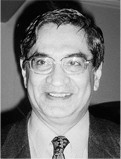
"He always believed in carrying his own weight,” said Supreme Court advocate Lalit Bhasin who remembers Variava as a competent counsel, walking from the Bombay High Court to the chambers, his files tucked under his arm. "He brought a lot of discipline into the Delhi High Court where he took over as Chief Justice, tried to tighten up the loose ends so far as the administrative side of the High Court was concerned,” noted Bhasin, adding, "(It) required firm and decisive action and (Variava) did not hesitate. The Delhi High Court went into major surgery during his tenure as Chief Justice and emerged as a vibrant High Court, as it should be.”
Referring to both Sam Bharucha and Variava, senior Supreme Court lawyer Anil Divan said, "It has been proved that if you select young people at the right age, it makes an enormous difference.” At one time the general decision was not to offer judgeship to lawyers under 45 years of age, he noted. Yet Bharucha at 40 and Variava at 46 went on to render an excellent account of themselves as judges, he added.
Bhasin expects that the relatively youthful Variava "will be a major contributory to the development of law and the judicial system in the country. He belongs to the class of the younger generation of judges, brings with him a freshness of approach along with the wisdom of his seniors of Bombay.” Like Justice Sabharwal from Delhi and Justice B. P. Singh from Bombay,Variava "combines legal expertise with modern technological advances,” adds Bhasin.
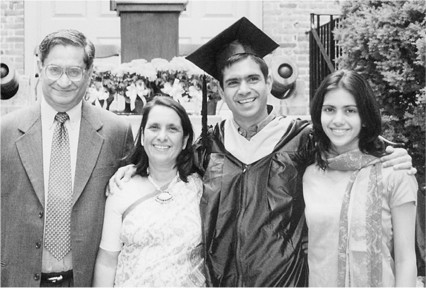
The Variavas — Sam, Dilnavaz, Firdaus and Naira
During his years as an advocate at Bombay’s City Civil Court and the original side of the Bombay High Court Variava had been a part-time professor of law at the Sydenham College of Commerce and Economics. After about 11 years on the bench of the Bombay High Court, Variava was transferred to Delhi as Chief Justice of the High Court and thence promoted in 2000 to the Supreme Court. Described by Engineer as "extremely genuine, warm and friendly,” Variava is said to be a lover of the outdoors, a good tennis player, a car rallyist and a rock climber. Married to Dilnavaz (née Sidhwa), vice president of the Bombay Natural History Society, the Variavas have a son, Firdaus, and a daughter, Naira.
Bhasin says, "I don’t view (Bha-rucha and Variava) as Parsis. Not also Soli (Sorabjee) or Fali (Nariman) or Nani (Palkhivala). I don’t like to call them Parsis because they are all part of the mainstream, not part of any minority group. They are committed to the rule of law in this country. No one can say there’s any deficiency in their approach. They are more committed to the welfare of the country than most of us are. There is one trait in Parsis generally: they are so committed to whatever is good and noble in life that they lose their cool and their equilibrium when they see anyone doing something unjust or unfair... When the lawyers were beaten up in Agra, Fali was so upset, he told the lawyers ‘Bring your case to me, I’ll fight for you.’ Bharucha is visibly agitated when some case comes to him where it is manifest that grave injustice has been done. You can see it in his face. Justice Variava’s recent judgments on employment laws show his concern for the labor class. (They) get choked with emotion which is visible to everyone. Their work is within the four corners of the constitution!”
◆ ◆ ◆
From the archive