
Events & Personalities
Eclectic economist
When teaching economic theories and problems the late Prof Jamshed K. Mehta would introduce spiritual thoughts to exercise the mental faculties of his students whom he hoped to make into "intellectual pehelwans (strong men),” it was recalled at the birth centenary celebrations of this rare blend of spiritual economist on December 14, 2001. Mehta was one of the greatest products of the Allahabad University both as a student and professor of distinction, noted P. D. Tandon, former Uttar Pradesh minister of higher education and information, at the celebrations convened by the University and covered in the Northern India Patrika. Mehta had joined the economics department as an undergraduate in the 1920s and retired as its head in 1963.
The focal thought of Mehta’s theory was wantlessness where he would explain that "want not, and you are in equilibrium.” The practical economist had foreseen the end of the Soviet Union on the premise that a system which ignores the critical role of incentives cannot grow, remarked Prof D. K. Srivastava of the National Institute of Public Finance and Policy, New Delhi. In almost all aspects of a man’s life and the universe Mehta saw rhythm, starting from the rhythm of breathing to booms and recessions in macroeconomics, added Srivastava.
In one of Mehta’s books titled Rhyme, Rhythm and Truth in Economics he had observed that we have to crack the outer shell of the apparent reality to discover the real, ultimate reality. Presiding over the celebrations vice chancellor G. K. Mehta referred to J. K. Mehta’s authorship of 22 books and hundreds of articles. Some of J. K. Mehta’s other well-known works were Studies in Advanced Economic Theory, Economic Problems of Modern India, Lectures on Modern Economic Theory and A Philosophical Interpretation of Economics which according to Prof G. L. S. Shackle "deserves to become a classic.”
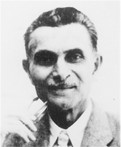
J. K. Mehta: "saintly scholar”
His erudition and academic brilliance were matched equally by his humanism and punctuality, it was reported by the Times News Network. His dislike of noise made him choose a room outside the University’s main edifice. In a structure with a thatched roof, his place was exclusive and yet warm and cosy. "It would have been a great gesture on the part of the economics department if that room had been converted into a memorial for him,” noted a tribute to him. The Academics section of the Northern India Patrika carried a special Mehta anniversary feature on December 14 wherein it was reported that once when a student requested him to postpone his MA thesis deadline as he was getting married, Mehta is said to have remarked, "This is fixed after great deliberations. No change can be made for an individual which may be unfair to the rest. You better postpone your marriage.”
On another occasion a visiting dignitary called at Mehta’s residence without seeking a prior appointment. When he reached his venue, hung on the verandah was a wooden placard reading: "Morning time is meant for research and study. If you happen to come in the morning what should you do? Go back.” Respecting his wishes the dignitary retraced his steps.
Besides economic theory and mathematical economics, religion and philosophy, J. K. Mehta’s other interests were photography, cricket and homeopathy. Highly cosmopolitan in his views he had studied the scriptures of all religions. He was particularly impressed by the Bhagwad Gita and Mahatma Gandhi’s non-violence. "His name evokes sweet and spiritual memories of a saintly scholar who was an angel for his students and a divine healer for his innumerable... patients,” states the Northern India Patrika. Many of his colleagues in the department had once been his students and as had commented the late S. L. Parmar, "Whenever we are in his presence, we feel some superior being talking to us — not just a teacher or a professor but someone far, far above. He has a spiritual halo around him which makes him so saint-like.”
◆ ◆ ◆
From the archive