
Dara’s dairying
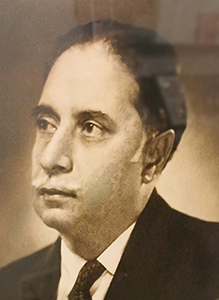
Bombay’s “last green lung” started out as the home of the revolutionary Bombay Milk Scheme envisioned by Dara Khurody
Khurody won the 1963 Ramon Magsaysay Award for his work in the dairy industry, and a proud government turned AMC into a tourist spot.
 In the decades that followed, as Bombay’s concrete jungle exploded all around Aarey and began to encroach into the forest, the AMC became a prized expanse of land: prime real estate material for builders, an endangered home for Adivasi villagers and the "last green lung of Bombay” for environment-conscious citizens.
The latest conflict about development in Aarey pushed the AMC into the national limelight: the state government wanted to build a metro rail car shed on 30 hectares of Aarey land, for which it would need to cut down more than 2,700 trees.
Up to the 1940s, residents of Bombay had to buy their milk from local suppliers — dairy farmers rearing buffaloes in squalid sheds scattered across the city. The dairy farmers lived in lofts above their cattle, and the milk they supplied was expensive and not always hygienic. "When my father was appointed as Bombay’s milk commissioner in 1946, he wanted to remove the buffaloes and sheds from the city to prevent health risks caused by polluted milk,” said Nawshir, a retired management executive who lives in his family home in south Bombay.
A dairy expert, Dara had spent over 25 years supervising dairy farms and marketing dairy products for the government. He proposed moving all of Bombay’s buffaloes and dairy farmers to a specialized colony where cattle could be reared and milk collected, processed and distributed in a systematized manner. His proposal was accepted, land in Aarey was granted to the dairy development board and in 1951 the then Prime Minister Jawaharlal Nehru inaugurated the AMC by planting a sapling at the location.
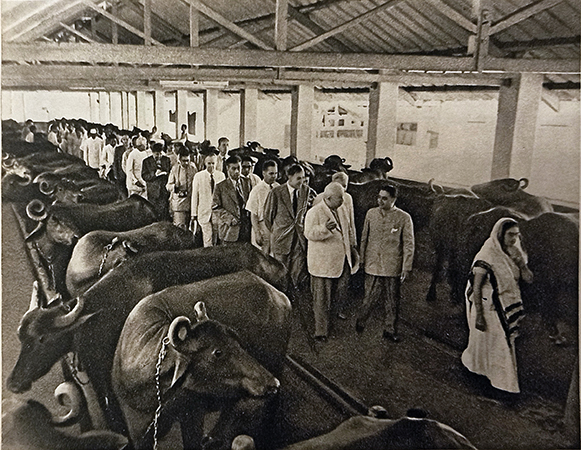
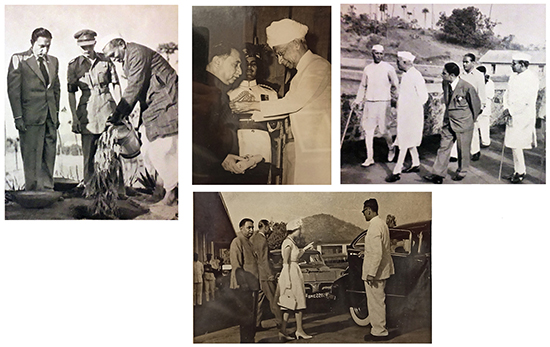
According to Nawshir, his father personally spent time convincing the city’s many buffalo rearers to move to the new location. "In Aarey, they were given proper stables and comfortable living quarters with toilets, and a school was also built for their children,” Nawshir elaborated. For cattle fodder, the dairy development board began growing special "para grass” on a portion of the land.
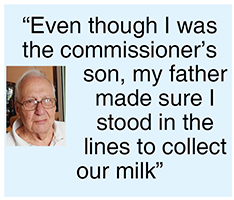
With the establishment of the Bombay Milk Scheme at Aarey, milk began to be supplied from a centralized, government-run dairy unit to milk booths across the city. Every morning, people would line up in long queues outside their local Aarey booth to collect their daily supply of milk. "Even though I was the milk commissioner’s son, my father made sure I stood in the lines to collect our milk,” Nawshir recalled.
To boost the supply, Dara introduced "toned milk” — a method of decreasing the fat content and increasing the quantity of milk — that he had first proposed in 1941. "By diluting milk with water and skim milk powder, one liter of buffalo milk was turned into three liters of toned milk, and it made milk much cheaper for people to buy,” said Nawshir.
The Bombay Milk Scheme model was replicated in several parts of India as well as the world over the years. Dara, along with Amul developers Verghese Kurien and Tribhuvandas Patel, won the Ramon Magsaysay Award in 1963 for their contribution to dairy development. Dara died in 1983.
The Indian government had recognized the uniqueness of the milk scheme much earlier, and actively promoted it as a proud symbol of the new Indian welfare state that many dreamed of at the time of Independence.
"The AMC was from its beginning an attraction for locals and tourists, where people could go for picnics and buy tickets to get a tour of the processing plant, the garden, the observation point and other places in the Colony,” said Sanchia deSouza, a historian from Bombay researching on milk and urban development at the University of Toronto. Students were also brought to Aarey on school trips. "Public engagement was essential for demonstrating the trustworthiness of this modern milk supply system.”
Nawshir has his own unique memories of visiting Aarey as a young man. "My father would drive me there at night in his car to see crocodiles crossing from one lake to another in the moonlight,” he reminisced.
Over the years, the state government developed more and more institutions and attractions within Aarey Colony. The area around Aarey’s main lake was branded as Chhota Kashmir, which now has its own boating club. The dairy development board established the Dairy Science Institute in Aarey, where students of agriculture can get diplomas in dairy technology.
Close to the Institute is the large New Zealand Hostel for non-local students. "The Hostel was built through funding from the government of New Zealand, because we would buy all the skim milk powder needed for toned milk from that country,” shared Nawshir.
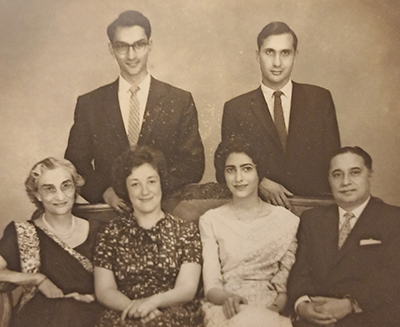
Clockwise from standing l: Firdaus, Nawshir, Dara, Roshan, Joan and Persis Khurody
The central and state governments also run a veterinary college, poultry farm, bakery and several other offices in Aarey.
In 1977, the Maharashtra government carved up more than 200 acres of forested Aarey land for another industry that has come to define Bombay: Film City. Hundreds of Indian films have been shot at the various studios, parks and natural sites of Film City, and guided tours for visitors are also a source of revenue for Maharashtra’s tourism board.
Since AMC is also home to 27 hamlets where various Adivasi communities have lived long before the milk scheme was established, land acquisition within Aarey has frequently been controversial. In 2006, for instance, Adivasis had protested the granting of land to filmmaker Subhash Ghai for setting up the Whistling Woods film institute near Film City.
Before that, in 1999, as much as 240 acres of Aarey land were sold to Royal Palms, a real estate company that has built a luxury residential township, complete with a golf course, within Aarey. In June 2019, the state government also cleared a plan to create an extension of the Bombay zoo at Byculla, in the south of the city, in Aarey.
 None of the previous protests against encroachments at Aarey, however, have matched the intensity and popularity of the protests against the metro rail car shed proposed by the Mumbai Metro Rail Corporation Limited (MMRCL). In a city otherwise known for its political indifference, the Aarey protests captured the imagination of thousands of ordinary Bombay residents, from different age groups and backgrounds, who showed up week after week for marches, rallies and human chains.
Government authorities have lashed out at the protesters with force, and on the night of October 4, 2019 when the MMRCL began hacking trees, the police arrested 29 protesters and held them in jail for two nights before they were bailed out.
Nawshir says he has often wondered how his father would feel about this conflict between citizens and the state authorities over this. "Initially I thought he would be heartbroken by the cutting of so many trees,” he said. "But my father was a practical person, and I think he would have found a way to talk to MMRCL well in advance. And he would have persuaded them to use an alternate site for the car shed.”
Reprinted with permission from Scroll.in
Parsis and Aarey
Reader Dr V. M. Meher-Homji sent the following information which appeared in The Indian Express of October 24, 2019:
"In 1806, A’reyn or Aarey — a series of village land holdings — was given to a Parsi merchant, Ardesar Dadaji, in exchange for land he owned in the Fort area of Bombay. Over 100 years later, the government of India acquired 3,000 acres, including the Aarey village from the Byramjee Jeejeebhoy Group, one of the big nine landowners in Bombay, to set up the Aarey Milk Cooperative. In 1949, trees were cleared to set up 40 cattle farms and a dairy…
"Activists and locals peg the number inside Aarey at around 30,000 slum dwellings. ‘We have faced continuous harassment from the state government. They want to mark us as slum dwellers and shift us to one of those congested SRA (Slum Redevelopment Authority) buildings. At present, there are 50 illegal huts around my house but no action has been taken against them,’ said Ravi Khandve, a Warli tribal, who lives there with his wife and two children.
"As MMRCL cleared the felled trees from the plot earmarked for the Metro car shed, Khandve said, ‘With this pace of destruction, silencing those who oppose and heve disregard for the environment, we will only get to witness Aarey as a green lung of the city in pictures.’”