
In Memoriam
The astute ambassador
Died: Jamsheed Kekobad Marker, 95, senior statesman and daring diplomat who served as Pakistan’s Ambassador in 11 capitals with concurrent accreditation to nine nations; at his residence in Karachi on June 21, 2018.
The Ministry of Foreign Affairs paid tribute to its long-serving Ambassador by naming a room on its premises as the Jamsheed Marker Hall. "Marker not only witnessed the formative phase of Pakistan but also played a key role in some of the decisive phases of the country’s evolution for over seven decades,” interim Prime Minister Nasirul Mulk who unveiled a plaque at the Hall, 10 days after Marker’s demise, was quoted in The Express Tribune of July 2. Describing Marker as "an outstanding diplomat and a patriotic Pakistani who will always rank among the giants of this country,” Mulk added, "He remains constantly a role model for his successors.”
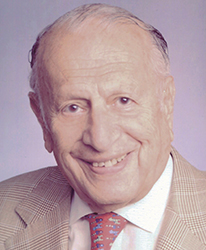 Other leaders of the nation too remembered the "suave and skilled envoy who always promoted Pakistan’s positive image,” as reported on pakistantoday.com.pk. To Pakistan foreign minister Abdullah Haroon, "Pakistan has lost a true and noble son and a brilliant icon.” Foreign affairs secretary Tehmina Janjua said that Marker practiced "diplomacy with an art of sophistication and a calm approach even in the midst of strife and discord.” Having earned the distinction as the "world’s longest serving Ambassador” he had an entry in the Guinness Book for having been "ambassador to more countries than any other person.” He was recognized by the Pakistani government as Sitara-e-Quaid-e-Azam in 1971 and Hilal-e-Imtiaz in 2004.
His first posting was as High Commissioner of Pakistan to Ghana in 1965 with concurrent accreditation as Ambassador to Guinea and Mali. The next posting took him to the USSR where he participated in frequent and extensive diplomatic negotiations in the Kremlin, particularly with Prime Minister Alexei Kosygin, during the crisis leading to the emergence of Bangladesh. As noted an obituary in the Newsweek of June 25, "He was the best ambassador Islamabad could have had in Moscow after losing East Pakistan. He was well liked despite his tit-for-tat meetings with Soviet ministers and his circle of diplomatic friends was wide, his personal conduct immaculate, complete, with an undying admiration for Russian literature and music. Everybody in the embassy thought he would be drummed out as a non grata ambassador, but… when he left the Soviet Union in 1972 for a post in Canada, he was made a permanent citizen of Moscow by a visibly moved Soviet bureaucracy… He fought to keep the country engaged with the global community even as internal forces backed isolation.”
It was during his Soviet posting when he would be frequently seen with his little cocker spaniel Simeon. He had created a stir a few weeks before the Indo-Pakistan War of 1971 when he warmly embraced Gen Sam Manekshaw and had a friendly chat in Gujarati with the Indian army head who had come to Moscow for an urgent consultation with the Soviet military. The two were apparently old friends from pre-Partition days.
The Ministry of Foreign Affairs paid tribute to its long-serving Ambassador by naming a room on its premises as the Jamsheed Marker Hall. "Marker not only witnessed the formative phase of Pakistan but also played a key role in some of the decisive phases of the country’s evolution for over seven decades,” interim Prime Minister Nasirul Mulk who unveiled a plaque at the Hall, 10 days after Marker’s demise, was quoted in The Express Tribune of July 2. Describing Marker as "an outstanding diplomat and a patriotic Pakistani who will always rank among the giants of this country,” Mulk added, "He remains constantly a role model for his successors.”
Other leaders of the nation too remembered the "suave and skilled envoy who always promoted Pakistan’s positive image,” as reported on pakistantoday.com.pk. To Pakistan foreign minister Abdullah Haroon, "Pakistan has lost a true and noble son and a brilliant icon.” Foreign affairs secretary Tehmina Janjua said that Marker practiced "diplomacy with an art of sophistication and a calm approach even in the midst of strife and discord.” Having earned the distinction as the "world’s longest serving Ambassador” he had an entry in the Guinness Book for having been "ambassador to more countries than any other person.” He was recognized by the Pakistani government as Sitara-e-Quaid-e-Azam in 1971 and Hilal-e-Imtiaz in 2004.His first posting was as High Commissioner of Pakistan to Ghana in 1965 with concurrent accreditation as Ambassador to Guinea and Mali. The next posting took him to the USSR where he participated in frequent and extensive diplomatic negotiations in the Kremlin, particularly with Prime Minister Alexei Kosygin, during the crisis leading to the emergence of Bangladesh. As noted an obituary in the Newsweek of June 25, "He was the best ambassador Islamabad could have had in Moscow after losing East Pakistan. He was well liked despite his tit-for-tat meetings with Soviet ministers and his circle of diplomatic friends was wide, his personal conduct immaculate, complete, with an undying admiration for Russian literature and music. Everybody in the embassy thought he would be drummed out as a non grata ambassador, but… when he left the Soviet Union in 1972 for a post in Canada, he was made a permanent citizen of Moscow by a visibly moved Soviet bureaucracy… He fought to keep the country engaged with the global community even as internal forces backed isolation.”
It was during his Soviet posting when he would be frequently seen with his little cocker spaniel Simeon. He had created a stir a few weeks before the Indo-Pakistan War of 1971 when he warmly embraced Gen Sam Manekshaw and had a friendly chat in Gujarati with the Indian army head who had come to Moscow for an urgent consultation with the Soviet military. The two were apparently old friends from pre-Partition days.
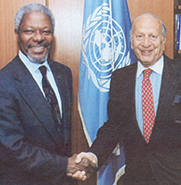
Jamsheed Marker (top and above) with Kofi Annan
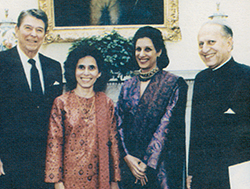
(From l): Ronald Reagan, Feroza, Arnaz and Jamsheed Marker
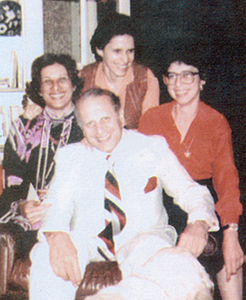
Arnaz, Jamsheed, Feroza and Niloufer Photos: Quiet Diplomacy
Fifteen years later when he was Ambassador to the USA, Marker maintained close coordination with the US administration and Congress on several issues including negotiations over the Soviet military withdrawal from Afghanistan. An article in The New York Times in 1989 mentioned that the State department officials and members of Congress considered him "tough, shrewd and cultivated... Of all the diplomats in Washington, few work so intimately with the Reagan administration as Marker.”
Posted as Ambassador to both West and East Germany, he opened the Pakistan embassy in East Berlin and negotiated trade and aviation agreements with the German Democratic Republic. As Ambassador to Japan, he negotiated two annual yen credits and numerous joint ventures in the private sector. Fluent in English, Urdu, Gujarati, French, German and Russian, altogether he represented Pakistan in 10 foreign postings with nine concurrent accreditations. Some of the other nations on which he left an imprint were Romania and Bulgaria, Canada, Ireland, France. The French government recognized his services by appointing him Grand Officier de l’Ordre du Merite. Though himself a ‘lateral entrant,’ a term used for those entering the Foreign Service from outside the system, he criticized the practice.
Having interacted with innumerable leaders, Marker observed that those of recent times were "corrupt and surrounded by sycophants… It’s been the death of our value system. Few have the guts to speak the truth before the rulers.” And when asked how he had managed to be Ambassador to two Presidents, seven prime ministers, three chiefs of army staff and many foreign ministers for nearly three decades in Pakistan if he was not a sycophant, he had responded, "I never jockeyed for a job. I really didn’t care and in fact each time the government changed, I resigned… Life is all about determination, diligence and truth.”
His ties with the United Nations (UN) commenced nearly 40 years ago when he was appointed permanent representative of Pakistan to the European office of the UN in Geneva and was spokesman for the country on UN’s different organizations and committees. Years later he served as chairman of the Group of 77 when he led negotiations on behalf of the developing countries at the UN conference on environment and development. For two successive years in 1993 and 1994 he was president of the UN Security Council. His most noteworthy role was as the UN Secretary General Kofi Annan’s personal representative for East Timor when he conducted negotiations with the governments of Indonesia and Portugal and with East Timorese leaders which led to a successful referendum and eventually the independence of East Timor. He has narrated the details in his book East Timor: A Memoir of the Negotiations for Independence.
In an article written for the Dawn, June 25, 2018, Ashraf Qazi, a former Ambassador to the US, India and China and head of the UN missions in Iraq and Sudan, quoted Annan’s praises for Marker as "one of the most seasoned and skillful diplomats,” commending his "intelligence, discretion, capacity to listen, patience, perseverance and endurance.”
"He was one of the most illustrious Zarathushtis of the 20th century and rose to become one of the most beloved diplomats of Pakistan and a man loved and respected all over the world,” noted a tribute by Homi Gandhi, president of the Federation of Zoroastrian Associations of North America (FEZANA). In 2007 FEZANA bestowed on him its Lifetime Achievement Award, an honor conferred on only five recipients so far. The Award recognized his "personal achievements and meritorious service (that) brought recognition to the Zarathushti community worldwide.”
A communique from Shahpur Captain, chairman of the World Zoroastrian Organisation (WZO), described Marker as "WZO grand patron and veteran Pakistani diplomat” while Toxy Cowasjee, Karachi based editor of the WZO quarterly Hamazor, considered him "a special friend and a great individual.”
After retiring as Ambassador he taught diplomacy and international relations at the Eckerd College in Florida, USA for more than a decade when he authored Quiet Diplomacy: Memoirs of an Ambassador of Pakistan. Quetta born Marker’s education was at the Doon School in Dehra Dun where the name of the Marker family is still celebrated in the form of Marker cups awarded to students for academic excellence. He subsequently studied at the Forman Christian College in Lahore, graduating as a gold medalist with an honors degree in economics from the University of Punjab. During World War II, he served as an officer in the Royal Indian Naval Volunteer Reserve, in command of a minesweeper which became the first such vessel to enter Rangoon to liberate Burma. He then served on combined operations in Burma and won the Star, Burma Star, War Service Medal. As he later acknowledged, "As a fighter in the Navy, I encountered danger and death. It made me strong.”
At the approach of Partition, Jamsheed’s father Kekobad reportedly led a deputation to Muhammad Ali Jinnah to seek assurance for the future of the Parsi community in the new Muslim nation. Jamsheed who was then working under Morarji Desai in India’s home department, announced his resolve to join his family business in Quetta. Subsequently when Kekobad was appointed director of the Pakistan Industrial Finance Corporation and chairman of the Industrial Development Bank of Pakistan, Jamsheed joined the family business and served on the boards of public and private corporations in banking, insurance and shipping.
In 1954, Jamsheed was persuaded by a former teacher who had become director general of Radio Pakistan to become a cricket commentator with another newcomer Omar Kureishi. An avid cricketer during his school days, he enjoyed being "the voice of cricket” in Pakistan until there were other demands on his time.
Qazi who grew up with Jamsheed’s younger brothers Khursheed and Minoo realized that they got their "inimitable wit, mischievous humor, flair for merciless mimicry, limitless curiosity, generosity, sincerity and sagacity” from their eldest sibling who was their role model. To Qazi, Jamsheed was "A cool headed analyst, a nonpareil raconteur, a wonderful family man, one who bore personal grief and loss with moving dignity and forbearance.” After the death of first wife Diana Dinshaw in 1979, he married Arnaz Minwalla. One of his daughters, Feroza expired in 2001.
Marker’s last book Cover Point (which in cricket parlance is a position close to the wicket yet sufficiently distant for a general overview), written in 2016, provided a subjective yet analytical critique of current affairs whilst leading a quiet, retired life at his Karachi residence. With a sharp memory, he continued to spend time in his study lined with books, memorabilia, photographs and paintings, having taken a keen interest in the culture of every nation where he had been deputed.
In an interview with The Week, the nonagenarian had conveyed, "After working for a lifetime from the founding of the country through most of its trials, I do not want Pakistan to fail. I feel Jinnah’s idea of Pakistan had enough space for Pakistanis of different religious and cultural backgrounds. Jinnah’s vision has critics in India, but as a Pakistani of Zoroastrian culture I can say that Jinnah genuinely wanted a country that would accommodate all varieties of people.”
The astute Ambassador is survived by his wife Arnaz, daughter Niloufer Marker Reifler and brother Minoo.
◆ ◆ ◆
From the archive